




This story originally appeared on the Gents Cafe Newsletter. You can subscribe here.
Meet Nick Coe, the co-founder of apparel and lifestyle affiliate network, Kutoku, and founder of Heddels, a media company and blog spotlighting enduring menswear brands. A devoted father of three, Nick balances his entrepreneurial drive with a deeply intentional approach to daily life, and finds grounding in what he calls relaxed concentration. He approaches both his work and his personal life with the philosophy that “if you take care of your things, they’ll take care of you forever.”
Where do you live and what do you do for a living?
I live in Edmonton, Canada, and I balance a couple of different roles. First, I am the co-founder of an apparel and lifestyle affiliate network called Kutoku, which essentially helps like-minded, quality-driven brands and publishers connect and support one another. Second, I am the founder and publisher of a media company and blog called Heddels, which has been around for about fifteen years now. Since day one, the core mission of Heddels has been to help people discover and understand brands and products that actually improve with wear and, ideally, can be used forever.
To give you a bit more background, I originally started Heddels as the founding editor. Back then, it was almost like a personal diary for me. I was interested in raw denim and also eager to try something entrepreneurial, so the blog became a space where I could simply share what I was learning and what I found interesting. I didn’t think of it as anything grand or special; it was just an outlet for my curiosity.
At the very beginning, the site was actually called Rawr Denim, and it focused exclusively on raw denim jeans. When you’re a one-person band doing absolutely everything, you eventually have to figure out a sustainable way to grow. Over time, I brought on a co-founder and stepped away from the day-to-day writing to focus on running the business side of things, handling sales, marketing, and behind-the-scenes operations. In 2015, we officially rebranded the site to Heddels. We realized that people who have an affinity for raw denim naturally possess that same appreciation for quality in other areas of their wardrobe and lifestyle, so expanding our scope just made perfect sense.
Kutoku was born out of a very similar ethos. We wanted to help the right publishers work with the right brands in a meaningful, cost-effective way. While affiliate marketing can sometimes have a bit of a negative reputation in the broader industry, Kutoku is really focused on bringing these two sides together with integrity. My role there is also on the non-technical side, focusing on marketing, sales, and helping to lead and grow the team.
What are your main passions and how do you cultivate them?
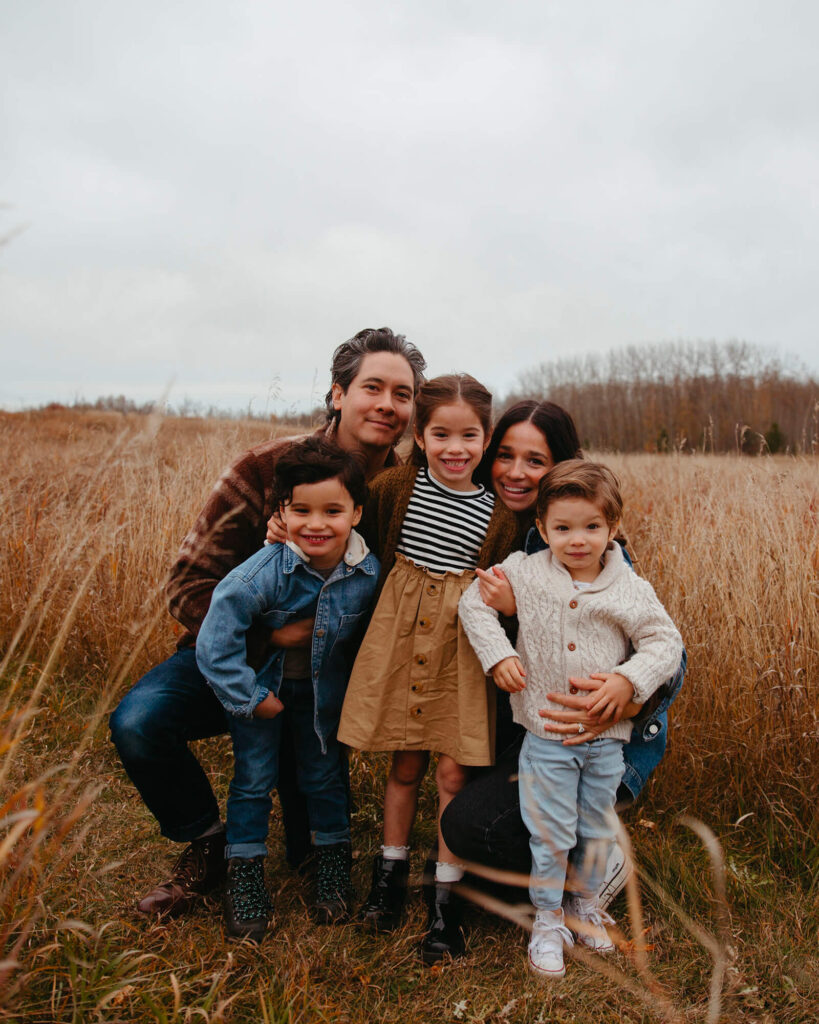
There are a few, but family is undoubtedly number one. I’m a big believer in the idea that we get so much out of our family, and I feel incredibly fortunate. I come from a family with three siblings, all of whom have children, and I have children myself, and it feels like a bit of a cheat code for living a truly meaningful life. My three kids are aged four, six, and eight, and I get immense joy out of watching them grow up and spend time together. Plus, I live just a short, few-minute drive from my parents and one of my sisters. Cultivating this passion simply means spending as much time with them as possible, trying to be entirely present, and taking an active interest in everything they do. For instance, when my kids take up a sport, I try to sign up as an assistant coach on the team just to be right there with them.
Beyond family, I’m deeply passionate about tennis. I love both playing and watching it. In a lot of ways, I think tennis parallels life; I learn a lot from the game, but it’s also just a great way to stay healthy and completely disconnect.
Cooking is another major interest of mine, because it allows me to build something with my hands and step away from the screen for a while. There’s a side of me that’s a bit of a people-pleaser, so it’s incredibly gratifying to cook a meal for others. You get that positive feedback very quickly, which makes it a lot of fun.
Finally, I’m passionate about what I do for a living. I feel exceptionally lucky because I essentially get to choose my path, and I view my work more as a vocation than a standard job. Any “problems” that crop up are things I feel fortunate to have the opportunity to solve. So many people out there view a job merely as a means to an end, but for me, it’s a massive part of the journey—and, in a way, the end itself.
I’m passionate about what I do for a living. I feel exceptionally lucky because I essentially get to choose my path, and I view my work more as a vocation than a standard job.
How did you first develop an appreciation for style?
I’ve thought a lot about how I would define style first, because everyone has a different perspective. Some might think of style purely as how someone dresses or presents themselves, but I think it’s something much bigger—it’s really someone’s inner self on display. It’s about their level of intention, and how they choose to live and be with others. My own appreciation for style first came from my dad. He’s never been a flashy guy; he’s quiet and reserved, but there are two things about his style that always stay with me.
First, he derives a lot of meaning from helping others, having worked as a physician for over 50 years—he’s almost 80 and still working today. When I was about seven, I asked him why he dressed so casually for work—usually just pants, a short-sleeve button-down shirt, and very basic leather shoes—when some of his colleagues wore finely pressed, three-piece tailored suits. He told me that dressing is about how you want to show up for others. Wearing a suit can feel intimidating or create a hierarchy for the patient, while dressing a bit more casual can put them at ease. I’ve always loved that perspective.
The second part of his style comes from his lifelong enthusiasm for craft, design, and timeless quality. As a kid, I would rummage through his office and closet to look at all his things—pens, knives he’d kept since he was my age, model cars, cameras, and his massive collection of shoes that still drives my mom crazy. His own style was shaped by growing up in the UK in the 60s and 70s, so it’s always been very clean, a bit like a mod aesthetic. He always taught me, “Nick, if you take care of your things, they’ll take care of you forever.” I think that lesson is what seeded my appreciation for all that Heddels stands for: the focus on things that wear in rather than wear out. It’s about appreciating well-made products, repairing them, and if you’ve purchased correctly, ensuring they last for a very, very long time.
What does “being well-dressed” mean to you?
It’s such a personal thing. It is always going to be unique to the individual, and when I think about what it means to me, my brain immediately jumps to two concepts that come into vogue every so often: wabi-sabi and sprezzatura.
In some ways, these two mindsets feel at odds with each other. Wabi-sabi is organic; it’s about letting life run its course and allowing things to wear in naturally. Sprezzatura, on the other hand, is more deliberate—it’s consciously choosing what to wear but making the final look appear completely natural. Even though they seem opposite, I think they are ultimately striving for the same thing: an appreciation for effortlessness, imperfection, and impermanence, and really accepting something for the way it is.
When it comes to how someone dresses specifically, not everything has to be perfectly tucked together and precisely fit. As long as it feels and looks natural, that is what stands out to me as being well-dressed. You always hear about various rules in menswear and fashion and maybe that’s important for some people. But for me, as long as an outfit feels natural and comes off as effortless, that’s really what being well-dressed boils down to.
How do you avoid distractions and stay focused?
Number one is that, in general, you have to take care of yourself. If you don’t have your health, you have nothing. As I’ve gotten older, this has become more and more of a focus for me in order to maintain my concentration. I try, to the best of my ability, to keep my diet clean and simple and I exercise three to four times a week. That said, I’m not the type of person who strives for perfection or optimizes every single calorie and minute of sleep. I think doing that takes away the fun and becomes a bit too much; for me, it’s really about moderation and finding a balance.
The second thing is maintaining a certain level of routine. Between my personal and work lives, the demands definitely stack up and the days are very full. If I want to ensure I am focusing on the right things, I have to have a schedule and routines. But again, I don’t overdo it, because if everything is planned all the time, you take away the enjoyment.
On a more tactical level, having a dedicated, clear, and clean office space helps immensely with work-related focus. I try to keep my space as neat as possible, while still keeping it inspiring and relaxing. I try to maintain a level of relaxed concentration in what I do, and surrounding myself with the right environment helps me achieve that.
I am also a big fan of lists. I have lists for personal things and lists for work-related tasks. If something is in my head, it has to go onto a list, otherwise it just clutters up my mind. I use both paper and digital formats. When I’m speaking with someone, I keep a pen and pad in front of me to write things down so it doesn’t interrupt the conversation, and then I’ll transfer those notes to my digital list later on or at the end of the day.
When it comes to avoiding distractions, there is a lot to be said for literally removing them and assessing what actually adds value to your life. Having made a living off the web for almost twenty years now, I spend a lot of time in front of screens. I’ve become pretty ruthless about nuking any app on my phone that doesn’t offer a net benefit. For instance, all social media is off my phone, so I only use those platforms on my laptop where it’s much more controlled. One of my sisters also gifted me a device called the Brick—it’s a physical square that blocks certain apps for a set period of time, and the only way to unblock them is to physically tap your phone against it. On the weekends, I use it to block all of my work-related apps, and during the week, I block certain apps at night. It’s a great forcing mechanism. I’m human, so of course I get distracted, but these tools help me stay on track and focus on what truly matters.
I try to maintain a level of relaxed concentration in what I do, and surrounding myself with the right environment helps me achieve that.
What’s a place that holds significant meaning for you, and why?
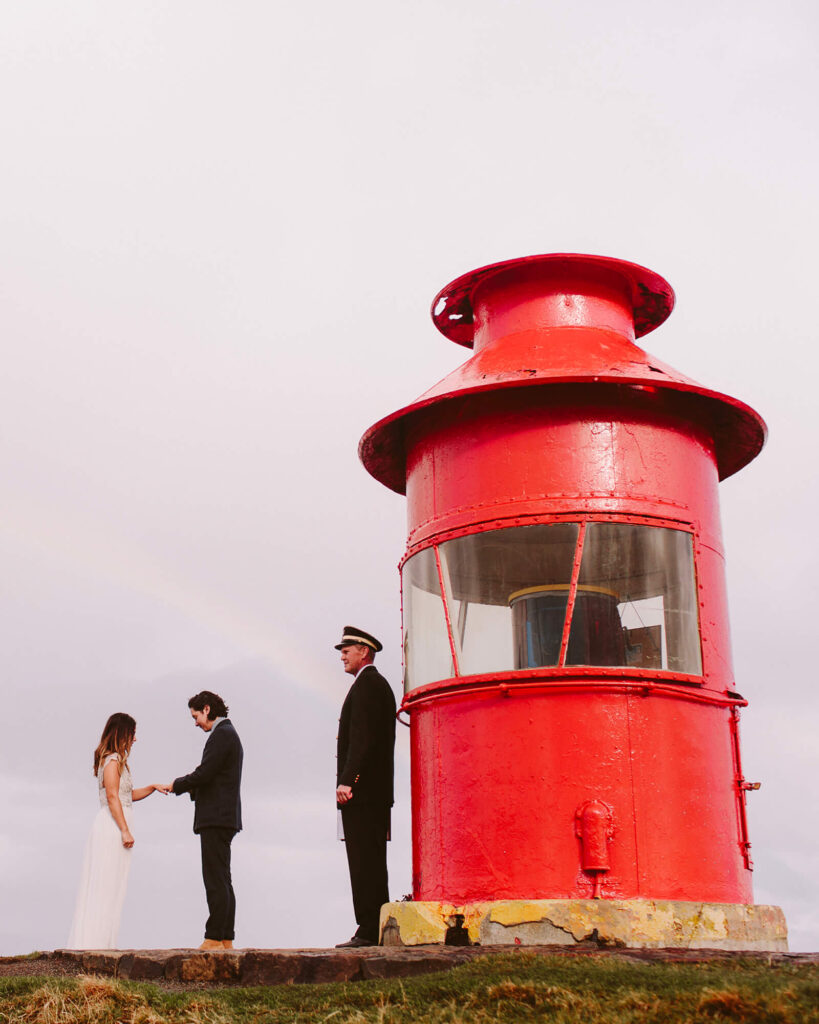
About ten years ago, my wife and I got married, and we had this trip planned to Iceland. Rather than having a big wedding and doing the whole traditional thing, we decided to elope there. It was a little nerve-wracking in some ways because eloping is obviously very secret, and there are inherently always family expectations. We weren’t even engaged beforehand; we did the entire thing—the engagement and the wedding—all on this one trip.
A lot of planning went into it between just the two of us. We went to a small town in the northwest part of Iceland called Stykkishólmur. It was pretty much unplanned when we arrived. We had a meeting scheduled with a government official who would be our officiant, but we were traveling during the shoulder season, so it was quite rainy, and we weren’t entirely sure where the actual ceremony would take place. We just knew we wanted to get married and make the experience our own.
We got incredibly lucky. We only picked the spot the day before the wedding—it was just a small hill right along the coast. Even though it had been pouring rain, the rain stopped and the sun came out about ten minutes before the ceremony and stayed out for some of the pictures. We haven’t been back since, but this year is our ten-year anniversary, so we’ve been thinking about maybe making a trip back. I’ll never forget it. Iceland is an incredible, beautiful country to begin with—very humbling in many ways, both in its scenery and its people, but it is obviously even more meaningful to us because it’s where we got married.
What does your ‘daily uniform’ look like?
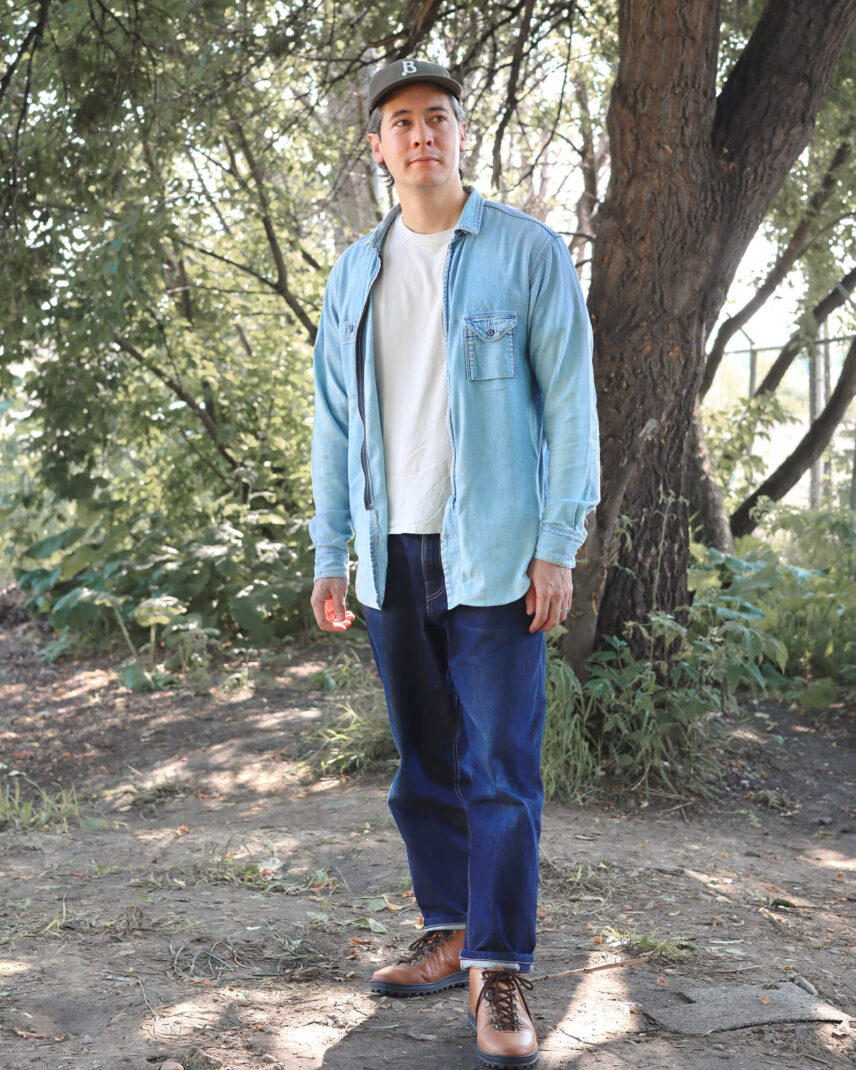
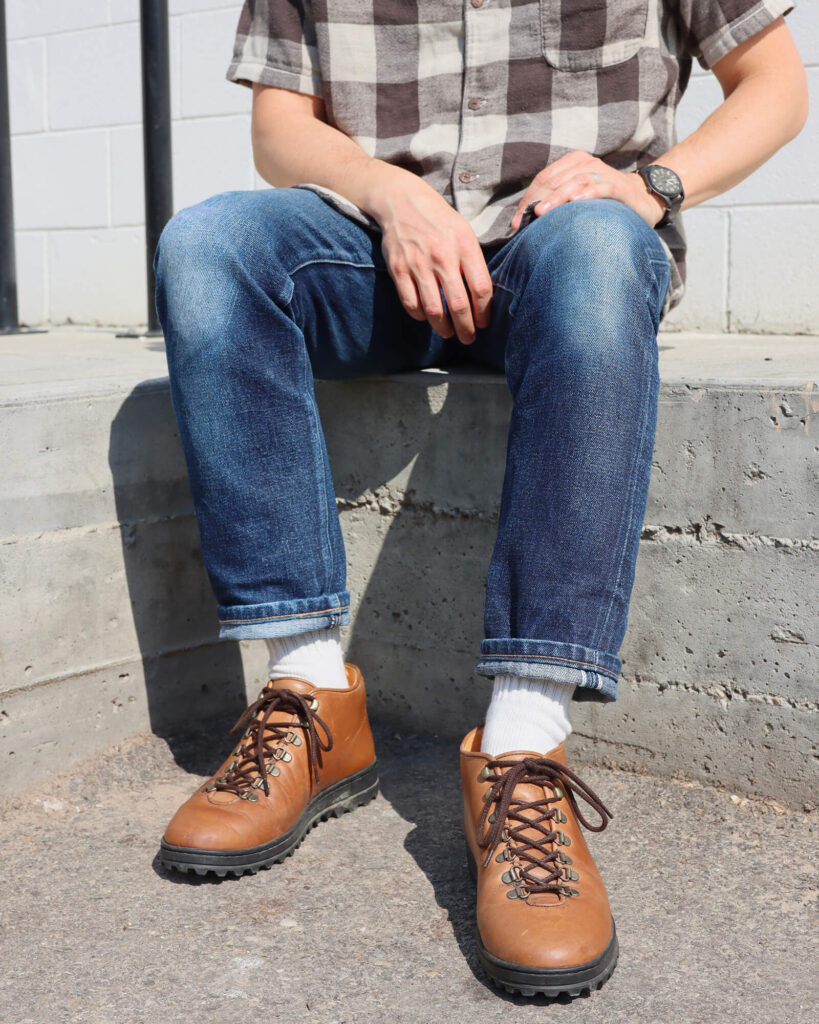
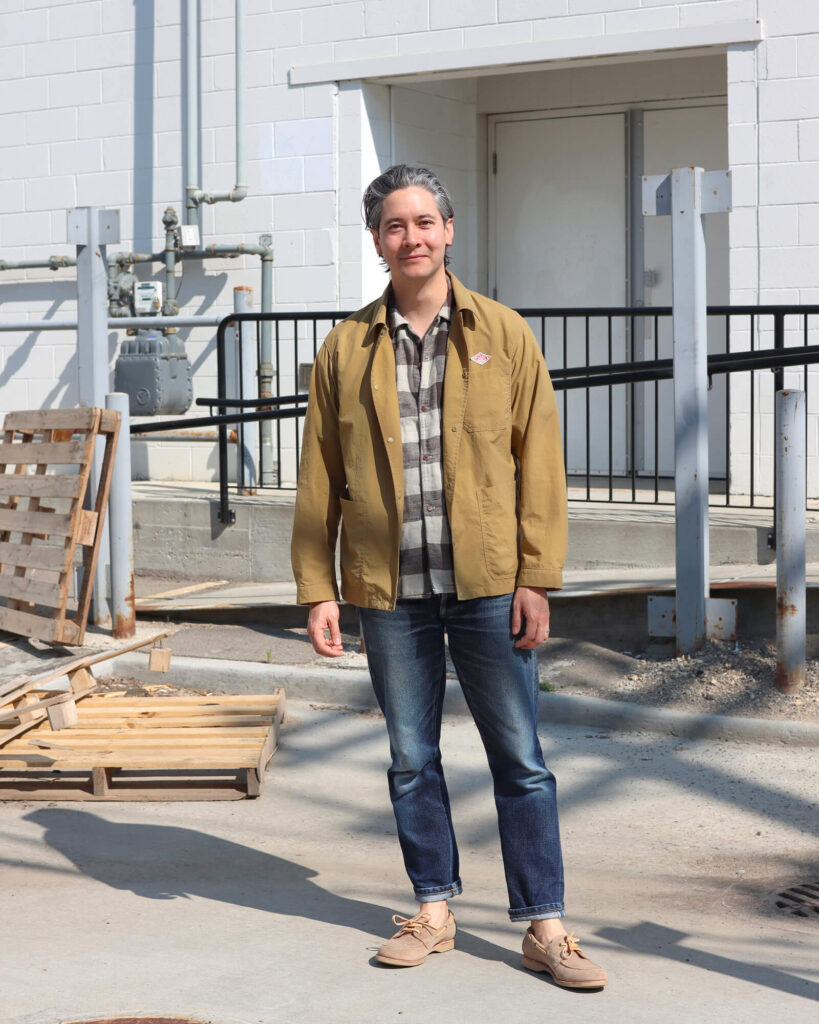
My daily uniform is fairly straightforward: it’s jeans almost every day, which suits what I do since I mostly work from home. I do travel every few months, but living in a part of the world with very distinct seasons requires planning for the weather. Right now, it’s summer in Canada, but even at this time of year, the temperature can swing by twenty or thirty degrees in a single day.
Because of that, my base is usually jeans paired with a heavier t-shirt, and I’ll throw a simple overshirt on top while working at my desk. When I head outside to spend time with my kids, I typically have to layer up to stay prepared for the shifting weather. Even in the middle of summer, I’m often wearing welted footwear, boots—not chunky work boots, but well-made, sometimes waterproof leather boots that wear in nicely—or at least a pair of sturdy sneakers that I know will hold up. Toss on a raincoat or a heavier jacket when needed, and it really doesn’t get much more complicated than that for me.
To share what my daily uniform is not: I have never been someone who can sit at my desk, be productive, and wear sweatpants. It just doesn’t feel right to me. It isn’t a matter of feeling above it; rather, it just doesn’t feel comfortable or correct for work. In fact, I can’t even bring myself to wear sweatpants outside of the house. For me, they are really for lounging around the house. I know the entire point of sweatpants and casual sportswear is comfort, but wearing them throughout the day just doesn’t feel relaxing or right to me.
Is there a particular item in your wardrobe or accessory that holds special meaning for you?
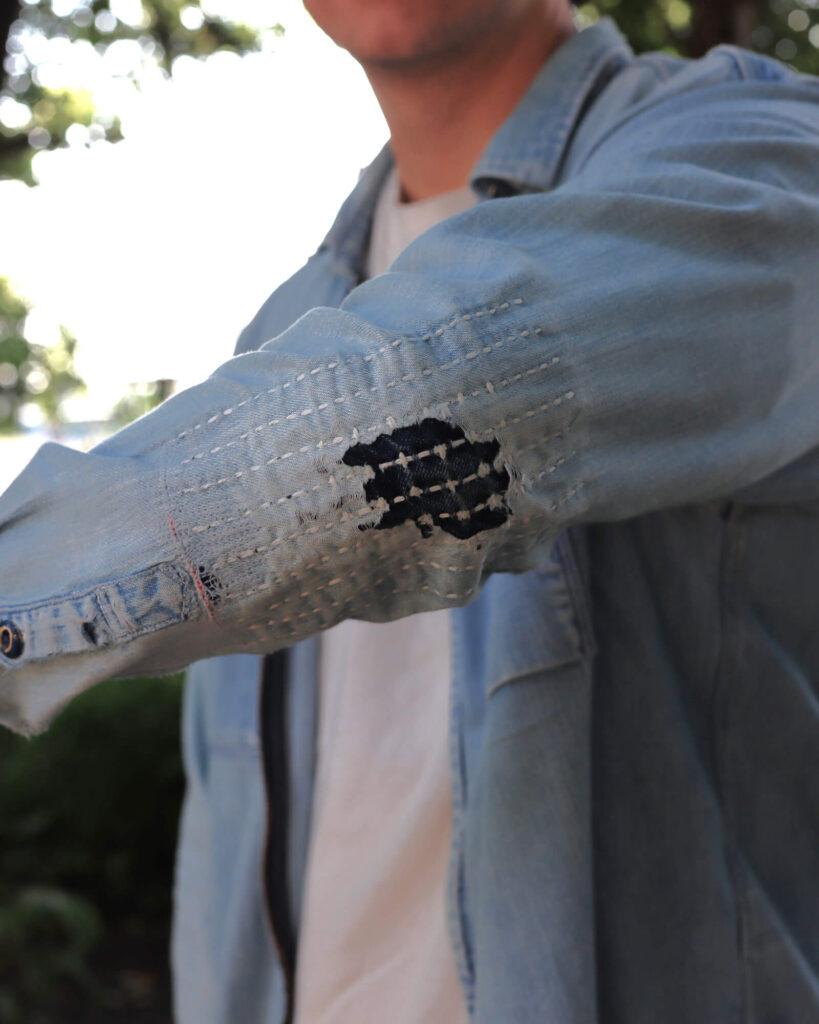
It’s probably the shirt I’m wearing right now, which is made by Kapital. I try not to be overly precious or protective when it comes to my clothing; I have plenty of pieces that have been completely ruined by my kids because children can just be messy, and that’s fine. I just let it go because, at the end of the day, it’s just another object. But this shirt is quite special to me.
On the outside, it’s really nothing fancy but I’ve owned it for about thirteen or fourteen years now, and I’ve repaired it maybe six or seven times. My elbows have gone right through the fabric, so it now features visible sashiko stitching on both arms over large underlying patches of selvedge denim. Even those interior denim patches have faded and worn in over the years, and I’ve had to have the seams hand-repaired as well.
The shirt has softened beautifully, and it carries a sense of nostalgia for me. It reminds me of the earlier days of my career, back when I was trying to create my own luck and build something from nothing. It’s also a great reminder that things can actually improve over time if you constantly iterate, repair, and build upon them, even if everything isn’t perfect along the way. Plus, unlike a lot of the old jeans I have that no longer fit me, this shirt still fits great today.
Is there an object or piece of craftsmanship in your life that holds deep meaning? What makes it special?
I was born and raised in Edmonton, but my parents are originally from very different parts of the world. My dad is from Taiwan and my mom is from England. My dad moved to England when he was sixteen, eventually met my mom in the North of England, and they later moved to London, then to Toronto, and finally settled here.
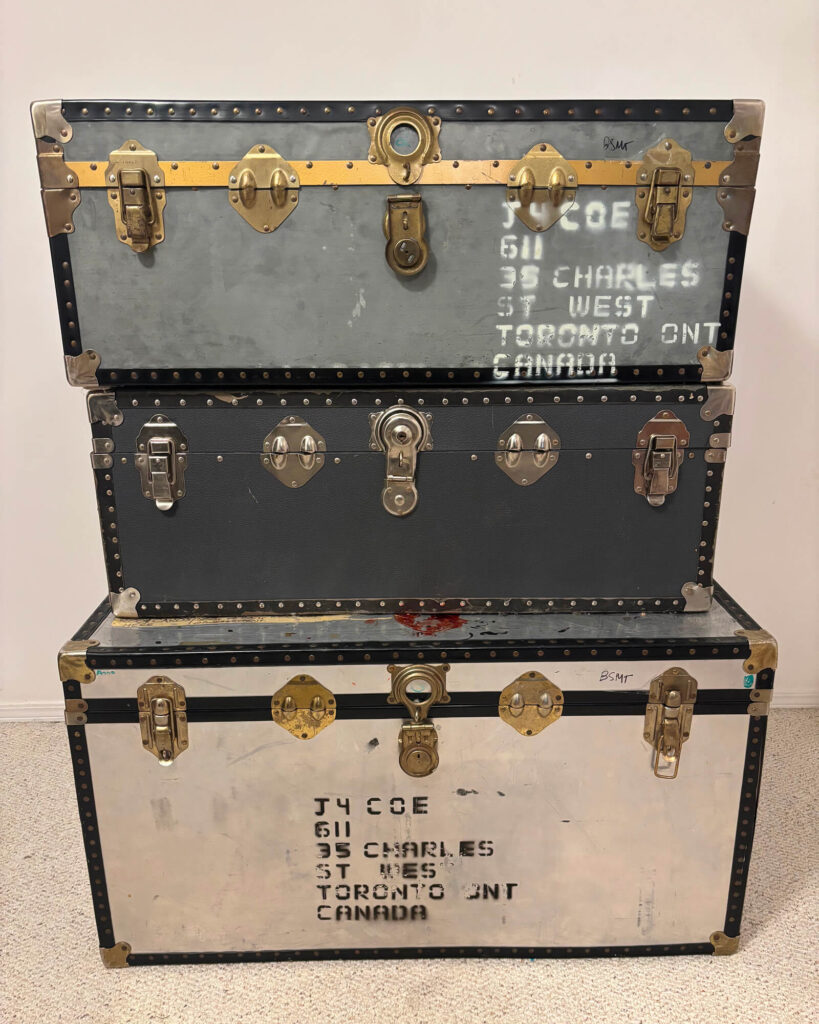
When they made that massive move from London to Toronto back in the 1970s, instead of using standard boxes, it was much more common to pack your life into large travel trunks. They look almost like old steamship chests. They used these massive trunks to move all their belongings across the Atlantic to Toronto, and eventually out west to Edmonton. Not long ago, my parents were downsizing and clearing out some things, and they asked my siblings and me if we wanted them. I immediately said yes, and I still have them today.
These trunks are now around fifty years old and they are massive, roughly the size of my desk. Looking at them, you realize they are incredible pieces of luggage that you just don’t see anymore; they are very difficult to find. They still have my parents’ old addresses written on them, which serves as a constant, beautiful reminder of everything they went through to provide the life my siblings and I enjoy today.
On a practical note, they are so well-made that I’ve actually used them myself when moving houses, and I even use them as coffee tables in my home. Whenever people see them, they often ask if they can buy them off of me because they’ve become quite rare. My parents have gifted me many things over the years that carry value, but these trunks represent an enduring piece of craftsmanship that holds incredibly deep, personal meaning for me.
What are your three favorite books and why?
Even though I’m a dad of three, I haven’t actually read that many parenting books. However, I did read one before my daughter was born called Kids Are Worth It! by Barbara Coloroso. Honestly, it is the only parenting material I’ve ever read that I still think about every single day. When you’re parenting, it can be so hard to remember that even the seemingly little decisions—like how you react to something your kid does that you’re unhappy with—help shape their worldview. You can tell kids what to do all day long and they won’t listen, but they will watch what you and your spouse do and mimic that behavior. This book helped me develop the right framework for hopefully helping my kids grow up to be successful, however they choose to define it, and gave me the tools to help them build a strong backbone to just be good human beings.
My second choice is an absolute classic: Influence by Robert Cialdini. To me, it is an essential read for marketers, but honestly, it’s essential for any human being because in some ways, we are all marketing something, even if it’s just ourselves. The lessons and principles laid out in that book are completely timeless, and I still think about them today when making a lot of different decisions.
The third is a book called The Inner Game of Tennis by W. Timothy Gallwey. As I mentioned, tennis is something I get a lot of joy and value out of, but I can sometimes be a bit hotheaded on the court. I heard someone talking about how this book helps you manage the mental aspects of the game and decided to pick it up. To give a quick summary, the idea is that when you play tennis, you have two selves: Self 1, which is the teller, the conscious mind that gives instructions, judges, and focuses on technique; and Self 2, which is the doer, the unconscious mind and the body itself. Oftentimes, Self 1 dominates with negative self-talk, asking things like, “Nick, why did you hit it that way? What were you thinking?” You constantly hear players talking to themselves out there.
The author explains that you will have much more success in tennis—and frankly, in life—if you can quiet Self 1, quiet that self-talk, and simply trust your body to execute the work. When you reach that state where you are just letting the action happen naturally, you develop what the author calls “relaxed concentration.” You are deeply focused, but not so rigid that you get upset with yourself when things go wrong, or overly emotional when things go well. You just accept what is, operate based on the facts, and stop spinning a narrative. If a ball goes out, it just went out; you don’t overanalyze it or beat yourself up. While it uses tennis as the vehicle, it is filled with profound life lessons that apply to everything. I think the author knew that, too, because he went on to write versions of the “inner game” for football, basketball, and almost every other sport possible.
What are your three favorite restaurants/cocktail bars/coffee shops and why?
While I’ve been incredibly fortunate to travel and visit some amazing spots globally, I will choose three places right here in my city, Edmonton, because it’s where I spend the vast majority of my time.
First, there is a wonderful local cafe and roastery called Ace Coffee. I don’t know their entire backstory, but they also run a pizzeria and sell high-end espresso machines, so they have a lot of deep knowledge when it comes to exceptional coffee and hospitality. Whenever I need to have an in-person meeting over coffee, I tend to head straight there. It’s a beautiful space with incredibly high ceilings that perfectly strikes the balance between sprezzatura and wabi-sabi I mentioned earlier. There is a bit of a clean, brutalist side to the design with its hard surfaces, but they’ve mixed it with natural elements and beautiful imperfections, like exposed ceiling framing made of big, gorgeous pieces of lumber. This high-low dynamic, combined with tons of natural light and greenery, makes it a fantastic environment. And, of course, the coffee is outstanding.
Next is a place called Bar Bricco, an intimate Italian wine and spuntini bar. Here in Canada, they promote themselves using that term to describe a menu filled with little appetizers and aperitifs designed for grazing rather than a single massive meal. On the outside, it looks completely unassuming and modest, but the moment you step inside at the end of a long day, you feel entirely transported. It has the vibe of a great lounge but without any of the stuffiness or pretension; you are immediately put at ease. The food and drinks are amazing, but they have one specific dish—the Agnolotti—consisting of these tiny, bite-sized pockets of pasta where every single bite feels like heaven. The environment is incredibly cozy and relaxing, almost feeling like you’re hanging out in a close friend’s basement. It’s just a great place to unwind with friends.
Finally, there is Clementine, which is a truly fantastic, intimate cocktail bar. It is very small, seating perhaps twenty people or even fewer. It’s the kind of place where you can instantly tell that the staff don’t take themselves too seriously, but they take the craft of cocktails incredibly seriously. They are talented and professional, and love to experiment and have fun with unique flavor profiles. Here in Edmonton, winter can stretch on for eight months of the year, so when you go out for a nice drink with friends, you want somewhere warm where you can just settle in and stay for a while. Clementine is exactly that kind of place; everything is elevated, curated, and exceptionally well done, yet the atmosphere remains completely casual. You can sit there for hours, sipping something nice, and completely lose track of time.


