




This story originally appeared on the Gents Cafe Newsletter. You can subscribe here.
Based in Brussels, Belgium, Mathieu Henceval (@mhenceval) is a consultant in European affairs who finds his primary inspiration in music, cooking, and his Belgian-Spanish heritage. He is a dedicated collector of vinyl records, and a lover of traditional craftsmanship, valuing the history and technical skill behind every object he owns. For Mathieu, dressing well is a form of self-care and a mark of respect toward others, viewing his wardrobe as a visual introduction to his personality. He remains grounded through simple, daily rituals, like the non-negotiable priority of picking his young son up from school every day.
What are your main passions and how do you cultivate them?
My passions are deeply rooted in my family history, but over the years, they’ve evolved into something very personal. First and foremost, there is music. I don’t play an instrument and (for everyone’s sake) I don’t sing, but I was raised on music. My father is incredibly passionate, so our home was always filled with everything from rock to classical.
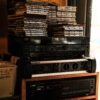
For me, it’s not just about the sound; I love the digging. I read biographies of musicians and watch documentaries because I want to understand how a record was made, what the influences were, and the cultural context of the time. It’s a journey that never ends. While I appreciate the ease of jumping between artists on Spotify, I’m a romantic when it comes to vinyl. I sold all my CDs years ago, but I kept my records: they have a soul that digital can’t replicate.
I also have a great love for cooking. My parents both loved to cook and visit great restaurants, so I grew up thinking it was perfectly normal for a man to be in the kitchen. It’s my way of disconnecting. Preparing a meal for family or friends requires focus; you have to be “in the moment,” which helps the stress of the day fade away. Like music, food is a borderless world. You can travel to a different country every night through a recipe.
I also love watches and clothes; and while it might sound trivial, I often think of a quote by American writer Fran Lebowitz: “I hate money, but I love things.” My interest goes beyond material possession: I am fascinated by the “how” and “where.” How an object has been crafted, where it has been produced, and so on. Since I’m not handy at all, I have a massive appreciation for craftsmanship—tailors and artisans who are still working the same way they did a hundred years ago. It’s a heritage we need to protect.
Finally, there is travel. My mother was a flight attendant, so I was privileged to be on planes from a very young age. It sounds strange, but back then I probably flew more often than I took the train! Spending every summer at our family house in Spain exposed me to different cultures early on. Even now, there’s a specific kind of joy I feel the moment I step onto a plane, knowing I’m heading somewhere new.

How did you first develop an appreciation for style?
My appreciation for style began at home. My mother was a deeply elegant woman who dressed with intention; she understood the nuances of the occasion and always knew exactly what fit her without ever overdoing it. My father, too, was always elegant, though his relationship with clothing was more functional. In his era, suits were first and foremost part of the dress code for work.
Still, I watched him select his own shirts and loafers with care. It taught me early on that dressing is a form of self-care—we don’t need to rely on others to project who we are. Even though he never went bespoke or spent a fortune on clothes, he understood that making an effort is a way to present yourself and, more importantly, a way to show respect to others.
For me, style has been a journey. As you usually do, I made a lot of mistakes, but my evolution has always been driven by curiosity. When blogs and social media arrived, I started digging into the technical side of menswear. I remember the moment I first learned about half-canvassed versus fused construction and thinking, “Wait, how is my suit actually made?” I had to unlearn old myths, like the idea that black is an easy color to pair (it isn’t), and start understanding the architecture of a garment.
I have a friend from Apulia here in Brussels who always looks perfect. Whenever I ask him about it, he just shrugs and says, “I just took what was in the wardrobe.” It’s that classic sprezzatura—making something that requires thought look entirely effortless. Watching him, I realized that style isn’t actually that complicated; it’s primarily a question of fit and fabric.
Nowadays, I view dressing as a pleasure—I am “dressing my day.” I don’t want to overthink it to the point of vanity, but I like the seriousness and the playfulness that a good outfit provides. It takes a bit of confidence to dress with classic intentions today. In a world that has become overwhelmingly casual, wearing a jacket, a tie, and a pocket square makes you an outlier. But I enjoy being “out of the box.” It’s a small ritual that genuinely makes my day.

What does “being well-dressed” mean to you?
At its simplest, being well-dressed is a form of self-expression. Much like the music I listen to, the way I dress is a piece of who I am. It isn’t trivial; it’s a visual introduction. But beyond that, it has to do with the concept of respect. Whether it’s a wedding, an interview, or just a nice dinner, dressing up is a way of acknowledging the importance of the moment and the people you are with. I’m a believer in the “come as you are” philosophy for the office—if you don’t want to wear a suit, that’s fine—but I also want the freedom to wear mine.
There is also a certain “equality” in dressing well. You often see a couple out at a restaurant where the woman has clearly dressed with great intention and care, while her partner looks like he barely thought about it. I think we should demand more from men. Presentation isn’t a feminine pursuit; it’s a human one. Life is fragile and every day is an occasion. Even if it’s just wearing a nice jacket to pick up my son from kindergarten, I do it for myself.
I recently read a story about a Japanese tailor who told a young client, “In this suit, you will finally look like an adult.” It struck me because, in our modern world, many people seem afraid of looking like adults. You see 40-year-old men on the tram in Brussels dressed exactly like 15-year-olds. I don’t want my son to dress like me, but I certainly don’t want to dress like him.
This brings to mind a philosophy often associated with Giorgio Armani: you want to be remembered for what you said, not just what you wore. You don’t want to be flashy or “noisy.”
Take a look at someone like Japanese style icon Noboru Akuzawa. Some might call his style “boring” because it’s very restrained, but it is incredibly elegant. You don’t notice him the second he walks into a room because he isn’t making noise, but you certainly don’t forget him once he leaves. That is the ultimate goal: to be restrained, elegant, and timeless.
Much like the music I listen to, the way I dress is a piece of who I am. It isn’t trivial; it’s a visual introduction.
What’s a personal ritual that keeps you grounded?
If you had asked me this three or four years ago, my answer would have been entirely different. Today, the ritual that truly keeps me grounded is taking my son to school every morning. It sounds like a cliché, but there is a profound gratitude in being a father. Because I became a parent later in life, I don’t want to miss a single second. I treat picking him up as a non-negotiable obligation in my agenda.
Cooking is another anchor for me. It is a daily necessity, but also a great escape. I have a theory that if you put on great music while you cook, the pasta actually tastes better. It’s also interesting to see how the “paternal” image has shifted. A generation ago, a father might have been associated with cigars, the newspaper, or a glass of whiskey. Today, being the one who puts food on the table is what keeps my feet on the ground. It’s a humble, repetitive task, but it’s where life happens.
And, of course, there is always music. It is playing in my car and nearly always in my house. My kid already learned to love vinyls: he saw me one Sunday morning scrolling on my phone, as I wanted to stream some music on the stereo. When my boy heard the music and looked at the vinyl player to see no vinyl was playing, he pointed at the record player and told me “No dad, it’s better here!”
What’s a place that holds significant meaning for you, and why?
For me, that place is Spain. I like to think that I was partly raised in Spain: every summer of my life, since the moment I was born, has been spent there, because my maternal grandparents bought a house in Spain in the mid-60s.
I remember spending the entire month of July there with my brother and my two cousins, living out the kind of perfect summers you only see in movies. My parents would join us in August, and eventually, they even built their own house in the same area. Today, I find a different kind of joy in taking my son to those same beaches and sharing those same daily rituals with him.
My connection to the country runs much deeper than just summer vacations. I studied the language, spent my Erasmus year in Madrid, and lived for two years in the Basque Country. I even had a long-term relationship with a Spanish woman, which took me further into the culture.
My Spanish friends in Brussels say that I am a third French, a third Belgian and a third Spanish. And somehow I feel that every day. I read Spanish newspapers and books, and the moment I’m with Spanish friends, the language just flows. Put me on a plane to Spain, and I’m a happy man. It’s a core part of my identity, and I’m looking forward to the day my son learns the language so he can carry on that family connection.

If you could have dinner with any historical figure, who would it be and why?
This was a tricky question for me because, my ideal dinner table wouldn’t just be one person, but a collection of voices that represent the values and passions I hold dear.
First, I would invite the French lawyer Gisèle Halimi. She was an incredibly inspiring figure who did monumental work for women’s rights. Even today, equality is something we must constantly push for, and her resolve is a massive source of inspiration.
Because I’ve lived in Brussels and worked in European affairs for twenty years, I would also invite Jean Monnet, one of the founding fathers of the European Union. What fascinates me about him—beyond his achievements—is that he chose to stay in the shadows. He believed he was more useful behind the scenes than in the spotlight. In an age of soaring egos, there is something deeply admirable about someone who says, “I don’t need to run for election; I just want to be useful.”
Of course, being a music obsessive, I’d have to fill the remaining seats with the artists who have shaped my world. Bruce Springsteen, Joan Baez, and Patti Smith would all be there. I’ve followed them in concert for years, but I’m drawn to them for more than just their music: it’s what they embody as people.

Is there a particular item in your wardrobe or accessory that holds special meaning for you?
Yes. It’s the one thing I would grab if there were a fire in my house: a jacket I had made in Madrid in the fall of 2018. It’s from a Spanish house called Oteyza, and it was my first venture into made-to-measure. More than that, it is an object that embodies everything I love about Spanish culture. At the time I ordered it, I was going through significant personal changes, and the process of creating this garment became grounding for me.
The experience was so profound that when I returned to Brussels, I felt a need to share it. I reached out to the Spanish Embassy, and together we organized an event to welcome the couple behind the brand to the “heart of Europe.” We showcased their craftsmanship and the unique story of their house, a brand I had actually first discovered on Instagram right as they were gaining traction at Pitti Uomo.
The jacket itself is quite different from my usual attire; it’s not as “classic” as the rest of my wardrobe, so I don’t wear it every day. But that isn’t the point. I love it because of the period it represents and the people behind it. It’s a piece of Madrid that I get to keep with me in Brussels, a physical reminder of a specific chapter in my life.

What’s an object you’d love to pass down to the next generation?
First and foremost, it would be the vinyl collection. Most of these records were originally my father’s, and I grew up looking at those covers while he’d say, “You have to listen to this one.” When the day came that he told my brother and me, “I’m giving you my collection to share,” it meant the world to me.
Now, I’m living out a dream I had long before I even became a parent. Some fathers dream of waking up at 7:00 AM on a Saturday to drive their kids to football practice, but my dream was sitting on the sofa, listening to The Rolling Stones or The Beatles with my children. That is exactly what is happening now; we sit together, and he helps choose the next record.
The other objects are my watches. My interest in horology started later in life, but it has become a true necessity. If I leave the house without a watch, I feel naked. The watch I’m wearing today, for example, is particularly special because I’ve had my son’s name and birthdate engraved on the back. My hope is to pass these pieces down to him one day. Like vinyl, mechanical watches are timeless. They are some of the few things that truly survive the passage of time.

What are your three favorite books?
I wouldn’t call myself a voracious reader, but these three books have made a profound impact on me over the last few years.
Just Kids by Patti Smith: She is an extraordinary artist. I love the way she writes, and there is a deep sensibility and a raw beauty to her prose. Just Kids is a remarkable look at her relationship with Robert Mapplethorpe and the grit of the New York art scene in the late sixties and seventies. It’s a book about devotion, art, and the struggle to find one’s voice.
The Disappearance of Josef Mengele by Olivier Guez. This is not a “funny” or lighthearted book, as you can imagine from the title. It follows the years Mengele spent hiding in South America, but more importantly, it serves as a necessary warning for every generation. There is a quote by the author that stayed with me: “Man is malleable.” We should always be wary because we are not inherently “better” or more moral than our ancestors. We must never forget what happened, not just as a matter of history, but as a reminder of how easily human nature can be bent toward darkness.
Une Farouche Liberté by Annick Cojean. I grew up in a generation where my mother, working as a flight attendant, navigated a very male-dominated environment. She faced a lot of quiet misogyny and machismo without always being in a position to speak up. This book retraces Gisele Halimi’s work as a lawyer and activist, and reminds us that the fight for equality is far from settled; there are always forces trying to pull us backward.
Interestingly, my three-year-old son is always picking up this book. It has no pictures, and obviously, he can’t read yet, but he’s drawn to it. I tell him, “One day, you’ll have to read this, because it says a lot.” I truly believe that equality cannot be defended by women alone. If men aren’t on board and actively involved, we won’t get anywhere. It’s a lesson I want him to carry with him.
What are your three favorite movies?
Taxi Driver: I saw this a long time ago, but it has never left me. Robert De Niro and a young Jodie Foster are simply haunting. It’s a masterpiece that captures a very specific, dark energy of New York.
In the Name of the Father. I am a huge admirer of Daniel Day-Lewis; I think he is one of the most remarkable actors of our time. This film is so powerful, and the way he portrays the struggle for justice is incredibly moving.
Phantom Thread. This is perhaps the most “recent” film on my list. Daniel Day-Lewis plays a meticulous, high-society fashion designer in 1950s London. I absolutely love the aesthetics—the refined British elegance and the obsessive attention to detail. I highly recommend it to anyone who values the “why” behind the things we make.


