


This story originally appeared on the Gents Cafe Newsletter. You can subscribe here.
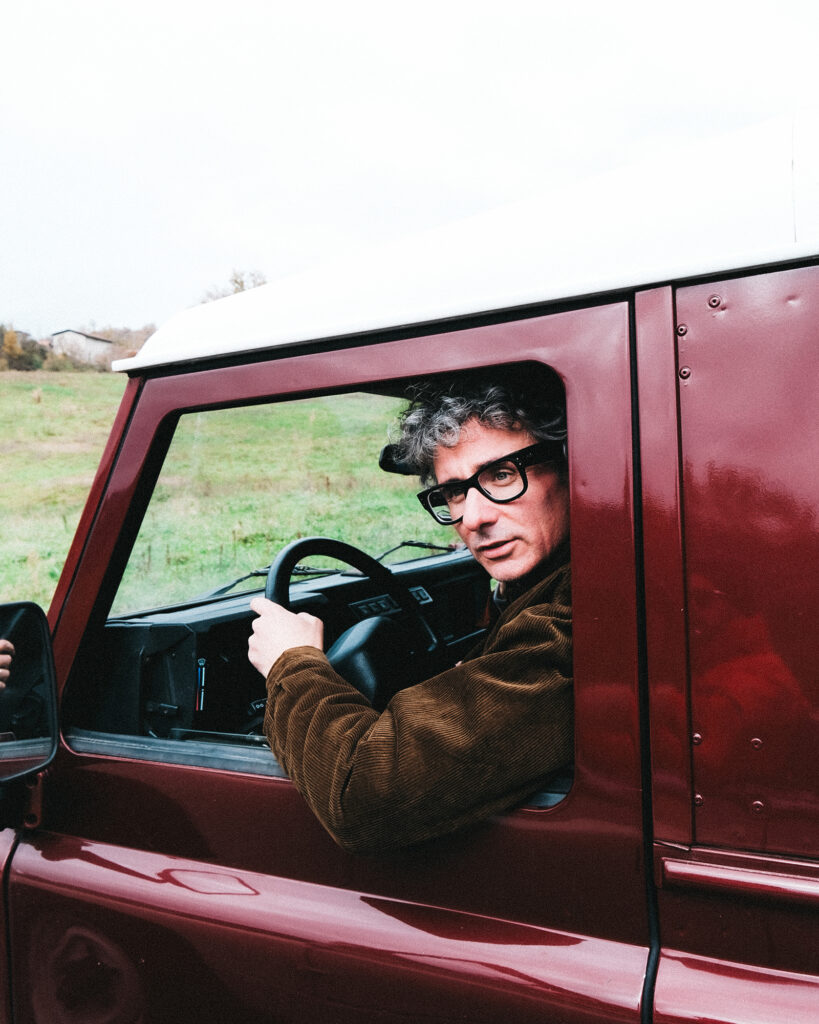
An early childhood memory of an Italian singer driving a sportscar (and getting stuck in front of his home) ignited a lifelong passion for engines in Pier Francesco Verlato, and turned him into a seasoned biker by the time he was in his mid-twenties.
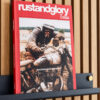
After embarking on countless adventures, alone or with friends, he decided to start sharing his travel tales, chance encounters and much more on a blog, only to realise digital channels weren’t the right fit for his very analog travel philosophy: that’s when Rust and Glory evolved into a printed magazine.
In this Scent of Paper interview, Pier Francesco recounts the origins of his love for classic cars and motorcycles, looking into how real travel begins when you slow down and why, for once, he was happy to contradict his “Perfect is boring” mantra…
What is your very first memory associated with the world of motors, and what kind of impression did it leave on your memory and the way you look at things?
It’s funny to think back on it, because my first memory of motors comes from a time when I probably wasn’t even walking yet. We lived in Casal Palocco, a neighborhood outside Rome between the city and the sea, where I stayed until I was ten. It was a closed, sprawling residential community with security gates at both ends. As often happens in coastal central Italy, the maritime pines lining the streets had roots that constantly tore up the asphalt.
A very famous singer of the era, Little Tony, used to enter our neighborhood driving one of his many sports cars to visit a friend. He would regularly get stuck on the asphalt raised by those pine roots and have to call for help. Being out on those private streets with my mother, or later running around freely on roller skates, skateboards, and playing football with neighborhood friends, I frequently witnessed these rescue missions.
While that was a colorful recurring scene, it genuinely formed my eye for observation, my appreciation for specific vehicles, and my eye for design. Other neighbors drove fantastic cars—air-cooled Porsche 911s, Alfa Romeos, and the marvelous Citroën DS, which my father also owned until it was unfortunately stolen. My passion for motors is tied almost entirely to design and aesthetics, with virtually zero interest in pure performance. I would literally stand there open-mouthed. Experiencing objects like a Porsche 911, a Ferrari Testarossa, or an Alfa Romeo Spider was like seeing art in motion. I appreciated them for what they communicated aesthetically.
Motorcycles came later. I didn’t grow up in a family of bikers or motoring enthusiasts—my father simply bought the DS because he loved its design. But during middle school, my interest in two wheels suddenly ignited out of nowhere. I bought a magazine called “Moto Junior” and studied every single article down to the comma, cover to cover. When my mother found it, she threw it away, as she didn’t want me to ride a motorbike; this, naturally, had the opposite intended effect and only fueled my curiosity further.
When my mother found it, she threw it away, as she didn’t want me to ride a motorbike; this, naturally, had the opposite intended effect and only fueled my curiosity further.
Once you got your first motorcycle, how did you cultivate and evolve your passion?
I pursued it in a somewhat erratic and intense way. As a teenager, I was influenced by the culture around me: performance and speed were what mattered to my friends. We weren’t racing professionally, but we rode fast on our scooters—Aprilia, Piaggio Zip, Honda Dio. Looking back, I’m grateful for that period because taking those risks taught me how to handle two wheels, and like many of my generation, I was lucky to have a very attentive guardian angel…
While my friends’ upgrades were driven by performance, my mind kept drifting toward classic design. During university, I bought a 1979 Vespa 125 Primavera from a senior law student. That purchase cemented my love for mechanical purity. I kept the Vespa completely original. I loved the fact that it didn’t even have a battery—meaning there was nothing to drain while sitting idle. You could leave it parked for weeks and even months, pour in fresh fuel mix, and it would kick to life. In fact, after sitting untouched for eight years, it started right up. I’ve always seen these older machines as eternal, built to outlast their original era and be passed down to children or grandchildren.
I bought my first proper touring motorcycle at 25—a BMW—to go on summer road trips across Europe with the same group of friends from my high school scooter days. We covered immense distances traveling through Scotland, Portugal, Spain, and Greece, which truly shaped me as a rider.
Over time, my friends upgraded to modern, high-powered adventure bikes like the BMW 1200 GS. But to me, those bikes felt unnecessarily fast and complex. And while they were taking a step forward into modern technology, I took one back. Around 2013, I sold my touring BMW, bought a much older model, and converted it into a custom café racer. It was the era when Wheels & Waves in Biarritz was taking off and Riders Magazine, a brilliant, visionary publication led by Roberto Ungaro, was at its peak. Riders was a phenomenal editorial miracle and a major source of inspiration for me.
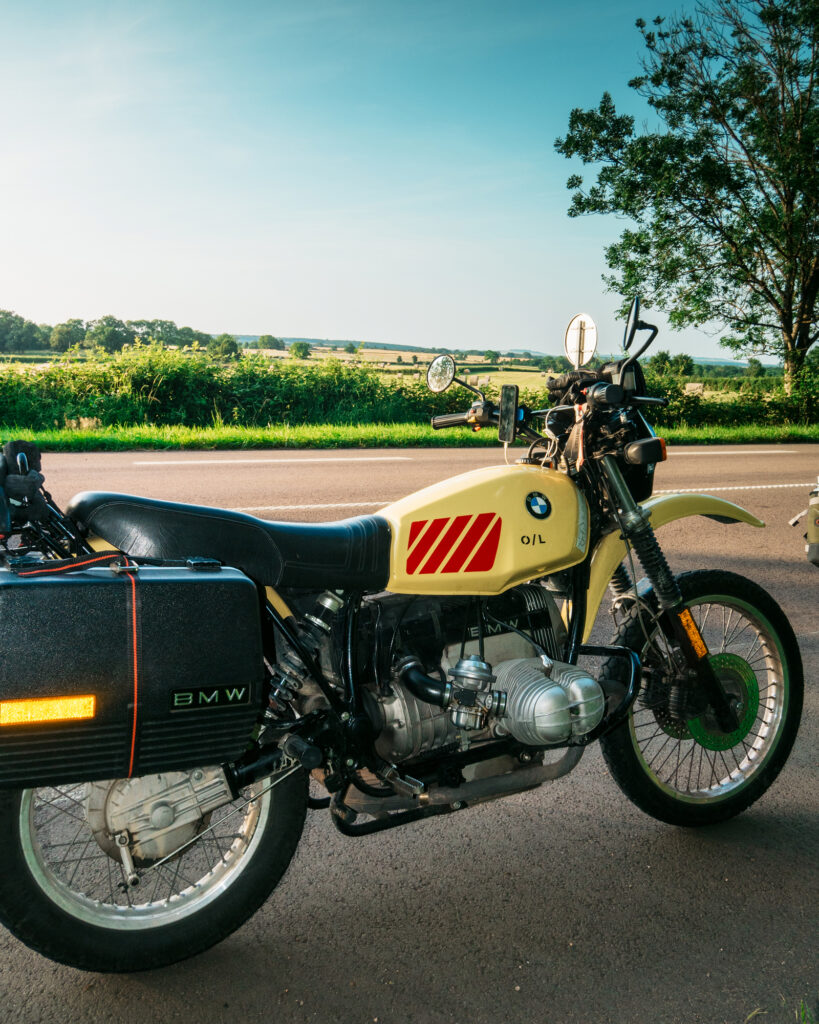
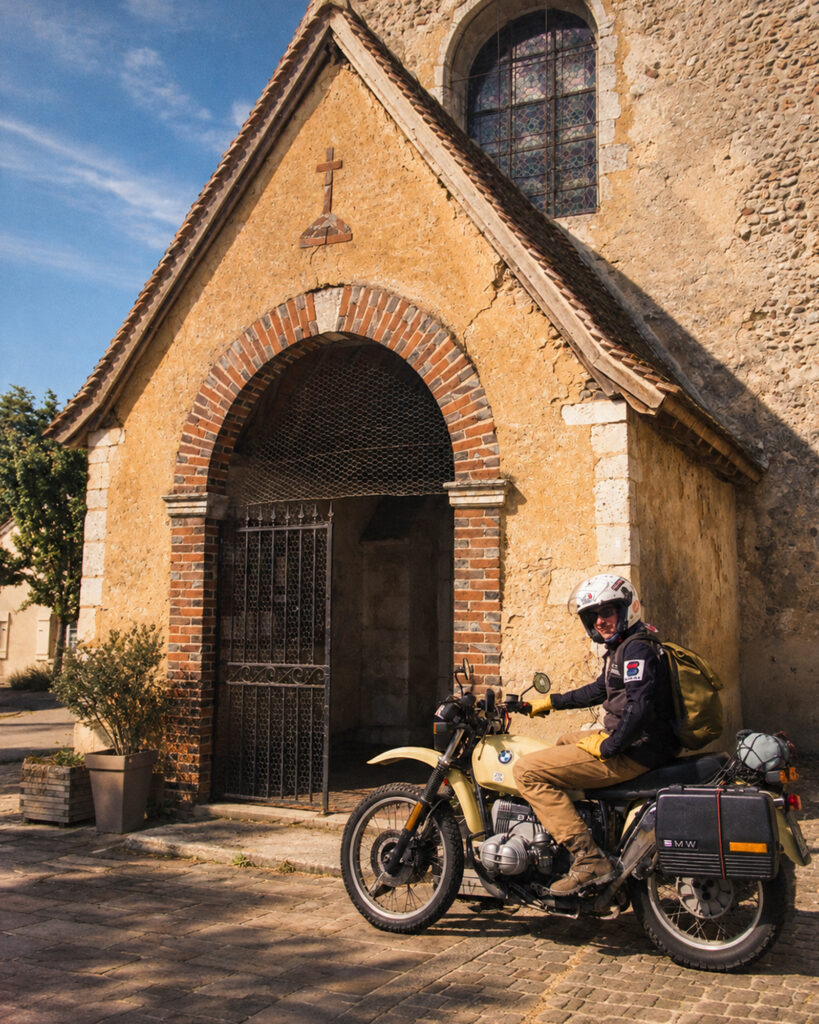
The café racer project ultimately didn’t run or handle the way I wanted, so after a couple of years, I sold it to a guy working at Gucci and built the yellow classic BMW—”La Giallona”—in 2016. I’ve owned other bikes since, but if I ever had to sell everything and keep just one vehicle, it would be the yellow one.
Was there a specific moment, a journey, or an object encountered along the way when you realized it was time to bring Rust and Glory to life?
I’ve always had a natural drive toward communication, and I like sharing my perspective with people. However, the birth of Rust and Glory wasn’t really calculated; it began on Christmas morning in 2014 when I had a couple of free hours while waiting for Christmas lunch with my family.
It was the era of Web 2.0 blogging—simple, basic, and free from algorithmic complications. You set up a web space, posted what you liked, and shared it via Facebook. I created Rust and Glory on Google’s Blogger platform and posted a feature on a motorcycle. I set up a Facebook page simultaneously, shared the link to my short 10-line blog post, and left for Christmas lunch. When I got home that afternoon, the Facebook page already had a few hundred likes. In those early days, Facebook was an incredible tool for reaching like-minded people.
Around that time, I closely followed several bloggers who inspired me. Primary among them was Paul d’Orléans and his site The Vintagent—he is arguably the world’s leading authority on historic motorcycles, who later went on to evaluate bikes for major auction houses. Another inspiration was The Selvedge Yard, run by a clothing designer who wrote beautifully about past icons like Steve McQueen and the California desert racers. There were also custom motorcycle outlets like Pipeburn and Bike EXIF, which published custom builds daily. I used to translate and curate those stories in Italian for my audience.
The Facebook page took off quickly, gathering thousands of likes within three months. I added an Instagram account in late 2015. That tri-fold setup—website, Facebook, and Instagram—remained the core structure until 2023, when I started building our newsletter. That momentum eventually laid the groundwork for launching the physical print magazine in 2025.
What does the combination of two such evocative words as “Rust” and “Glory” embody, and how did the intuition for this name come about?
The name came to me in a flash of illumination. I loved how it sounded, and then I realized the depth of its meaning afterward. I did a reverse-engineering process on a name that had simply popped into my head out of nowhere.
I really liked the counterpoint between rust, which represents decay and something deteriorating, and glory, which is its exact opposite. But the meaning evolved beyond just a contrast between decay and triumph. It suggests that within the rust itself, there is goodness and glory. In the marks of honest wear, in the fact that an object has been used for decades and handed down through generations, there is a projection toward timelessness and endurance.
I’ve conducted formal naming exercises many times in my corporate career for companies, startups, and new products through structured brainstorming sessions. But with Rust and Glory, there was no strategic process or creative framework. It just surfaced naturally: it was likely inside me all along.
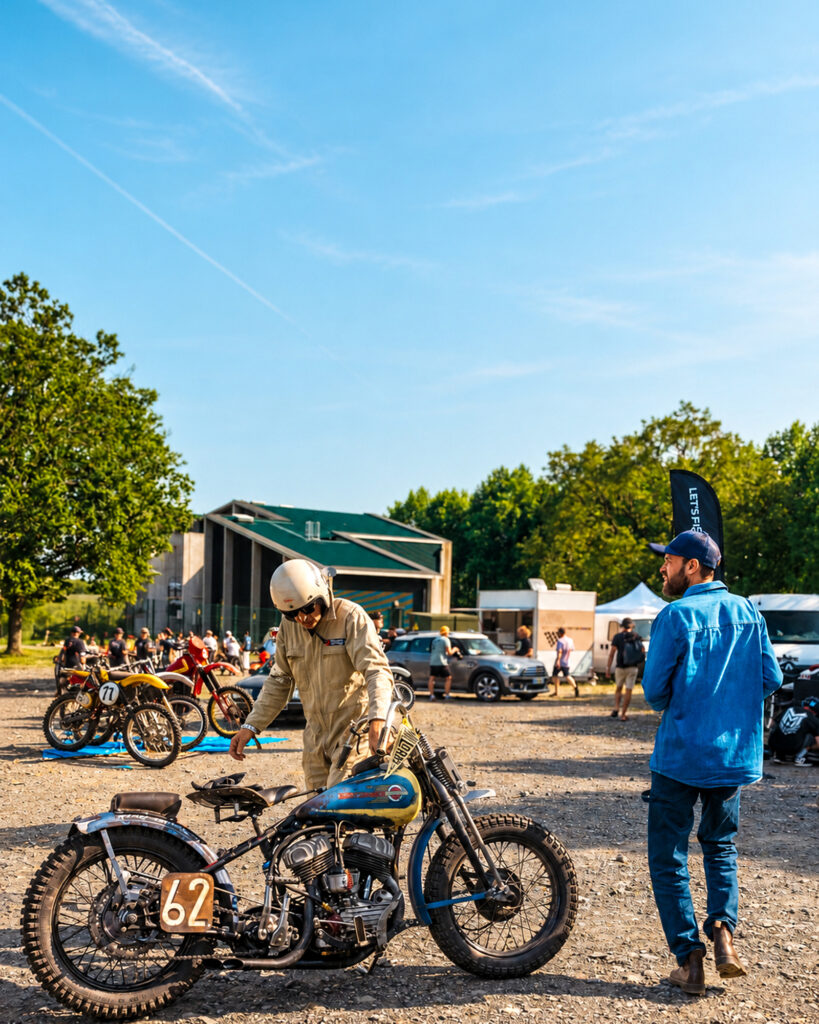
You often talk about the fascinating idea of traveling at a “carburetor rhythm.” How does this philosophy guide the way you traverse places and experience the open road?
Many motorcyclists love speed and focus intensely on technical perfection, nailing every apex and drawing precise trajectories through every curve. Their full concentration goes into the mechanics of riding fast. Even in a small group of three riders, there’s always someone pushing the pace.
My focus, however, is entirely on the environment and the journey itself. Aside from necessary highway stretches to get to interesting regions, real travel for me happens at 50 mph. At that speed, you become an integral part of the landscape. Unlike sitting inside a car, riding a motorcycle exposes you fully to the elements: you feel the sudden shift in temperature when moving from sunlight into the damp shade of a forest, you smell the trees or the sea, and you adapt naturally to the changing conditions of the road.
I travel on vintage machines—”La Giallona” is forty years old. When riding in a mixed group with modern bikes, a conflict arises: either you force an old machine beyond its comfort zone to keep up, or the others have to slow down for you. In both cases, the joy of the ride is compromised because your attention shifts entirely to pushing the machine rather than observing what lies over the next mountain pass. The ideal journey is either solo or with a companion who shares your exact pace and curiosity.
There’s also an element of unpredictability with classic bikes. Minor mechanical quirks become part of the adventure and fuel the stories you tell later. Extreme examples are riders on pre-war machines or hand-built vintage choppers from the 1940s and 50s, who might only cover 100 kilometers a day because a quarter of their time is spent making roadside repairs. On the opposite end is the modern tourer on the latest high-tech adventure bike. I prefer the middle ground: riding a classic bike that is reliable enough not to break down, while remaining slow enough to genuinely absorb everything around me.
Rust and Glory began as a digital project around which a passionate, like-minded community formed. What was the moment you realized those stories needed the weight, smell, and physical presence of paper?
Beyond my personal love for printed media I have to credit digital channels for building the initial community that made a physical publication possible. Facebook allowed us to grow very quickly in those early years.
When I sat down in 2023 to structure the future of Rust and Glory more deliberately, I noticed a fundamental contradiction. Here I was, advocating for slow travel, celebrating eternal mechanical objects, and using motorcycles as a lens to explore authentic human lives and slow-cooked stories. But, I was delivering all of it through non-permanent digital channels.
I realized those stories deserved a completely different tempo. They needed the weight and texture of something permanent—a tangible volume that sits on a bookshelf rather than a post buried by next week’s digital newsletter. The physical medium simply matched the soul of the content far better.
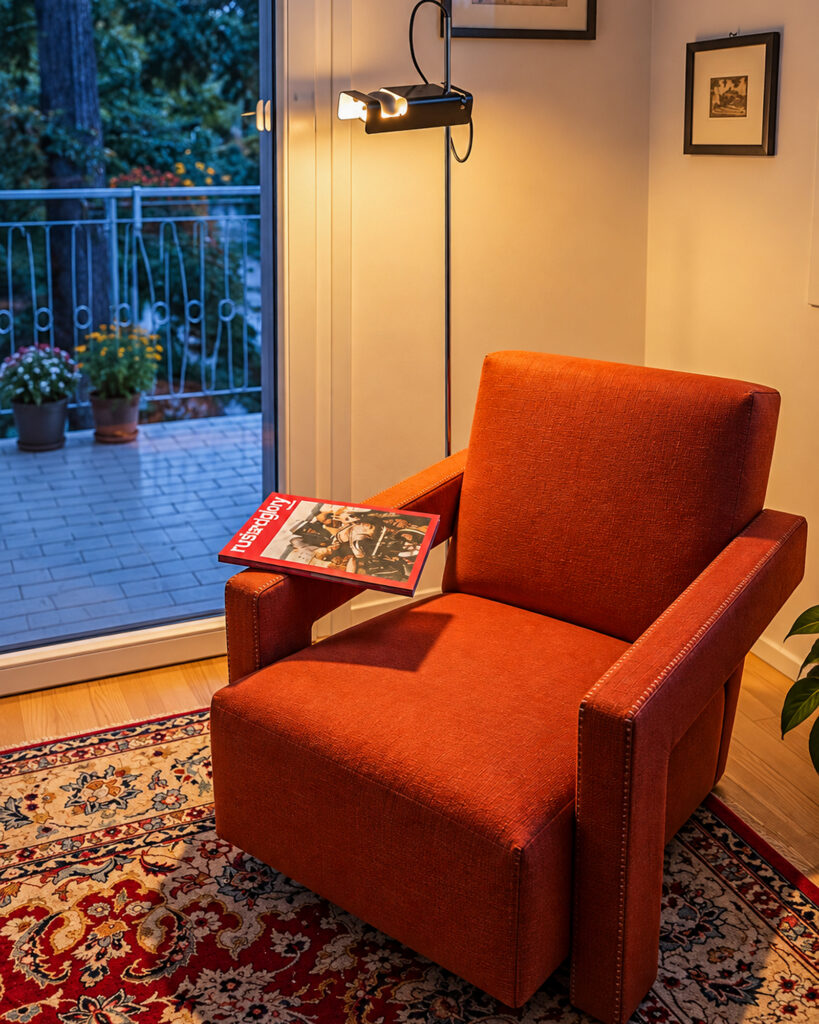
Anyone opening the magazine immediately encounters a precise manifesto: “Perfect is boring.” What does this phrase mean to you?
Out of all the stickers available in our store, “Perfect is Boring” remains by far the most requested. So many people see themselves reflected in this concept.
To be clear, it doesn’t mean doing things poorly or accepting carelessness—we produced Rust and Glory with almost maniacal care and attention to detail. Rather, it means that sterile, standardized perfection ends up being completely forgettable.
Character comes from imperfections: a slightly grainy photograph, a scratch on a vintage car door earned through decades of real use, or a life choice that isn’t entirely conventional—like someone abandoning a corporate trajectory to become an artisan. While perfection offers a sense of sterile safety, it rarely tells a story that stays with you. Imperfection, on the other hand, contains real life and human stories worth telling.
For me, striving for absolute perfection in today’s world often leads to conformity. I’ve always been drawn to outsiders and voices that sing out of tune with the crowd. In that sense, I reject perfection as a form of homogeneity, and I find the bearers of those small, honest imperfections far more interesting to write about.
Flipping through the magazine, a very clear common thread emerges. What criteria did you use to stitch together such diverse stories?
That was—and will continue to be for future issues—one of my main worries: ensuring the magazine maintains a coherent logical thread. But when you look at it as a whole, it hangs together well. Flipping between different topics actually creates a dynamic flow, something like a jazz concert I suppose.
The underlying thread always comes back to the human element. We aren’t technical journalists or bike testers; motorcycles are simply the excuse, the lens through which we look at people who have built their lives around something they truly believe in. We seek out individuals who refused to conform to the norm, following a strong personal calling instead. They might be mechanics, artists, or artisans—people who fiercely value their personal freedom and have translated it into a trade, a craft, or a way of life.
We consciously avoid featuring people just because they are currently riding a wave of fame. As a small confession, I’m heading to Los Angeles in early October to gather material for the second issue of Rust and Glory, which comes out between December and January. While organizing the trip with a local contact in the vintage motoring scene, he suggested visiting a world-famous customizer. I turned it down, opting instead for a lesser-known builder. Everyone has already covered some “Giorgio Armani” of custom bikes. I would much rather visit the equivalent of a Hedi Slimane—someone doing something genuinely distinct and under the radar.
Ultimately, we want to stay far away from cliché and offer something fresh to our readers. As my good friend Andrea Chiaravalli puts it, our readers aren’t purists obsessed with only one brand. They are open-minded enthusiasts who appreciate vintage motorcycles with genuine character. By looking beyond the obvious, we can introduce them to fascinating stories that would otherwise never reach an Italian audience.
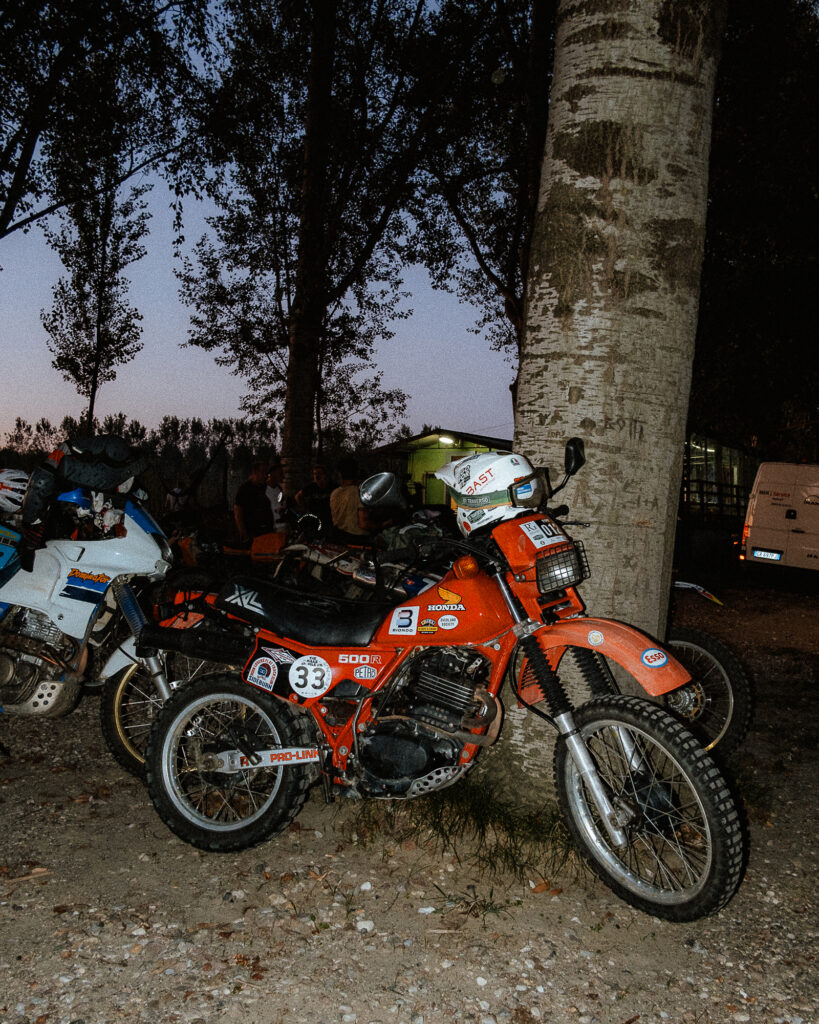
Among all the shots contained in this first issue, which one do you feel is most representative of the soul of Rust and Glory, and why?
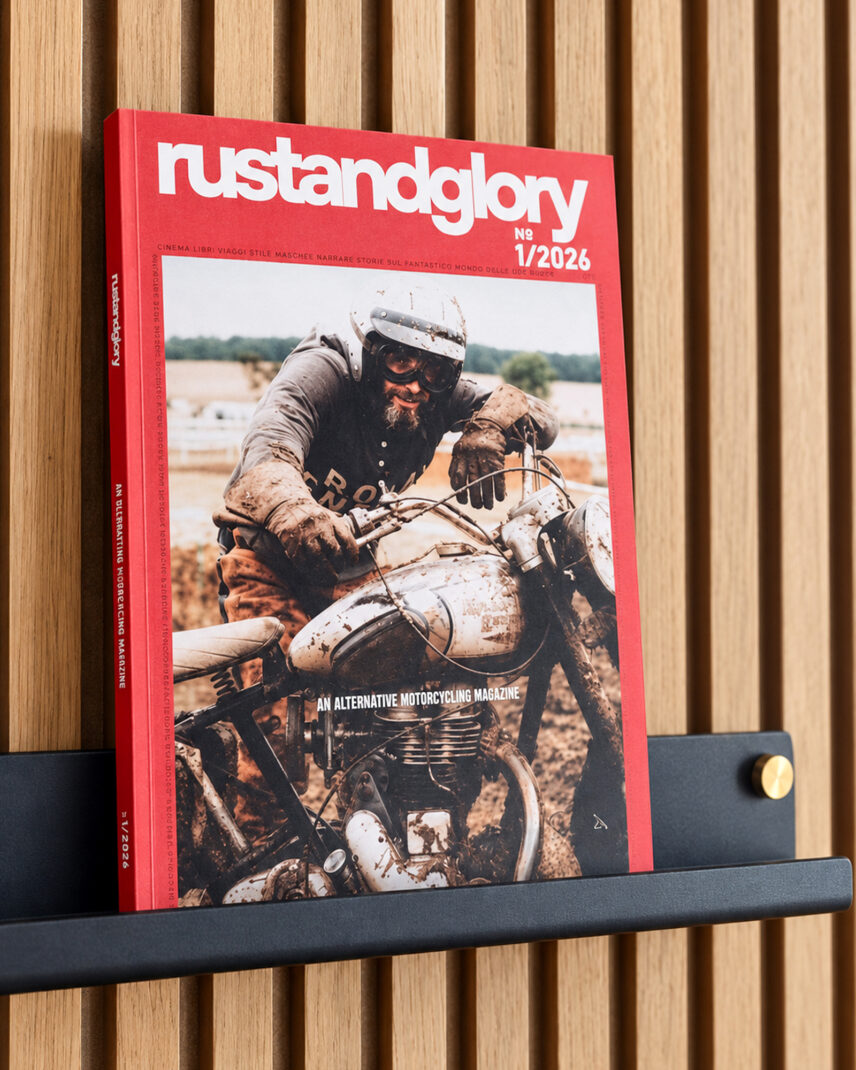
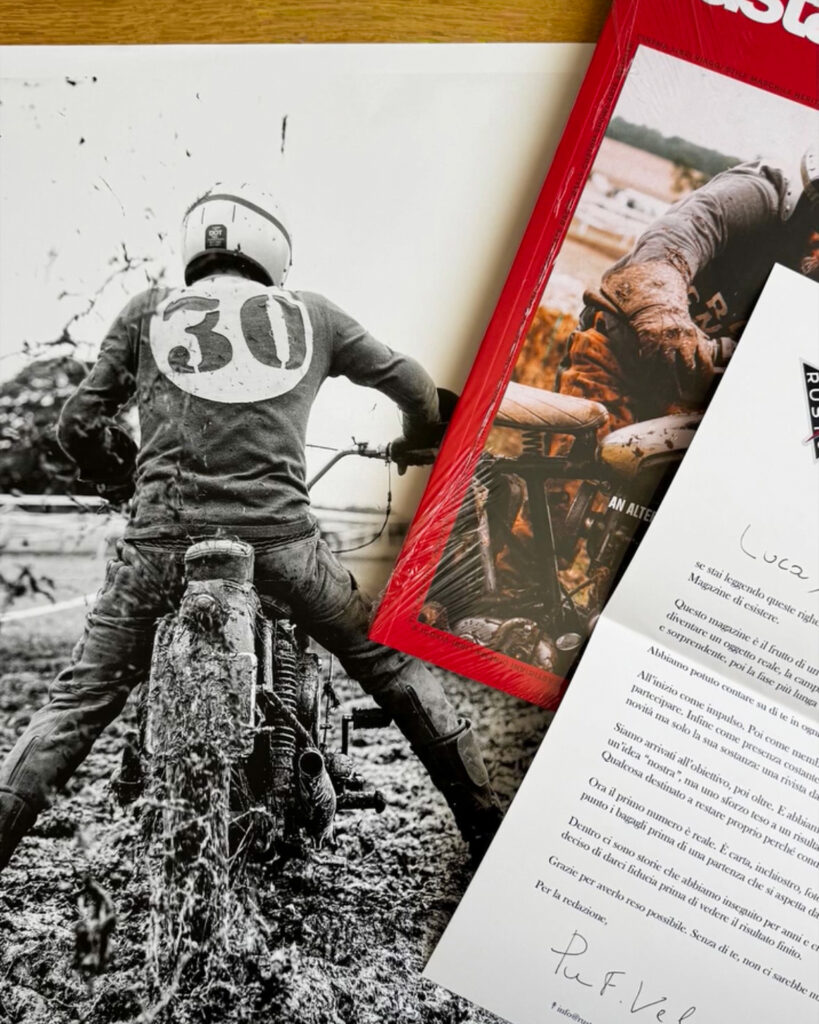
I’ll pick two. The first is the cover shot featuring Nico, a French guy who lives for his vintage 1940s Royal Enfield. He pushes that motorcycle hard, entering flat track races and riding it in events where an engine that age could easily overheat. He cures and maintains it obsessively, yet he doesn’t hold back from using it to the absolute fullest. We were in England at the Malle Mile event when I took that shot—he and the bike are covered in mud, but you can immediately sense his incredible personal style. A battered, mud-soaked bike ridden by someone with genuine flair represents the exact visual manifesto of Rust and Glory.
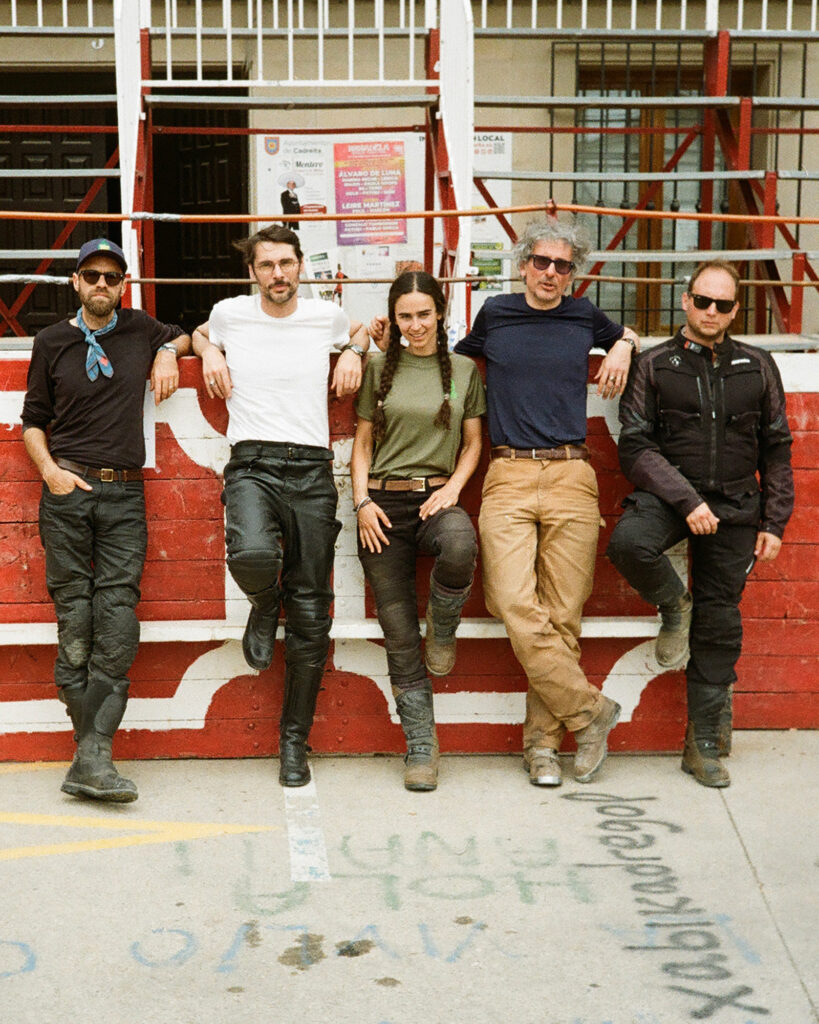
The second shot I hold dear is from the photo essay of our trip to Biarritz. It features all of us—Andrea, Paolo, Francesca, myself, and Luca—inside a small bullring in a tiny, non-descript village in the Spanish Pyrenees. We were exhausted, soaked from the rain, and had just eaten a terrible sandwich. Yet, standing together inside that forgotten little Plaza de Toros, it captured the pure essence of a journey made by an eclectic group of travelers united by a shared goal. That photo essay ended up taking up many pages in the magazine because it felt like a true milestone in making the first issue.
It’s also worth noting that both the cover photo and that entire Biarritz photo essay were shot on traditional analog film. Overall, the first issue is about a 50/50 mix of analog film and digital photography, though my goal is to lean even more heavily into film for future issues.
Is there a behind-the-scenes story, an anecdote from the field, or an unexpected hiccup during the making of the magazine that particularly stayed with you?
At the risk of sounding boring and contradicting my own “Perfect is Boring” mantra, everything went remarkably smoothly for the first issue, so there weren’t any major disasters that turned into epic survival tales.
However, something wonderful consistently happened during our interviews. We have an extraordinary team—my partners Paolo and Andrea are incredibly empathetic—and when we sit down with people, they naturally feel at ease. Conversations would go on for hours to the point where our subjects completely forgot the voice recorder was running.
In those moments, the real magic happened. Amid the long digressions and off-the-record chatter that we obviously had to edit out, they would drop a candid confession or insight that ended up giving profound meaning to the entire article. During our interview with builder Davide Caforio, for instance, the relaxed atmosphere led to digressions about music bands, outsider artists who inspired him, and connections to outlaw motorcycle clubs—details that wouldn’t have surfaced in a standard, formal interview. It simply felt like a genuine conversation among friends.
At the risk of sounding boring and contradicting my own “Perfect is Boring” mantra, everything went remarkably smoothly for the first issue…
Probably, among your readers, there are also non-motorcyclists. When you think of them, what do you hope they take away from reading the magazine?
I hope they come away with an experience of beauty. Without wanting to sound philosophical or claim that Rust and Glory is on the level of an iconic art volume like those by, say, Franco Maria Ricci, I want readers to feel that aesthetic richness.
Whenever I present the magazine in bookstores to friends and readers, I always emphasize that Rust and Glory is a collectible publication. It uses vintage and custom motorcycles—two categories defined by aesthetics rather than pure performance—as a lens through which to explore larger human stories. The motorcycle is merely a starting point to initiate conversations with people who might not even focus exclusively on bikes, but who choose them because they mirror their personal taste and identity.
I hope non-motorcyclists connect with the content and the lives of these individuals, many of whom have made radical, unconventional choices. My wish is that these stories inspire readers to embrace their own passions with greater courage—whether that means pursuing art, photography, music, or embarking on a long journey. In fact, every single article in the magazine is paired with a recommended musical album, reflecting my lifelong love for music.
Ultimately, I want non-riders to experience a journey toward personal enrichment and beauty, rather than a technical lesson on how a 1976 Harley-Davidson differs from a 1975 model, or how a first-series BMW R80 GS varies from a second-series.