




This story originally appeared on the Gents Cafe Newsletter. You can subscribe here.
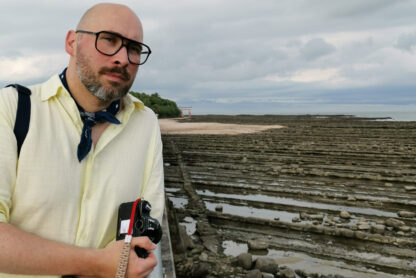
Meet Noel Manti (@noelmanti), the Copenhagen-based founder of Concept Surplus, whose background blends Danish and Italian roots. Noel is animated by a deep fascination with history and fashion, which ultimately led him to the universe of military surplus. This appreciation for the soul of a garment was instilled early on by his grandmother, a professional tailor who is still the “chief commander” of his family at ninety years old, and that Noel regularly visits in their hometown of Sirolo, on the Adriatic Coast.
What are your main passions and how do you cultivate them?
Working in the fashion industry for some time now has solidified my belief that clothing, history, and nature are my primary passions. I founded Concept Surplus specifically because I am fascinated by the intersection of fashion and historical narrative, and I wanted to build something that combined those two factors into a single vision. Growing up in Italy, however, instilled in me a deep-rooted need to be outdoors; for me, passion is about feeling free in nature, but it is also inextricably linked to the culinary traditions and the soul of Italian cuisine. While Copenhagen has its own pockets of greenery, my definition of nature is heavily influenced by my childhood in the coastal town of Sirolo, where I had the privilege of growing up on Monte Conero in an old brick house with a forest as a back garden.
Today, I view Copenhagen as my urban refuge—a city that avoids the exhausting traffic of Milan or Paris—where I can breathe fresh air while cycling through the streets. But when I truly need to cultivate that original sense of peace, I go back to Italy to reconnect with the mountains and the landscapes of my youth.

How did you first develop an appreciation for style?
I believe that style is often something you develop without even knowing it; it is a core element in all of us that is shaped by how we were raised and the people we met in our past. For me, a major factor was my mother, who is no longer with me, but was incredibly stylish and had a significant impact on how she dressed my brother and me. She had a rare gift for seeing trends before anyone else did, and that left a lasting mark on my own aesthetic.
Beyond that, my obsession with history has been a primary motivator. I’ve always been a history nerd, fascinated by old photos of how people dressed in previous eras, and I’ve long admired the effortless elegance of elderly Italian men. My grandfather was a particularly stylish man who always looked perfectly put-together in his suits. Interestingly, my grandmother, who is now 90 years old, was a professional tailor, and her constant presence—repairing our clothes and paying attention to the construction of garments when we were kids—deeply influenced my understanding of quality. And I would say all of these elements blended together with the rugged utility of military surplus to inspire how I dress today.
I believe that style is often something you develop without even knowing it; it is a core element in all of us that is shaped by how we were raised and the people we met in our past.
What does “being well-dressed” mean to you?
To me, it is primarily about feeling comfortable and natural in what you are wearing. I don’t believe being well-dressed means simply copying how someone else dresses; instead, it should feel like a true extension of yourself. You should be able to look at yourself in the mirror every morning and genuinely feel that what you see looks nice, as that creates a sense of confidence in your appearance. Finding your own style is about providing a personal boost before you even step out the door. That moment when you catch your reflection and feel motivated by your choice of clothing has a significant impact on your overall mindset. Ultimately, if you avoid insecurity and embrace a look that feels authentic to you, that is the true essence of being well-dressed.

What has been your most memorable or adventurous trip, and what made it so special?
Until 2016, my life was essentially a constant loop between Denmark and Italy. Even though I lived primarily in Denmark, I spent every childhood summer in Sirolo, six weeks at a time with my father and family. Eventually, however, I realized it was time to see the world beyond Europe. In Denmark, we have this wonderful tradition where many people take gap years after high school to travel before starting university. While most of my peers were heading toward Southeastern Asia I felt a different pull. I had studied Spanish in high school, and because of its proximity to Italian, I felt a cultural and linguistic attraction to Central and South America.
My friend and I sat down and made this wildly ambitious list of about ten countries we wanted to see. We took it to a travel agency and told the agent our budget, and the guy just started laughing at us. He told us that with our budget, visiting those many countries was impossible and that we needed to break it down to at least three. We finally agreed on Colombia, Panama, and Costa Rica. Looking back, Colombia was the country that left the most significant and lasting impact on my soul. This was back in 2016, right before the massive global craze for series like Narcos really took off. It was a unique window of time because the country hadn’t yet become over-saturated with tourists seeking out the ghost of Pablo Escobar; it still felt raw and authentic.
That trip challenged my assumption that material wealth is a prerequisite for happiness. I saw people who, by our standards, were quite poor or had literally nothing, yet they carried constant smiles, they danced in the streets, and they were the most generous people I have ever met. A perfect example occurred in Barranquilla, the hometown of Shakira, during their famous February carnival. Because of the festival, every single hostel and hotel in the city was completely booked. We met a French girl during a hike near Santa Marta who gave us a contact for a woman named Maude. We reached out, and Maude immediately told us we could stay at her place.
She didn’t live in a fancy villa; it was just a classic Colombian house with the protective fences you see in places like California. She cleared out her own children’s room and set up air mattresses on the floor just so we would have a place to sleep. We paid her, of course, but it was a fraction of what a hotel would cost. She treated us like family, showing us around the city and pointing out where the best parties were. Everywhere we went, people wanted to take photos, ask where we were from, and dance with us. That level of openness was incredibly admiring.
Beyond the people, the landscape fed my obsession with the intersection of nature and history. We did a five-day trek to La Ciudad Perdida, the Lost City, walking through the jungle and seeing native Colombians living in ways that felt untouched by time.
Where do you primarily draw your style inspiration from?
My inspiration is a blend of my childhood memories and a deep fascination with the historical relevance of clothing. As I mentioned, the foundation was laid by my mother’s taste, but it has evolved into an obsession with the way history is etched into the garments of elderly men. I often find myself scrolling through the Gramparents Instagram page, which features incredibly well-dressed older men; it reminds me so much of my grandfather, the quintessential stylish Italian man.
I have always viewed elderly people as living history books. They carry so much narrative within them, and when they are dressed with that effortless elegance, it creates a perfect dialogue between the person and the garment. This intersection is exactly why I started Concept Surplus. I am fascinated by how military utility has dictated modern fashion. Design elements we use today, like specific pocket placements, reinforced stitching, durable fabrics, all originated from a need for functionality on the field. Seeing those rugged, functional army pieces refined by the elegance of an Italian man is my “sweet spot.” It’s about recognizing that the best garments today are descendants of historical uniforms built for a purpose.
Elderly people carry so much narrative within them, and when they are dressed with that effortless elegance, it creates a perfect dialogue between the person and the garment.
What’s a place that holds significant meaning for you, and why?
Sirolo is the town I’m from, and it holds a massive piece of my heart. It’s a village of only 4,000 people where everyone knows me as “the son of Paolo Manti”. There is a specific warmth there—everyone recognizes you and greets you. Now that I live in a busy urban city, I feel more connected to Sirolo than ever.
It is also the place where my parents met. My mom was an old hippie in the 80s who went down to Italy and saw this beautiful man in the town square, and the rest is history. Beyond the family connection, the landscape is stunning. We have a fantastic beach called Le Due Sorelle with a breathtaking view of Mount Conero. I can lay on that beach and look at that same view every single year and never, ever get tired of it. It’s the place where I truly feel at home.
If you have made a significant career change, can you describe it? What motivated that decision?
After university, where I studied entrepreneurship, design, and fashion management, I actually moved into the IT sector, working with lifestyle image banks and systems that fashion brands use to coordinate with suppliers. While IT was profitable, I found myself lacking passion. I missed the tactile nature of a physical product; everything in IT exists on a screen, and while that’s practical because you don’t have to manage stock, I realized I missed the “chaos” of physical goods.
The biggest shift was leaving that world to start my own ventures. I first launched Trade 21, acting as a middleman between high-end Italian artisans and Danish brands. I work with incredible suppliers, including Fratelli Conforti for deadstock fabrics and a Tuscan hand-knit supplier where everything is made by local nonnas. While Trade 21 is B2B, I eventually felt a pull toward a B2C model where I could connect directly with the end client.
That led to the birth of Concept Surplus. I saw a void in Copenhagen; while the city has many beautifully curated vintage stores for women, there was nothing equivalent for men. I took a leap, using my savings to make my first buying trips to Italy without any certainty that the items would sell. Luckily, the reputation grew quickly, aided by a feature in Euroman.
My own discovery of this world goes back to a school trip to Berlin during my boarding school year, where I bought my first surplus military jacket. Even earlier, my mother had given me a Che Guevara-style hat that I used to wear with my big curls, decorating it with my own pins and writing. Berlin’s vintage scene was a first-mover in the surplus world, and that interaction stayed with me.

Who’s someone you admire, and why?
I deeply admire my grandmother, Norma, back in Italy. She is the quintessential hard-working woman of her era. We all know the image of La Dolce Vita, but people often forget the other side of Italy in the 30s and 40s, especially in small, rural villages where life was incredibly tough. She came from a family of twelve siblings living in poverty before she met my grandfather. He came from a wealthier background with an architecture firm, but when that company eventually went bankrupt, he lost his motivation to work.
My grandmother didn’t falter. While raising four children, she balanced two jobs: she continued her work as a tailor and took on a second role as a cook in a restaurant in Sirolo. I have immense respect for that resilience. Today, she is 90 years old and her mind is still incredibly clear. I truly believe that her lifelong work and social interaction are what kept her brain so sharp.
I was joking with her on the phone the other day, telling her to think of herself like a vintage car—the bodywork might not be as pretty as it once was, but the engine, her brain, is still running perfectly. She laughed, though she’s still a typical Italian “drama queen” who complains that she doesn’t look like she did when she was thirty. We celebrated her 90th birthday last summer, and seeing her stand there crying and thanking the family was beautiful. She is the chief commander of our family, and I admire her spirit every single day.
What are your three favorite restaurants/cocktail bars and why?
Osteria Sara in Sirolo: This is the restaurant where my grandmother worked during the years she balanced two jobs, and my father was a waiter here in his youth. It is a historical anchor for my family; I have memories of being covered in tomato sauce as a child, eating their incredible sea snails in tomato and rosemary. Although it has a new owner, Vittorio, he has been gracious enough to keep everything exactly as it was, down to the pictures on the walls. It’s the kind of place where you walk through the open kitchen to get to the back, seeing the steam and the movement of the chefs. It feels like home every time we return.
Trattoria Conerello in Ancona: Located on the slopes of Monte Conero, this is a classic osteria that wins through absolute simplicity. There is no sprawling menu; they tell you the pasta of the day, offer some grilled meat and a green salad, and for dessert, it’s a choice between tiramisu, panna cotta, or salame al cioccolato. They harvest everything locally and even produce their own wine. My father worked at the nearby Teatro alle Cave, so we would often join him there for lunch. Every Wednesday, they make a duck ragu that is simply spectacular. It represents the best of Italian dining: local, handmade, and unpretentious.
Kind of Blue in Copenhagen: To take things out of the Italian context, I have to mention Kind of Blue in the Nørrebro district where I live. It is one of the few bars in Copenhagen where you truly feel transported back in time. It’s family-owned, and you’ll often see the owner himself behind the bar rather than a hired hand, which gives it a very intimate feeling. It isn’t a “lounge” in the fancy, modern sense of the word; it’s a cozy space with pillows on the floor where you can just disappear into the atmosphere. In a world that is becoming increasingly corporate, a family-run bar like this is something I really treasure.

What are your three favorite movies and why?
Blow: This was one of the few DVDs we had at our house in Italy, so I watched it every single summer—sometimes three times in one season. Johnny Depp and Penélope Cruz are incredible in it, but for me, the 70s-era Miami and California style is the real star. The costume design is on point; there is a specific scene where Depp walks through an airport in a white suit with his luggage that is just perfect. While the industry the characters were in was dark, I’ve always been attracted to the “free bird” nature of the story and the fact that it’s based on real life.
All Quiet on the Western Front: This is a modern masterpiece of war cinema. It’s a haunting look at the First World War and the power of propaganda. There is a deeply moving sequence at the beginning where a uniform is taken from a fallen soldier, washed, and passed on to a fresh recruit who wears it with pride, having no idea of its history. This detail of how garments can carry the weight of those who came before resonates deeply with me. It’s a brutal, beautifully filmed reminder of what lies behind the glory of war.
Band of Brothers: I know it’s a series, but for anyone interested in history and military utility, it’s essential. It is remarkably well-made and, again, based on true stories. Watching it makes me realize how privileged we are to live in the Europe we have today, thanks to those who fought for our liberation. From a technical standpoint, the costume design is flawless. I recently found a similar level of detail in the series SAS: Rogue Heroes—when the wardrobe is that historically accurate and stylish, it ticks every box for me.