




This story originally appeared on the Gents Cafe Newsletter. You can subscribe here.
It is often said that photography is much more than the camera—it’s the artistic intention and the creative act behind the framing and composition of the image, the fleeting moment precisely captured and the story it recounts.
Sometimes, however, the equipment is just as important: a specific camera can reconnect a photographer with the subject, and a certain lens can allow results that are otherwise impossible. Add to that the sense of community that a brand can foster, and you can understand why Leica is such a household name in the world of photography.
In this Brand Talks Interview, Leica Camera Italia’s Managing Director Renato Rappaini discusses why true imagery needs time to decant, reflects on the legacy of the camera that launched modern 35mm photography in 1925, and reveals what it truly takes to build an authentic cultural community around an iconic object.
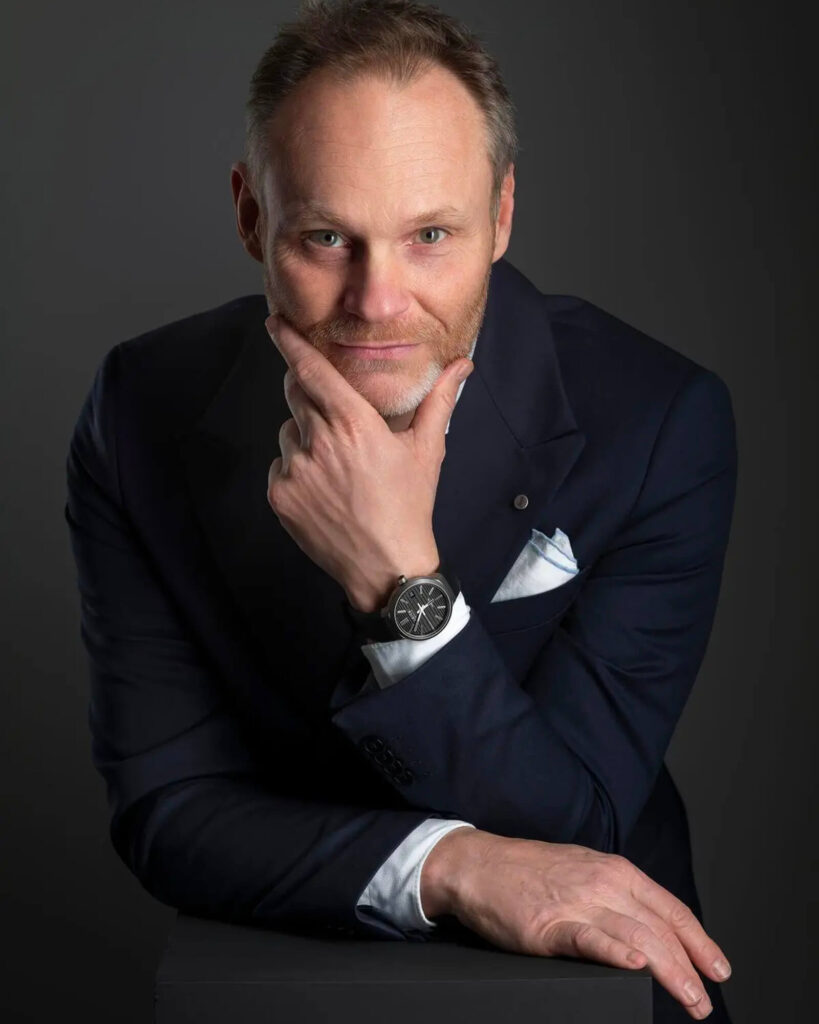
Do you remember your very first encounter with a camera? And when did you realize that photography represented more than just a camera?
Cameras were always around my house growing up because my father worked in the industry—he spent his entire career in the world of photography back when brands relied on local distributors rather than direct subsidiaries. I think I picked up my first camera as a teenager, around fifteen years old. At first, it was more of a playful phase: the appeal of carrying around a camera and using it as a way to explore relationships and document my daily life. I was the guy taking photos with friends and capturing our holidays, but it was purely functional rather than a pursuit of photographic culture.
The moment I realized photography was far more than just a piece of equipment came when I discovered Sebastião Salgado’s book, Workers. That book was a revelation. It made me realize that there is a true art behind capturing an image—that using the technical grammar of photography allows you to tell a powerful story rather than just taking a group photo with friends. Workers documents human labor, often in environments of extreme hardship or difficult conditions, and every image sparks your imagination. You look at a photo and immediately wonder, “What happened before? What happened after?”
Unlike video, which shows you everything, a single photograph is like reading a book: it opens up a narrative, but leaves room for personal interpretation. Two people can look at the same image—or read the same novel—and imagine completely different worlds behind it. That frame opens up an entire universe, and to me, that is the magic of photography.
A single photograph is like reading a book: it opens up a narrative, but leaves room for personal interpretation.
At what point did your passion evolve into a career path, and how did your journey at Leica begin?
I come from a technical background—I attended a technical high school and initially enrolled in engineering at university, though I realized early on that pure technical studies didn’t fully excite me. After taking a year off for military service and to figure out my next step, I decided to start working. I commenced in the services sector before taking a part-time job at a photography store. That role quickly turned full-time as I discovered a natural aptitude for sales and realized that business was the path for me.
After a few years, I joined a distributor as a product specialist, eventually becoming sales manager and launching my career in the photographic industry. I did leave the field briefly to serve as country manager for an Italian electro-medical company when I felt I had hit a growth ceiling at the distributor. However, when Polifoto called me back to serve as the brand manager for Leica, I couldn’t resist returning to photography. A few years later, Leica decided to establish a direct subsidiary in Italy from the ground up and asked if I would lead the start-up phase. It wasn’t just about sales anymore; it meant building a business around retail, marketing, and brand organization. Over the last thirteen years, leading Leica Camera Italia has been deeply motivating. We’ve essentially reinvented the company at least three times, continuously tackling new challenges and launching new products.
What drew me so strongly to Leica are its core values: a culture of mechanical precision, an obsession with uncompromising detail, and a strict commitment to essentiality—focusing purely on what matters rather than superficiality or unnecessary technology. My technical background certainly influences how much I appreciate that side of the brand. It gave me a concrete, project-oriented mindset and a deep respect for engineering. When you look at a cross-section of a Leica lens, you see a level of detail, material quality, and handcraftsmanship—like manually painting the edges of glass elements to prevent stray light—that you simply don’t find anywhere else. That intense level of care, along with the structured German approach to doing business, aligns perfectly with my personal values.

For any photography enthusiast, Wetzlar is a truly unique place filled with history, from the factory to the museum and historical archives. Do you remember the feeling of your very first visit? Was there a specific detail or object that left a lasting impression on you?
To truly understand Wetzlar, you have to look at the history of the company. Leica originally started there as a microscope and scientific optics manufacturer—which remains a major core business today under Leica Microsystems. In 1914, Oskar Barnack, who was Ernst Leitz’s head engineer and a passionate photographer, set out to solve a very practical problem. Back then, photographers had to lug around massive 25 kg view cameras. Cinematography was emerging, but movie film rolls were extremely expensive, and cinematographers had no easy way to test the exposure of the film emulsion without risking a costly roll.
Barnack designed a compact device that shot single frames on short strips of 35mm movie film purely to test exposure before shooting. He sized the film strip to the span of his open arms—which became the standard 36-exposure roll. He then realized that with high-quality optics, these small negative frames could be enlarged into big, beautiful prints, completely revolutionizing photography. Instead of long exposures where people had to hold their breath, you could capture fleeting moments and moving subjects in real time. Photography suddenly became a tool for mobility and historical documentation.
However, his invention sat in a drawer for a decade due to World War I. During the economic crisis that followed, demand for microscopes plummeted, and Ernst Leitz took a massive gamble: he decided to pivot the company’s entire manufacturing setup to produce Barnack’s camera. That decision saved the business and launched modern 35mm photography in 1925.
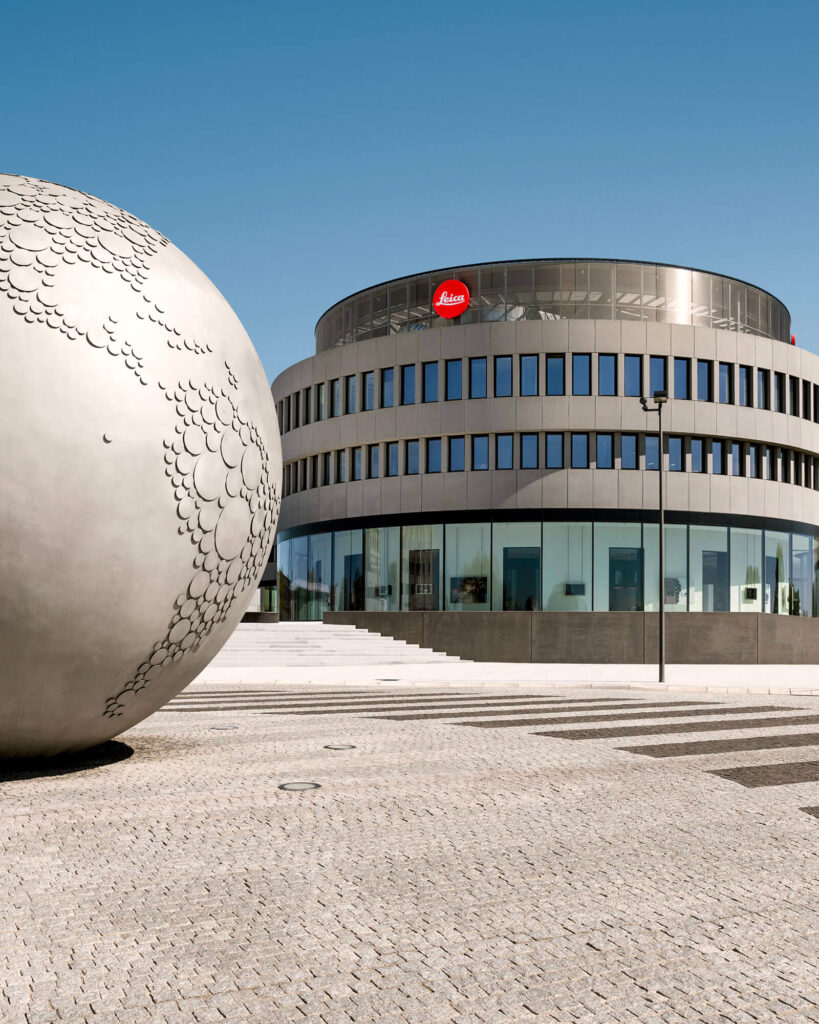
Decades later, Leica Camera separated from the other divisions and eventually moved into Solms—a rather plain industrial facility that housed world-class craftsmanship but lacked aesthetic prestige. By the time Leitz Park in Wetzlar opened in 2014, it was still primarily just the production plant and offices. For me, walking into Leitz Park for the first time was deeply emotional. I had taken a huge personal gamble a year earlier by leading the direct Italian subsidiary startup for a brand rebuilding itself in the digital era. Seeing that we had moved from a simple industrial hall to an ultra-sophisticated facility capable of producing the best optics in the world was immensely satisfying.
Over the past ten years, Leitz Park has transformed from a manufacturing site into a full campus, complete with a museum, historical archives, a hotel, and a watchmaking facility. If I had to pinpoint one detail that truly stands out, it’s the physical, three-dimensional “family tree” in the main hall. It’s a 20-meter glass corridor displaying the entire evolution of Leica cameras, starting with Barnack’s original 1914 prototype, the Ur-Leica, and tracing over a century of continuous innovation model by model.
For four years, I actually traveled to Wetzlar every other week because I held a global headquarters role alongside my position as Managing Director of Leica Italia. Walking through that space never fails to remind you of the rich history and heritage behind the brand.
You foster the creation of a true cultural ecosystem—from the Leica Galerie to lectures with master photographers and courses at the Leica Akademie. What value does building and nurturing this culture hold for you?
First and foremost, it comes down to our heritage. Modern 35mm photography was invented by Leica—we transformed photography from a static medium into a dynamic one, establishing the 24x36mm frame that remains the reference standard even for digital sensors today. Building a cultural ecosystem passes on that philosophy of photography: as we discussed earlier, taking a picture isn’t just snapping an image, it’s using photographic grammar to tell the story in your mind.
That is how we approach the Leica Akademie. It is an educational journey across various levels designed to connect people with our product philosophy, which differs completely from the hyper-technological, engineering-centric approach of many modern competitors. For us, the philosophy is strictly user-centric. The photographer must have full, intuitive control over the tool so they can express themselves fully—when mind, eye, and soul align seamlessly with the instrument. Without that connection, you end up at the mercy of the machine unless you are a technical expert. Even our most advanced professional tools, like the SL3, remain clean and simple on the outside so you can customize them to your way of working, which embodies our ethos of “Essential.”
The Leica Galerie represent an equally vital pillar of this ecosystem because photography needs to be displayed properly. You cannot talk about high-end cameras and engineering excellence if the final image only ever lives compressed on a smartphone screen. How do you appreciate a sensor capable of capturing the world’s full tonal range if it’s reduced to a phone display? To us, true photography lives in the print.
Our galleries—whether at Leitz Park in Wetzlar or across our global network—rotate exhibitions every three months, featuring work from master photographers as well as emerging talent. They serve as spaces where people can be inspired by exceptional art, engage with photographic culture, and even acquire fine art prints.
What is it like working with master photographers, and how do these relationships form and develop over time? Can you share any interesting stories with us?
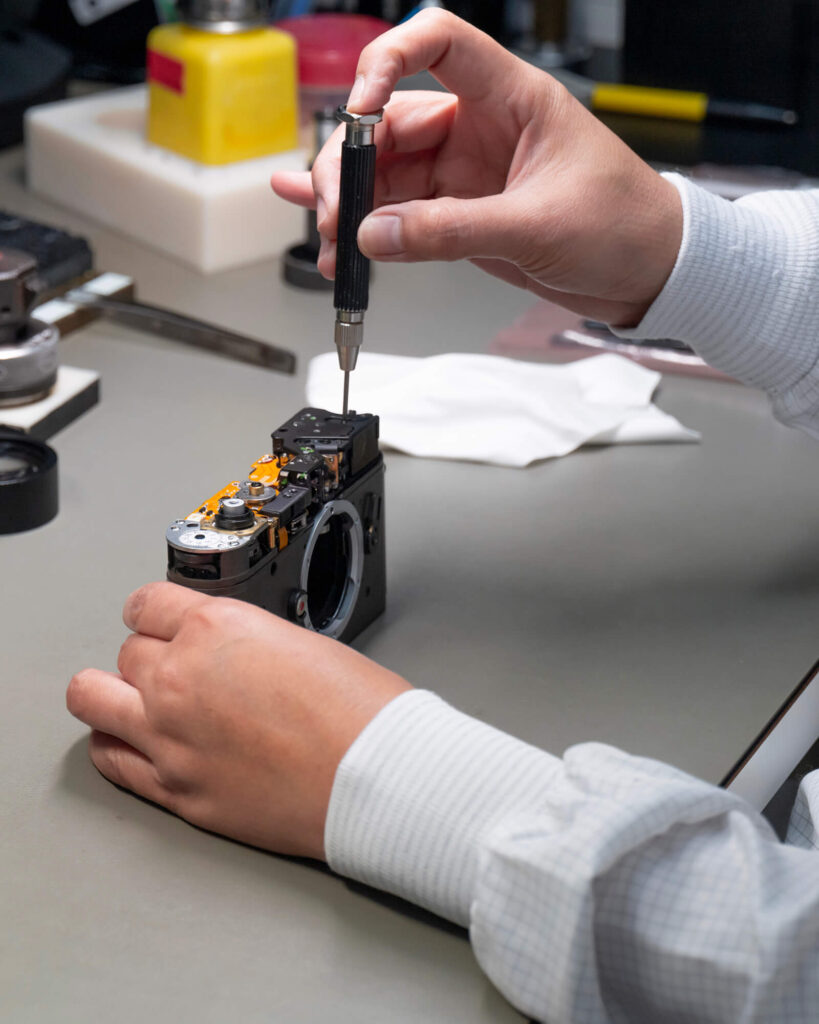
Everything we do is based on one fundamental principle: authenticity. We do not pay photographers to become brand ambassadors. If a photographer chooses to use Leica, we support them in their decision by providing equipment to test or use long-term, but the initial choice to shoot with Leica always comes from them because they align with our philosophy. The traditional market of paid endorsements simply doesn’t belong to our DNA.
Instead, we focus on building authentic relationships and a genuine community with photographers—including many world-renowned masters—who choose Leica for technical reasons, for its philosophy, and because they want to represent the world through our optics. Steve McCurry, for instance, used other tools for many years before eventually stating that his art deserved the mechanical art of Leica.
For many master photographers, switching to a Leica becomes a journey of rediscovery. After decades of working in the field, picking up an instrument like ours often reignites their fundamental motivation and passion for photography all over again.
We focus on building authentic relationships and a genuine community with photographers who choose Leica because they want to represent the world through our optics.
If you had to choose two or three photographs that particularly fascinate you, which ones come to mind? What makes them so special to you?
To start, I have to go back to Sebastião Salgado, whom I mentioned earlier. Specifically, there is his extraordinary work on the gold mines in Brazil, as well as his project in Kuwait following the retreat of Iraqi forces in 1991. After 500 oil wells were set on fire, he went to document the international teams and specialized workers trying to extinguish the blazes and contain the environmental damage. His black-and-white photographs from that story are simply incredible.
These are documentary shots that transcend their initial purpose. They don’t start out as art—they begin as reportage—but through their framing, harmony, and masterful use of technique, they gain a strength that makes them iconic.
Another photographer I always love to remember is the great Italian master Gianni Berengo Gardin, who passed away a few years ago. He always traveled with his Leica M around his neck—always—because he believed he needed to be ready to capture a moment at any instant. After all, the best camera is always the one you have with you, which is precisely why we co-engineer smartphone cameras today.
A photographer once told me he would consider himself lucky to capture just one image in his lifetime that becomes universally iconic. Berengo Gardin created several. There’s his famous shot through the window of a Venetian vaporetto, or the image of the car seen from behind on the beach—photographs that have become truly emblematic and deeply embedded in popular culture.
What makes a photograph so special and iconic to me is the magic it conveys—its timelessness. An iconic photo remains relevant forever: it reminds you of something from the past, resonates with your present, and will still hold meaning in the future. It is an image that never fails to evoke thought.
You recalled a conversation with David Alan Harvey, where he explained that checking photos immediately on the display interrupts the creative process and prevents images from “decanting” so they can be judged with distance. Do you agree with this statement, and what do you think we risk losing when we no longer allow things to mature before passing judgment?
I completely agree, and I think almost every photographer would say the same. In the analog era, you were forced to let your work decant—even if it was just the three days between shooting a roll of film and picking up the prints from the lab. That built-in gap gave you time to step away from the immediate emotion of taking the shot. When you finally saw the physical prints, you could evaluate them objectively, often realizing that an image you thought was weak was actually brilliant, or vice versa.
For professionals working on major assignments, that distance was even more crucial. David Alan Harvey would make contact sheets, but he would wait three or four months before deciding which photos were actually good enough for the final edit. When shooting on assignment around the world for National Geographic, he’d send his film home and physically couldn’t see the results for months while traveling.
With digital photography, even documentary and reportage photographers review everything instantly, often sending immediate edits off to editorial desks right away. But as a story unfolds and new context emerges, an image selected in a rush might not accurately represent the true heart of the moment. Allowing work to sit, settle, and mature always elevates the final quality of the narrative.
I try to apply that same philosophy to my own photography. Because of my analog roots, I don’t shoot thousands of frames, so a lot of the editing happens right before I press the shutter. But when I do shoot digitally, I never rush to delete anything right away. I always give the images time to rest—I don’t have that modern anxiety to immediately judge or erase what I’ve captured.
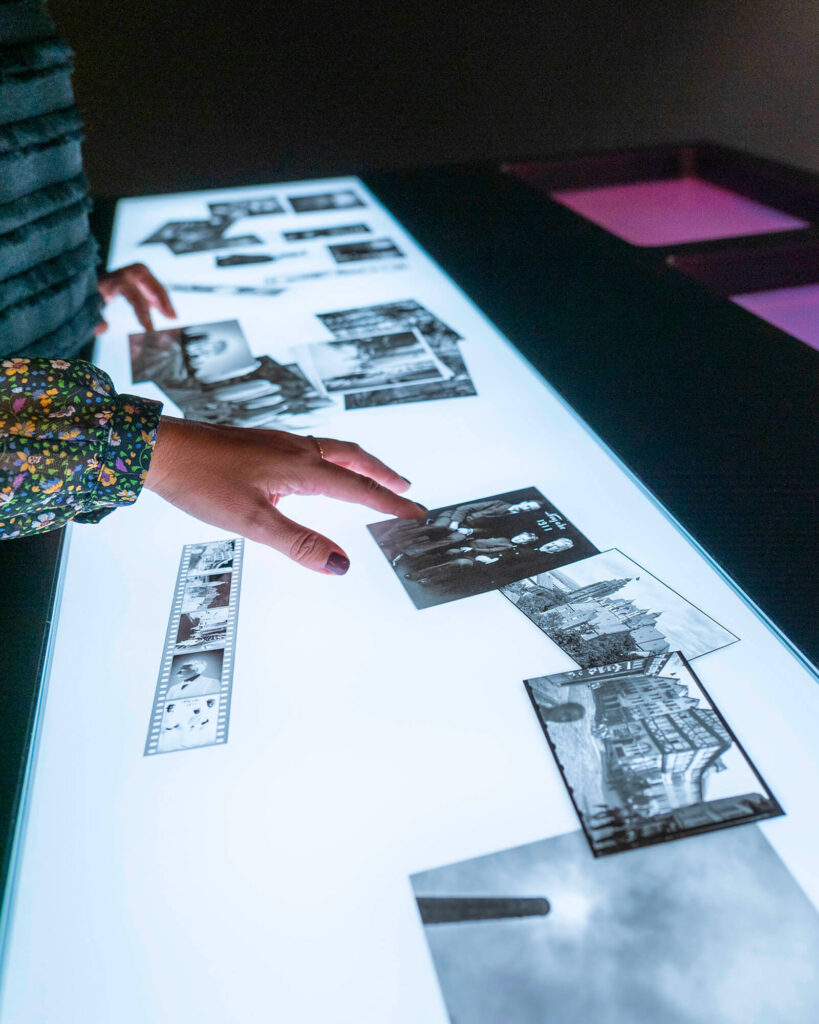
The world of Leica enthusiasts and collectors is unique for its devotion and continuity over time. From your point of view, what are people truly looking for in these objects? Is there a fun fact or curious encounter with a collector that has stuck with you?
Leica clients generally fall into three broad categories. First, you have the passionate users who buy standard production models to shoot with constantly, upgrading whenever a new lens or sensor advances the technology. Second, there are clients drawn to aesthetics and design—they collect current production items, special colorways, or limited-edition capsule collaborations with designers because they love beautiful objects.
Then there are the true, extreme collectors. These individuals focus on vintage pieces, camera bodies owned by legendary photographers, early prototypes, or ultra-limited runs. To them, these are appreciating assets. This world of high-stakes collecting is so significant that Leica has its own auction house business unit, alongside independent auction houses worldwide. In fact, a few years ago, an original 1923 0-series prototype—created by Oskar Barnack before commercial production began—sold at auction for €14.4 million.
I personally don’t consider myself a collector—I prefer using the cameras. However, going back to our discussion about not rushing to view images, my camera of choice is the Leica M-D, a digital rangefinder with no rear LCD screen. Like an analog camera, you shoot blindly and only review your photos later when you download them or connect to an app. Eliminating the screen forces you to stay present and focused on your subject, preserving your creative flow.
As for anecdotes about collectors, two stand out to me: one collector would only acquire Leica equipment made in a specific production year, and he matched each camera to a luxury watch built under the exact same chronological rule. Another client bought every standard production product in duplicate—one to keep untouched inside a safe, and an identical one to take out into the field and use every day.
That connection between Leica and watches isn’t accidental, either. About four years ago, we launched Ernst Leitz Werkstätten to produce our own timepieces, like the ZM 1 and ZM 2. The historic link goes back to 1869: Ernst Leitz I completed his early technical training in Switzerland as a watchmaker before returning to Germany to build microscopes. He brought Swiss horological precision directly into Leica’s DNA. Controlling time at 1/8000th of a second in photography is a natural extension of that heritage. In true Leica fashion, we brought our own mechanical innovation to watchmaking: instead of pulling the crown to set the time, our patented push-crown mechanism operates like a camera’s shutter release.
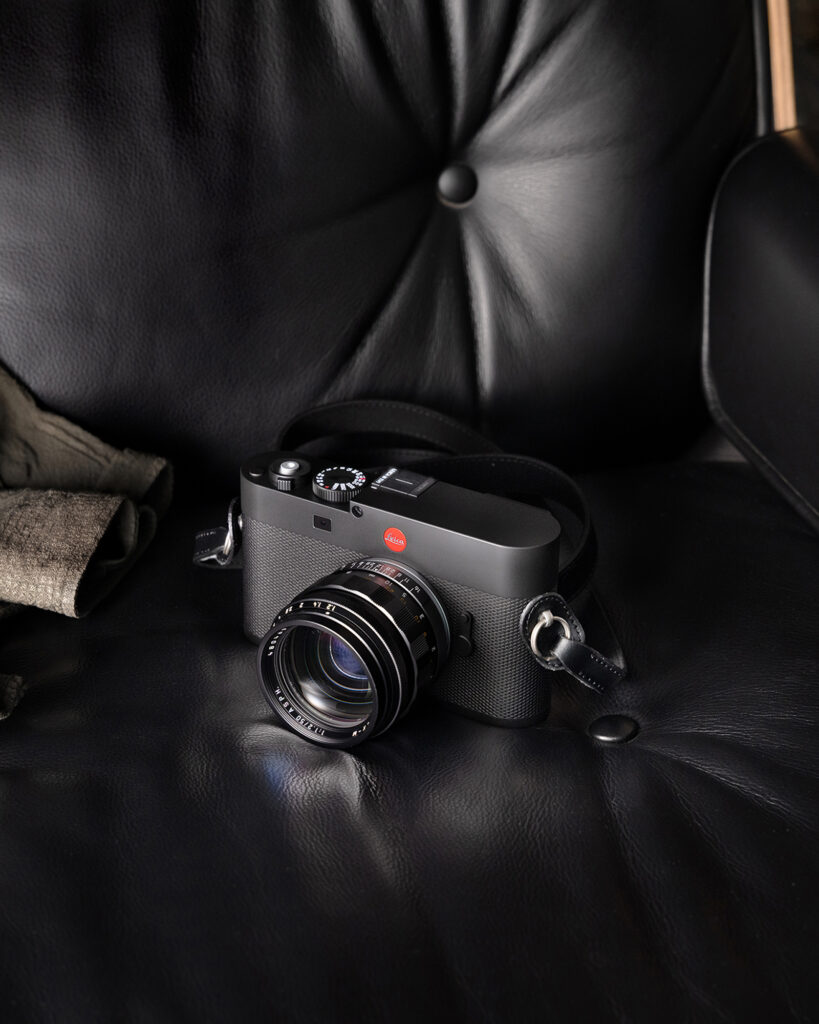
Despite growing up with a smartphone always in their pocket, we are seeing a strong return toward cameras—especially analog—among younger generations. How do you explain this?
From Leica’s perspective, staying true to analog has always been our norm—we are the only brand that never stopped manufacturing analog film cameras. But we certainly see many young people coming in today, often exploring the pre-owned market to pick up an analog body.
While analog has become a trendy status symbol for some, I believe the deeper motivation is a desire for a hyper-personal form of creative storytelling. Digital photography can easily be manipulated or post-processed—and today, AI makes that even easier. Analog, by contrast, is absolute: what you shoot is what you get. It requires real technical skill and deliberate intention because you have a limited number of frames per roll. That constraint builds a level of mindfulness that sophisticated, intellectually curious young people are seeking—partly as a way to distinguish themselves from the crowd.
At the same time, there’s a broader resurgence in dedicated cameras overall, from analog to affordable pre-owned digital compacts. People are growing tired of smartphones doing all the work automatically—the heavy HDR processing, the lack of manual control, and the constant digital speed. In fact, that appetite for manual control led us to launch the Leica LUX app for iPhone, which lets users manage aperture and emulate the iconic color profiles of historic Leica lenses right on their phone. It has performed exceptionally well with users who want to explore storytelling through a dedicated photographic lens while maintaining our heritage.
This shift mirrors the return of vinyl records, CDs, and mechanical watches. People are experiencing real fatigue from the relentless speed of the digital world and algorithmic social media. Platforms like Instagram used to be vibrant incubators for photography, but they’ve turned into algorithm-driven video entertainment feeds. That shift has created genuine frustration for anyone who values static imagery.
A smartphone is a great hub where you can sample everything out of convenience—whether it’s streaming compressed audio on Spotify or snapping a quick picture. But once a true passion develops, convenience isn’t enough. People naturally seek out dedicated tools that offer higher quality, deeper intention, and a real tactile connection to their craft.
Do you think there is a specific aspect that characterizes Leica and makes it unique compared to other brands in the industry?
When it comes to Leica and the values it represents, its true uniqueness lies in how hard it is to categorize using traditional market labels. Today, brands are usually slotted into consumer, premium, or luxury, but Leica doesn’t fit neatly into any of those boxes. It occupies a completely unique space driven by a deep sense of community—in a way, it’s our customers who define the brand’s positioning simply by choosing it.
It isn’t a brand meant for showing off. Unlike a luxury supercar that everyone instantly recognizes on the street as expensive, a Leica—despite its high value—requires a certain level of culture to be understood. It represents a form of quiet luxury that breaks down barriers and creates spontaneous connections. I’ve often made better professional connections while on vacation just by having a Leica around my neck than you would at an elite business mixer. Whether it’s a VP from a tech giant or an everyday photography enthusiast, people will walk up to ask how you like the Q3 or talk gear, sparking authentic conversations and immediate bonds.
To nurture these relationships, our events are designed to be inclusive while catering to specific interests—ranging from photographic culture through the Leica Akademie to high-end collecting. This allows people to find their peers, forge lifelong friendships, and even start creative collaborations together. Unlike sectors like fashion or automotive, which can often be about ostentation, Leica is rooted in genuine passion.
I would describe Leica as the ultimate blend of German engineering and manufacturing excellence, meticulous attention to detail, and an authentic community. Anyone who appreciates those values naturally becomes a friend of the brand—and a friend to everyone else in the community. It’s an identity so distinct that it’s nearly impossible to find a direct parallel in any other industry.


