

This story originally appeared on the Gents Cafe Newsletter. You can subscribe here.
Shielded by the silence of Swiss valleys, master artisans carry the baton of traditional watchmaking in its most authentic form, dedicating hundreds of hours to milling, machining, polishing and tuning their creations and ultimately shaping time by hand.
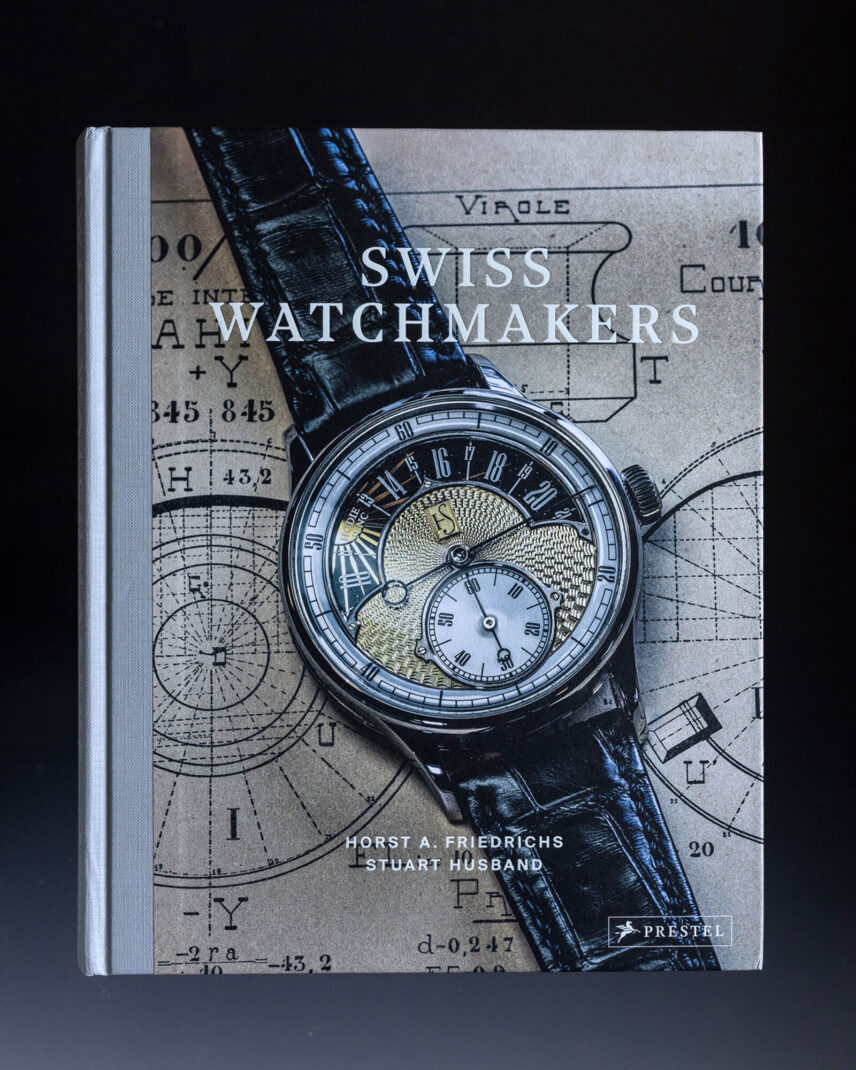
To create his latest book, Swiss Watchmakers, photographer Horst Friedrichs and author Stuart Husband stepped through the doors of these quiet workshops to capture the human side of independent horology and narrate it through his vivid photography.
In this Scent of Paper interview, Horst recalls the genuine, child-like curiosity that sparked his pursuit of this project, what he needed in order to gain the trust and confidence of the world’s best watchmakers, and how a wrist chime offers comfort in a doctor’s room.
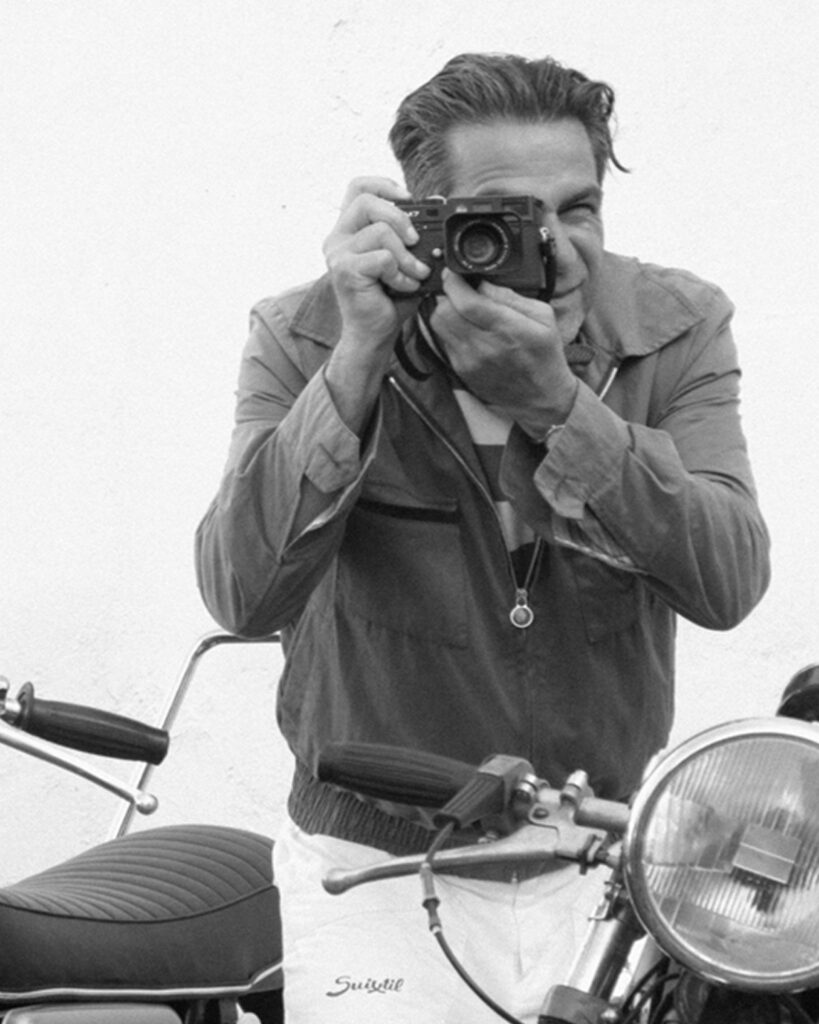
Coming into this world not as a watch specialist, but as a visual storyteller fascinated by unique subcultures, what was the initial spark that drew you and Stuart Husband to independent watchmaking?
The idea was originally mine, and it came from a pure, genuine curiosity—I just really wanted to see how a watch is built. When I began my research, I stumbled upon Philippe Dufour, who could arguably be defined as the “big boss” of independent watchmaking. He builds just one watch per year in a workshop filled entirely with pre-electronic, sculptural machinery. His setup was so traditional that getting in touch was a challenge in itself; emails went unanswered, and he didn’t list a mobile phone. Eventually, I reached a landline, and his daughter—an incredibly sharp young woman who ended up appearing in the book wearing her loupe—answered in fluent English. She passed the message along, and a week later, Philippe sent a short email saying, “Come on this day at 10:00 AM.”
Stuart and I left London, took the ferry, and drove through France into a stunning Swiss valley tucked away in the mountains. Finding his workshop, housed in a former schoolhouse, was a task in itself: there was no street number and not a soul in sight. But discovering that setting and seeing his craft firsthand sparked an incredible wave of energy and excitement.
Initially, I envisioned mixing independent makers with legendary heritage brands like Rolex or Patek Philippe, similar to how we approached the big distilleries alongside boutique producers in our whiskey book. However, the corporate giants are notoriously guarded, and photographing their facilities and workshops soon turned out to be just too difficult. Once we hit the road, we quickly realized we didn’t need the massive brands anyway—the independent world is where the true heart and soul of watchmaking lives.
Securing Philippe Dufour’s blessing at the very start opened every door after that. In subcultures, whether you’re working with Mods, Rockers, or watchmakers, gaining the respect of the figurehead gives you immediate credibility. Once the other independents heard we were working with Philippe, they welcomed us in.
Ultimately, the book became entirely focused on independents—with Oris being the lone exception, included because of its charm, scale, and accessible philosophy. More than anything, I knew I didn’t want to make a sterile book of studio product shots. My goal was to capture the live energy of craftsmanship, the personalities of the watchmakers, and the rare, high-stakes reality of handling these extraordinary, handcrafted timepieces right at the workbench.
What surprised you most about the daily reality of these independent watchmakers when you met them in person? Beyond the world of horology, who were the human beings you found behind these iconic names?
Every single watchmaker and atelier turned out to be completely unique. Meeting them in person makes you immediately understand where their inspiration comes from, whether it’s sci-fi, architecture, film, or even childhood memories. At MB&F, for instance, the workshop is set inside a quaint little castle filled with sculptures, unique lamps, and books. Hanging out there and absorbing the environment makes you realize why Max Büsser and his team create timepieces that look like futuristic spaceships.
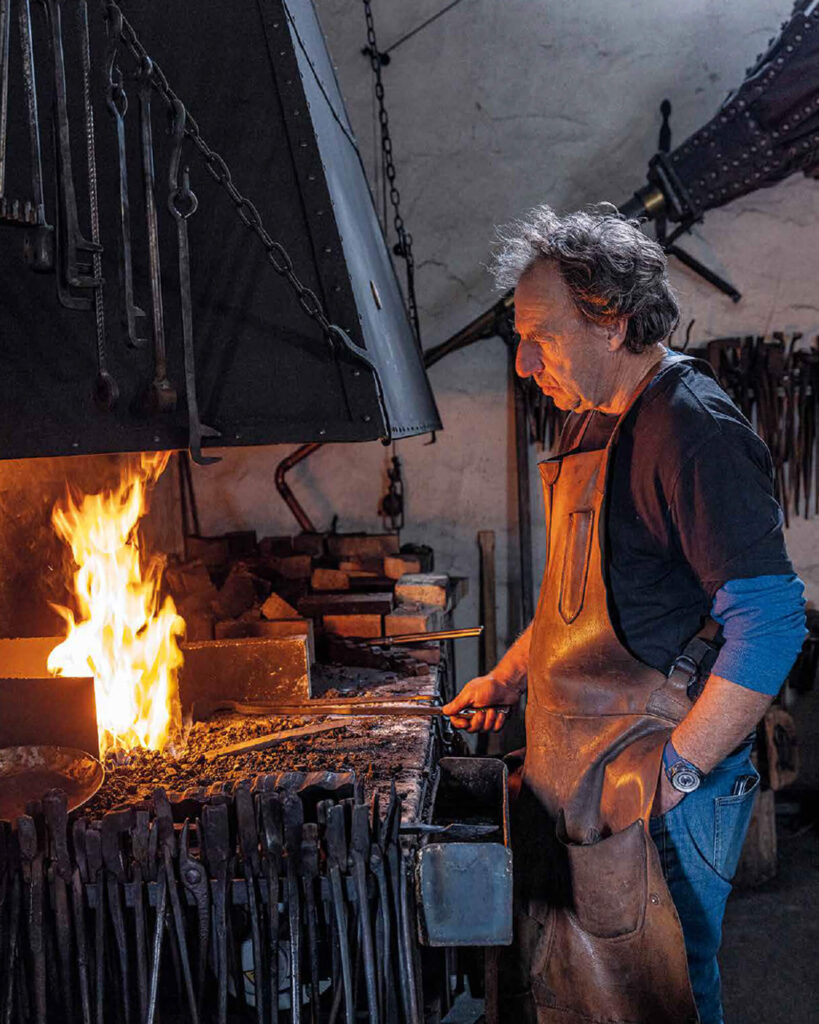
Then you have someone like Denis Flageollet of De Bethune, who is deeply fascinated by raw materials and even collects mountain stones containing meteorite fragments. Knowing his background, I really wanted to photograph him working at a traditional forge. Because my own father was a blacksmith, capturing that metalwork felt very personal to me. Denis was initially a bit resistant and reluctant, but I insisted, and we went to his forge. I worked very quickly, and the photo turned out magnificent, to the point it’s the opening image of the De Bethune section in the book.
The journey itself holds a wonderful sense of contrast. You drive through quiet Swiss villages, often wondering if you even have the correct address because there are no commercial signs outside. Then you step inside a non-descript building, and suddenly you enter a magical, white-coated atelier that feels straight out of a fairytale, with master artisans working in the utmost concentration.
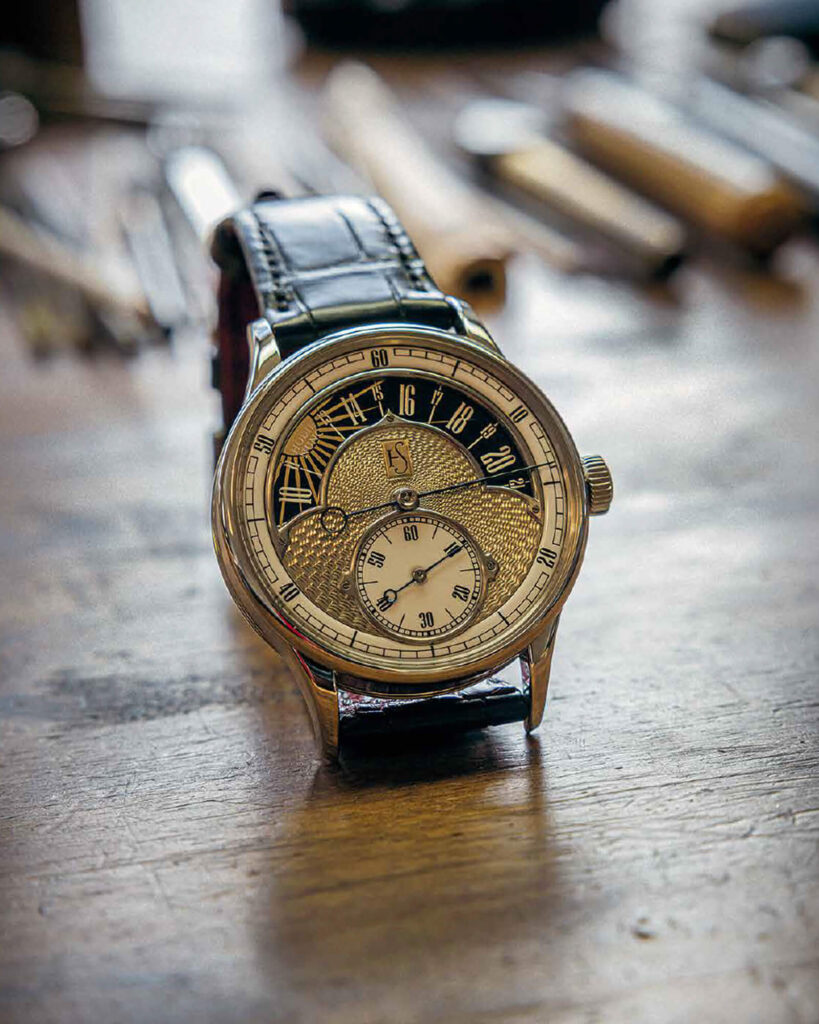
Stepping into a craftsman’s personal workshop often feels like stepping inside their mind or private home. How did you build that warm, human trust with these artisans so they could stay fully themselves and focus on their work while you were there with your camera?
Building genuine trust starts with absolute respect for their time and craft. Before I even reach out, I do my homework. Watchmakers love Instagram because they use it to showcase their newest creations, so I study their feeds thoroughly. When I send that initial email, they immediately realize I’m not just there to snap generic pictures—I understand their specific models and know exactly what I want to capture.
Before arriving, I share moodboards so everyone understands the vision, which helps avoid showing up in the middle of Switzerland only to find a watch isn’t ready or assembled. With a book budget, you might only have four or five trips total.
Once inside the atelier, establishing personal comfort is vital. You are entering a private, delicate sanctuary. These watchmakers are intensely busy, and early in my career, someone shared a piece of advice that I’ve carried with me ever since: never disturb an artist. You have to work fast, stay out of their flow, and capture the authentic energy of the room without overstaying your welcome.
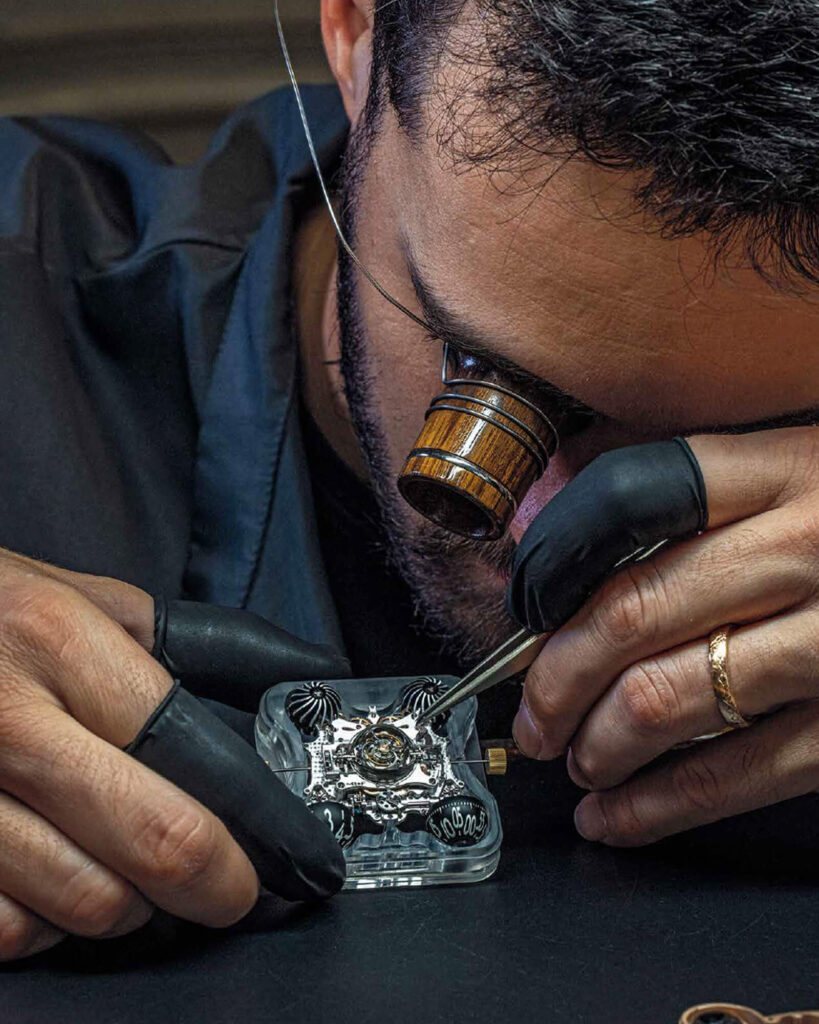
Then, because I shoot with a specialized macro lens, I am often working extremely close to the artisans at their workbenches. When working in such intimate proximity, personal presentation matters: you need to be respectful, carry yourself well, and even wear a touch of good cologne so you are pleasant to be around.
Communication is equally important. At one larger manufacturer where I was photographing around fifty watchmakers—mostly women—I addressed the room with a translator beforehand to explain the project and asked if anyone preferred not to be photographed. Respecting those boundaries immediately builds trust.
In the foreword to your book, Nathalie Marielloni notes that while no one needs a handmade watch, humanity inherently needs beauty and culture to remind us we are more than efficient machines. How did seeing these artisans create objects purely for the soul shift your perspective on what luxury truly means today?
Working on this project completely changed my perspective on luxury. Today, many collectors no longer want a mass-produced timepiece that simply comes off a corporate assembly line. During my time in Geneva, I saw collectors visit ateliers directly because they wanted to understand the craftsmanship firsthand and build a relationship with the watchmaker. Even when collectors live across the world in America, they maintain that connection digitally, following along as their specific watch is built.
In our fast-paced world, true luxury lies in slowness and extreme limitation. It isn’t about carrying a famous corporate brand name on your wrist; it’s on a completely different level. When someone like Philippe Dufour handcrafted just one watch a year entirely by himself, clients would willingly sit on a waiting list for six to ten years.
Visiting these workshops feels like witnessing pure alchemy. You watch artisans apply historical techniques—intricate guilloché engraving using antique rose engines or firing grand feu enamel dials in hot ovens. It reminded me of traveling to the island of Murano and watching master glassblowers shape molten glass in front of an open flame. Seeing how these makers preserve old-world arts to craft objects purely for the soul, proved to me that true modern luxury is defined by patience, heritage, and human connection.
As you said (and state in the book), collectors are chasing personal stories and genuine human connection. Photographing this book, how did you manage to capture “why an object matters” rather than just showing what it looks like?
I had to photograph the process, the environment, and the hidden details that hold the story together. In each workshop, I made sure to shoot the watchmakers themselves, the finished timepieces, and the various raw stages of creation. Seeing the tools they use reveals so much about their dedication; Raúl Pagès, for instance, still goes out into the mountains to source specific wooden sticks that he uses to hand-polish tiny movement components for hours on end.
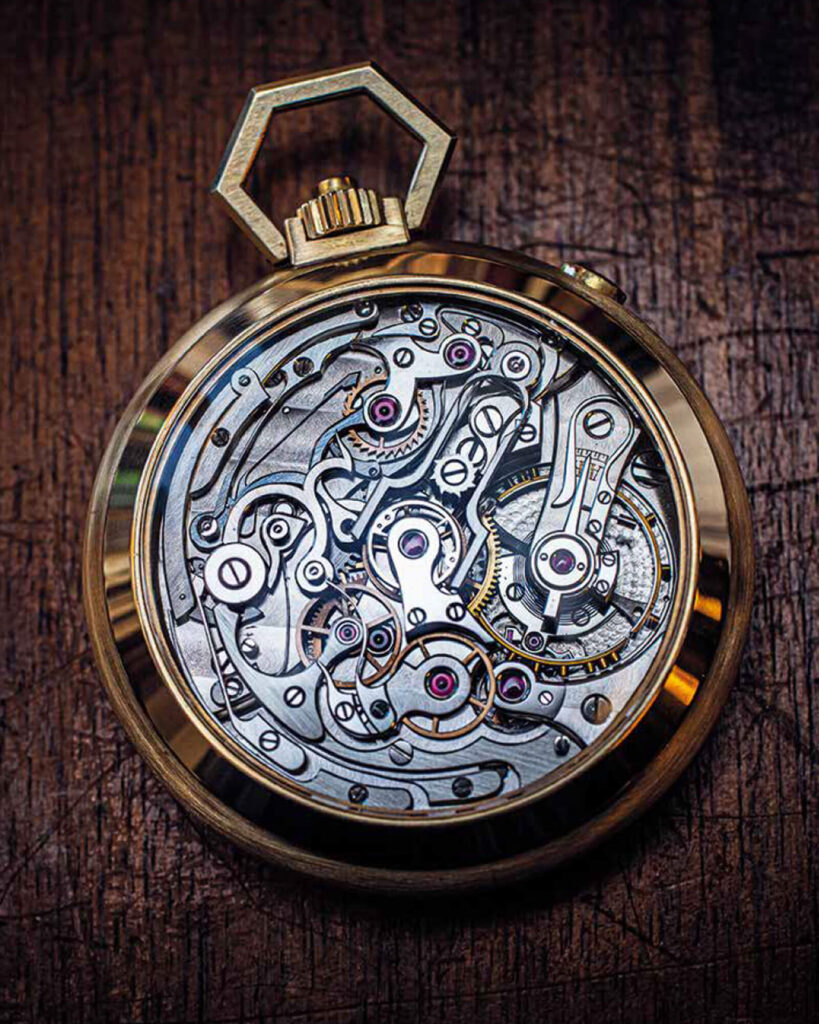
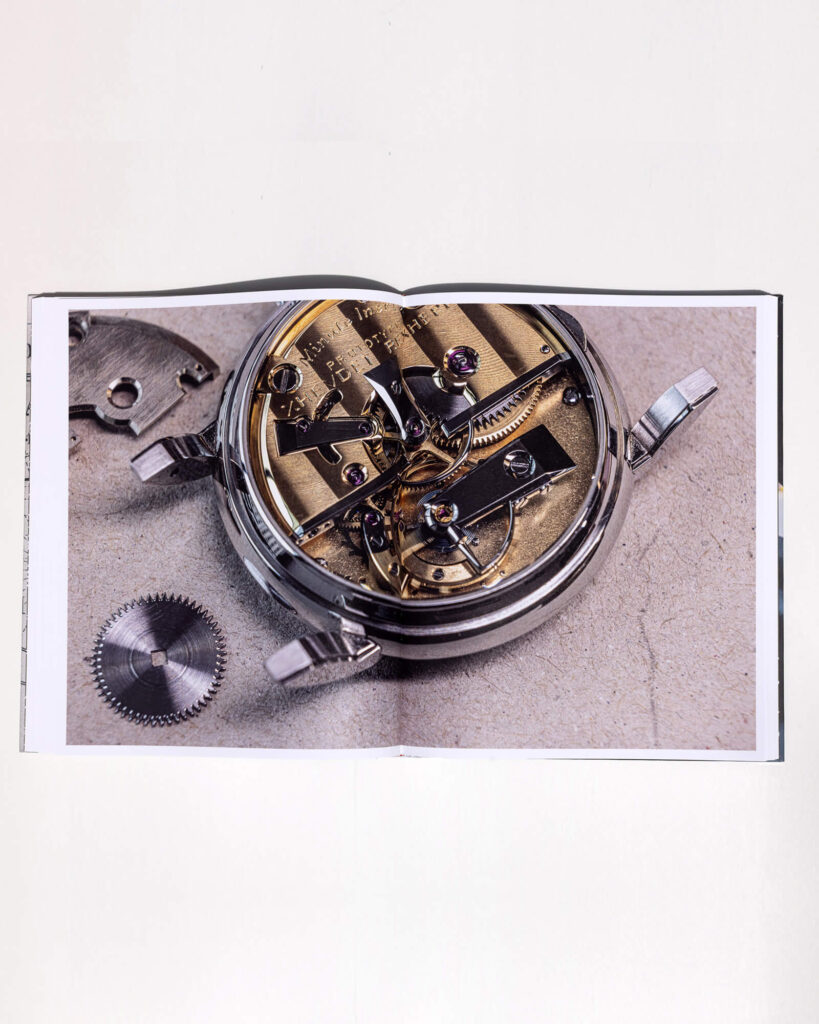
Much of this painstaking handwork happens inside the movement where no one will ever see it unless they flip the watch over. Because of that, I loved photographing the watch cases from behind to reveal the intricate movements underneath. Every maker embeds their own life observations and personal style into their work.
A remarkable example is Rexhep Rexhepi of Akrivia, a young watchmaker working in a window-front studio in Geneva where passersby can watch him work. He wanted to capture the feel of classic Swiss railway station clocks, where the red second hand briefly pauses at the top of the minute before jumping forward. To replicate that complication in a wristwatch, he manually removed a single tooth from a tiny cog and added slight scratches inside the movement. Looking closely at the photograph, you can see that subtle imperfection that makes the mechanism work.
Everything these independent artisans build has a story behind it. Capturing those unexpected quirks and observing how they interpret the world around them is what transforms a simple photograph of a watch into a story about human passion.
One of the most intriguing surprises in the book is learning that high-complication movements can be inspired by something as humble as a chicken rotisserie grill in a market. While exploring these ateliers, what was the most unexpected source of inspiration you discovered about how these master watchmakers think and create?
The range of inspirations is truly limitless. It spans from bars and classic architecture to space travel, train stations, and yes, even chicken rotisseries. To show how these creators tick, I made a point of photographing their sketchbooks and the personal libraries they keep in their ateliers.
Their world is also deeply connected to horological history. Nathalie, the wife of one of the watchmakers, works as a curator at a watch museum housed inside a striking Brutalist bunker underground. Visiting that museum gives you an incredible appreciation for the vast history underlying all these modern ideas.
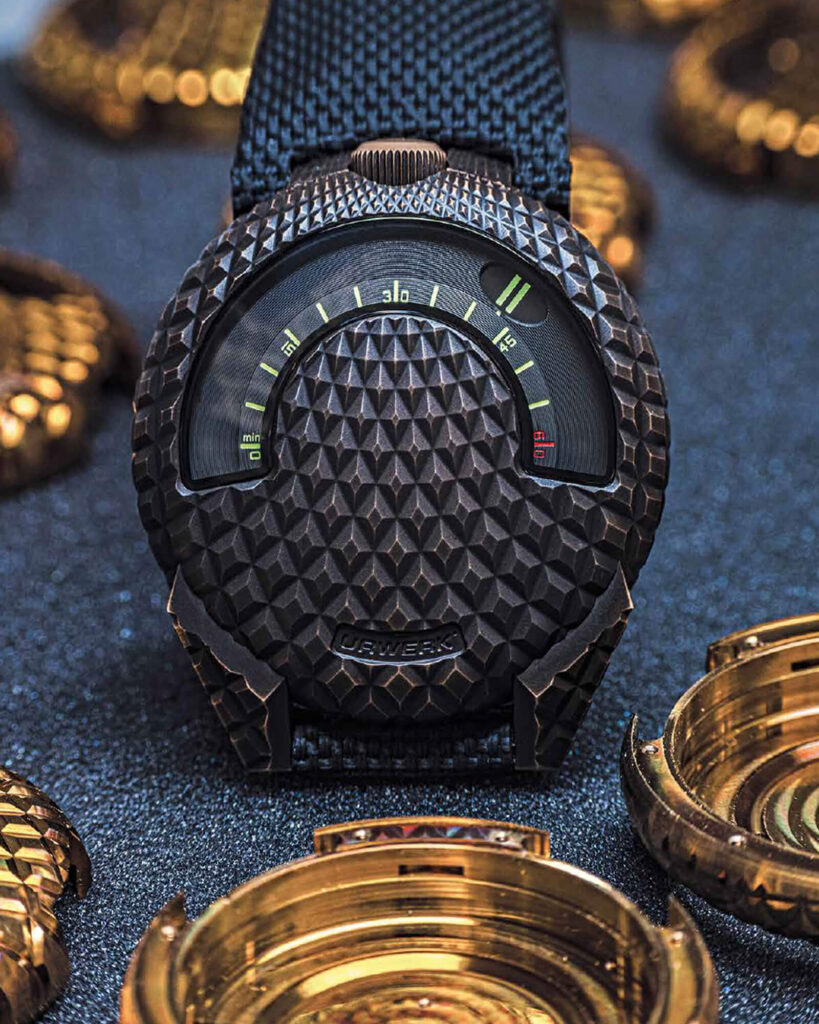
There is a fundamental difference between mass-market corporate brands and these independent makers. Bigger companies, despite their undeniable heritage, operate around mass production and tend to refine the same classic models rather than experiment. The independent watchmakers, by contrast, operate much more like individual artists. They aren’t bound by corporate constraints, allowing them to look at everyday life, draw inspiration from unexpected places, and turn those concepts into wearable pieces of art.
Inside the book, Maximilian Büsser, founder of MB&F, says “a creative adult is a child who survives,” explaining how his designs stem from childhood dreams of space and fantasy. As a photographer who has spent a career staying curious and seeking out distinct human subcultures, how much of your own work is driven by that same childlike sense of wonder?
Curiosity is absolutely my main driving force. Regardless of what I’m photographing, that drive to discover something new is essential. The moment you lose that childlike wonder, you lose the heart of your work. Even though horology is deeply technical, my approach was driven by a desire to learn, explore, and dive into hidden archives.
When you spend time with these creators, you witness an incredible level of hand-craftsmanship that feels almost unbelievable in an age of 3D printers, laser cutters, and automated technology. One watchmaker recommended by Philippe Dufour—Hervé Schlüchter, whose creation is featured on the book’s cover—runs a stunning atelier. When a watch is finished, he handwrites a personal, numbered note in elegant ink using a traditional dip pen. Seeing the whole process up close—tactile, manual—is fascinating.
Everything about this world comes down to narrative and soul. True icons, like a vintage Riva boat or an old Ferrari GTO, don’t need to shout—their beauty and craftsmanship speak for themselves. Philippe Dufour shared a story about one of his clients, a prominent oncologist in Japan treating cancer patients. Philippe crafted a wristwatch featuring a delicate chime mechanism. When the doctor has to deliver difficult news or comfort a patient, he passes the watch to them. Hearing that gentle chiming sound brings a moment of beauty and joy to people in their hardest moments. That goes far beyond simple luxury; it shows how an object can become a genuine extension of human connection and comfort.
When you look back on the months spent traveling through Switzerland for this project, what is the single non-photographic memory that stays with you most vividly?
Coming from a major city like London, where you step outside and are immediately surrounded by hundreds of people, the overwhelming quietness of the Swiss villages really stays with you. You drive past signs for Tudor or Patek Philippe through these pristine Alpine landscapes, but the streets themselves remain remarkably silent. Then, when you step inside an atelier, you finally understand why: everyone in the region is indoors working intently on timepieces.
Each workshop is an entire world unto itself. One memory that stands out vividly is visiting Luca Soprana’s atelier, which is situated right next to a castle. In his chapter, you can see these incredible surrounding views. He also loves to go sailing, and being there makes you realize that his ability to construct such breathtaking mechanical beauty comes directly from being immersed in the beauty of his environment every day.
What do you hope a reader feels when they hold this book in their hands for the first time?
Ultimately, I hope it reaches two distinct audiences. First, I want people who aren’t traditional watch enthusiasts to pick up the book and discover a completely unexpected, fascinating world. This book offers an opportunity to appreciate the sheer level of artistry, human effort, and dedication behind every piece. It’s similar to how someone passionate about classic cars might appreciate watchmaking once they realize both worlds share thousands of hours of intense hand-craftsmanship—in fact, Laurent Ferrier actually raced at Le Mans before he ever started crafting watches.
At the same time, I hope seasoned collectors gain something new by seeing the human work hidden behind the finished object. In our hectic, fast-paced world, sitting down with a physical book should feel like stepping into a cinema or putting on a great record. It offers a moment of positivity and slowness, reminding us of what human hands are capable of creating when they aren’t bound by mass production. If holding this book encourages someone to slow down and view their surroundings through a slightly different lens, then it has done its job.