





This story originally appeared on the Gents Cafe Newsletter. You can subscribe here.
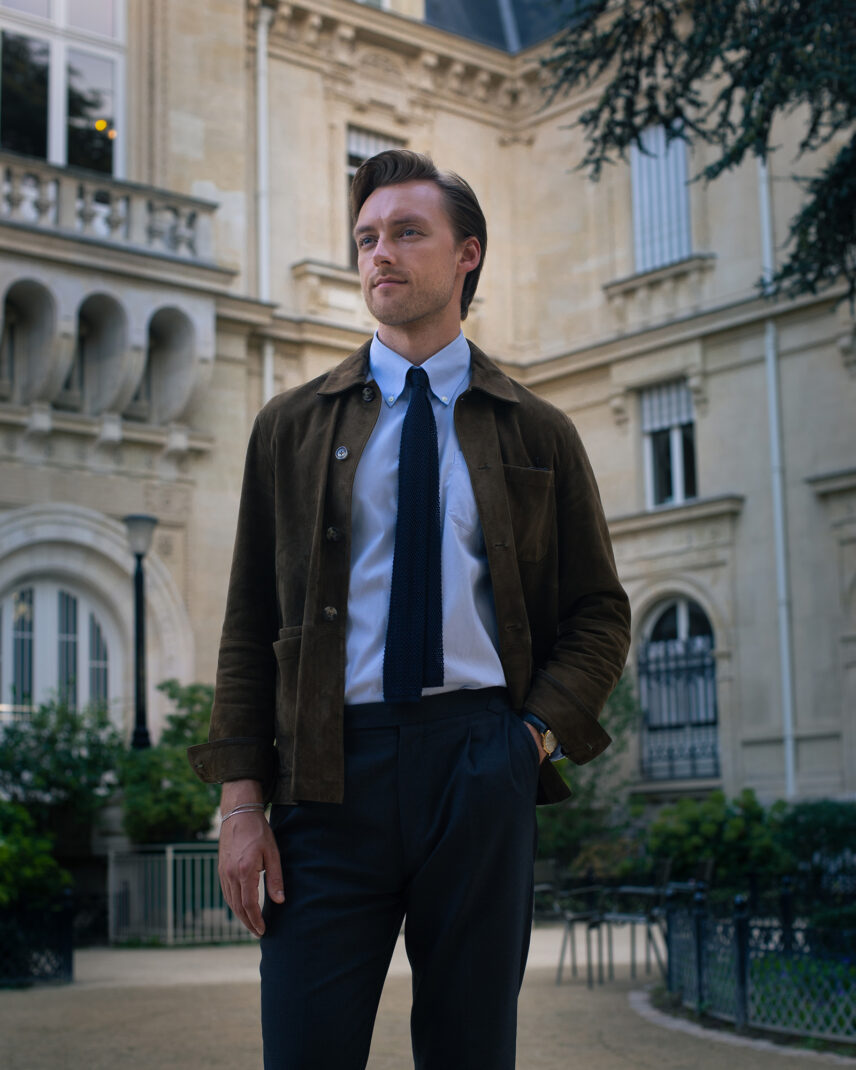
Meet Benjamin “Ben” Jackson (@benhjackson), a writer and advertising professional currently based in Paris, France, where he curates his publication, Jackson & Co. (where Gents Cafe founder Alessandro was recently featured, too). Animated by a defining passion for travel, personal style, architectural design, and the craft of intentional living, Ben believes in the power of writing as a way to connect deeply with all his interests, and share them with like-minded people.
What are your main passions and how do you cultivate them?
Now that I’m living in Europe, travel and personal style are major passions of mine, and I see them as going hand in hand. Moving here from the United States, I originally had that classic Ivy League, preppy aesthetic. Being in Europe, however, drew me deeper into Italian and English tailoring—I picked up a Barbour wax jacket and began viewing the European lifestyle as an adventure, both aesthetically and through direct experience. Right now, I’m super focused on traveling to unique spots across Europe to pursue specific activities, like fly fishing in the Jura Mountains or pheasant hunting in the Sologne, in the Loire Valley.
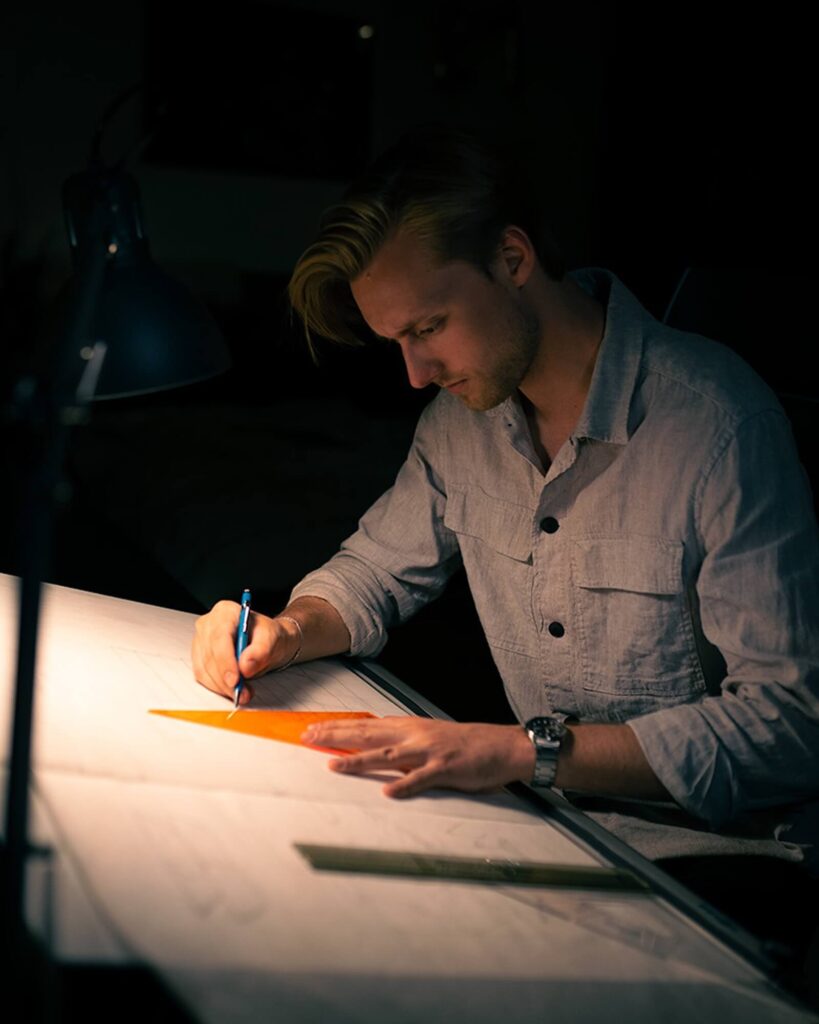
Another core passion is writing. I’ve been writing my Substack publication, Jackson & Co., for a while, and I also view myself as a writer within my career in advertising. Beyond that, I have a deep creative interest in architectural design. I use 3D software to design skyscrapers, residential homes, and mixed-use buildings, and I love creating hand drawings and renders for these projects. While I considered becoming an architect and might still pursue a license in Europe one day, writing became my main path.
What’s great about building Jackson & Co. is that it serves as a creative catch-all. It allows me to obsess over, write about, and share everything I’m passionate about in one place—whether that’s architecture, menswear, or European travel and adventure.
How did you first develop an appreciation for style?
Like a lot of people, I initially got interested in style by watching classic films—looking at characters played by Alain Delon, James Dean, or Indiana Jones and James Bond. But I also had a strong foundation growing up in North Carolina. Both my father and grandfather always dressed exceptionally well in a distinct Southern-coastal aesthetic—classic Brooks Brothers shirts, Sperry boat shoes, and quality leather loafers.
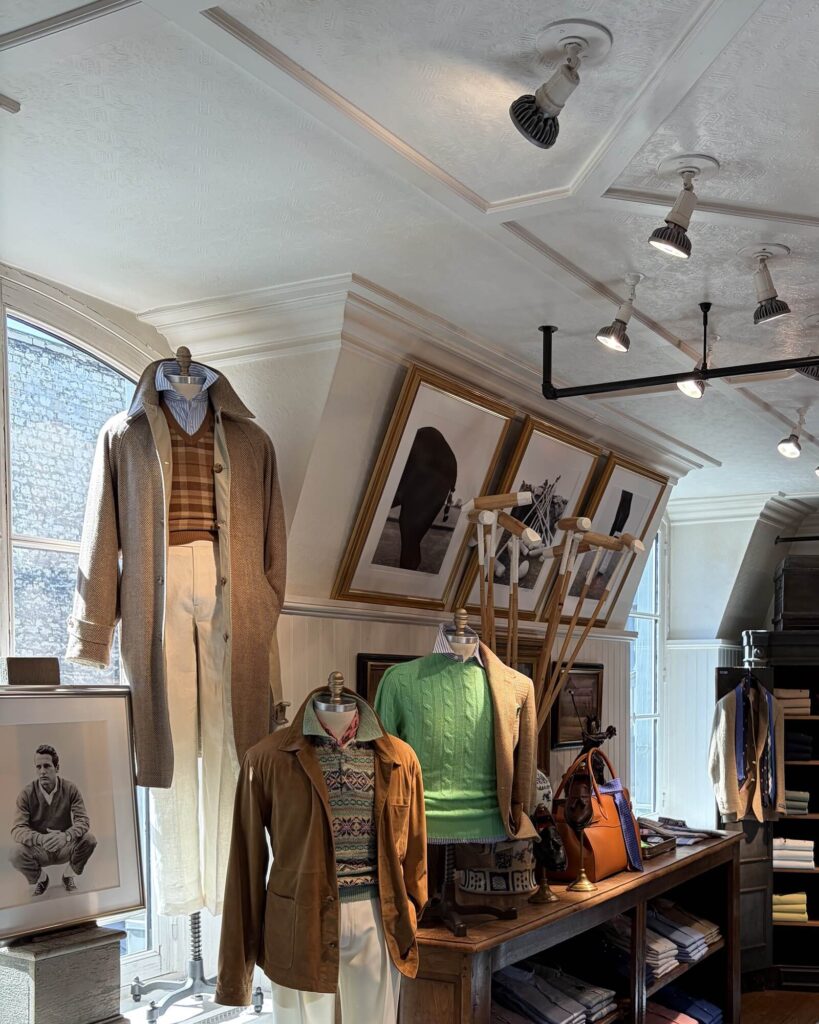
As I got older, my curiosity expanded into Italian and English tailoring. I dove deep into books like Alan Flusser’s Dressing the Man and Hugo Jacomet’s The Italian Gentleman, becoming genuinely obsessed with the underlying craftsmanship. Then I discovered high-end Ralph Lauren—not what you see in a typical department store, but the flagship experience in cities like New York, Paris, and Milan.
Walking through those stores was a turning point. Seeing the mannequins styled in crisp white linen trousers, navy sweaters, and a blend of soft Italian and structured English tailoring captured everything I loved: an understated 1920s and 30s elegance modernized for contemporary life. Ever since, stepping into a flagship Ralph Lauren store has been a primary source of inspiration, alongside online editorial platforms and publications like The Rake.
What does “being well-dressed” mean to you?
I believe being well-dressed is about holding yourself to a high personal standard. Today, everything has become so casualized—people routinely wear t-shirts and sweatpants on flights. For anyone who appreciates timeless elegance or that 1950s Ian Fleming aesthetic—I’m always drawn to how Fleming describes James Bond’s style in the novels—it comes down to dressing more intentionally and appropriately for the occasion.
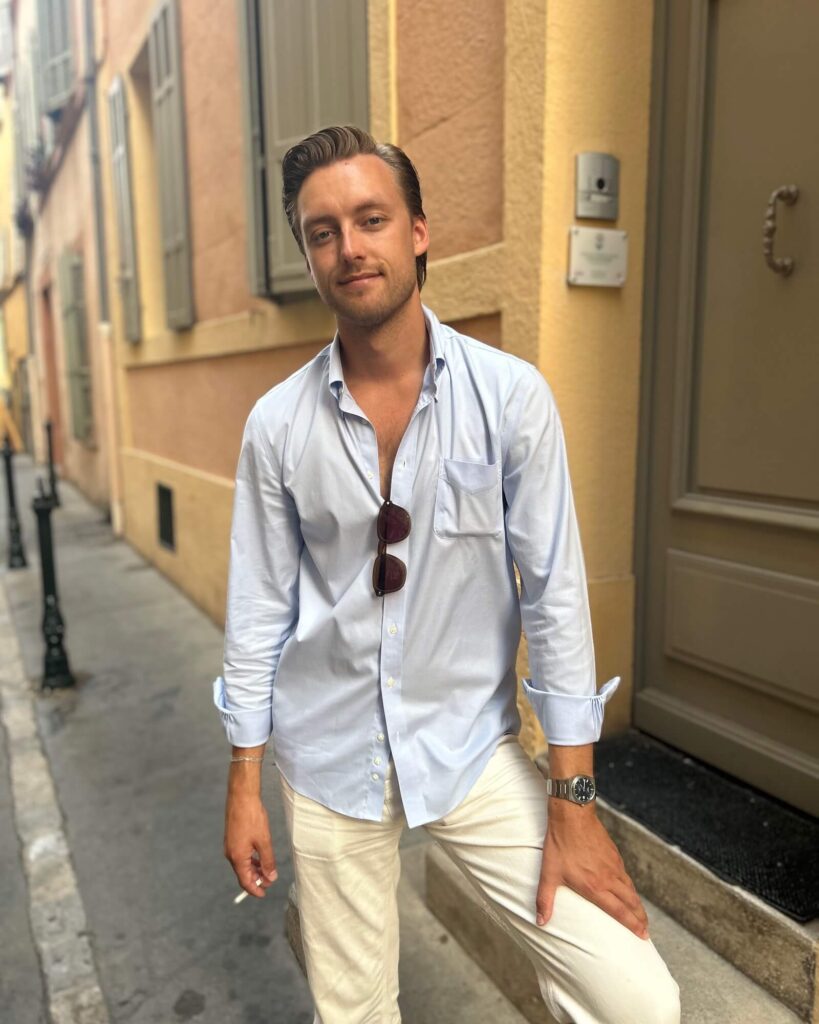
That doesn’t mean wearing a suit and tie to every single event, but rather choosing clothes that flatter your silhouette and leverage compelling color combinations. Right now, I’m obsessed with pairing crisp white trousers with a navy sweater or blazer; I think it’s one of the most classic and elegant pairings.
Ultimately, being considerate about your style means caring for every detail: selecting natural fabrics over polyesters, focusing on how a garment feels against your skin, and choosing pieces based on their longevity, cut, and overall aesthetic. Every aspect of what you put on deserves thought.
How do you define success, and what motivates you to achieve it?
To me, success is several-fold, but it begins with your productive acts—the work you do and how you execute it. At its core, creative success means seeing something clearly in your mind and turning it into reality, which is one of the hardest things in the world to do. Whether it’s an architect bringing a building to life, an advertiser crafting a campaign, or a writer finishing a piece that required deep research, observation, and experience, the ultimate satisfaction comes from taking an idea and building something beautiful through the lens of your personal philosophy.
The second crucial element of success is how you live your life—the places you go, the people around you, and the lifestyle you curate. It operates on the exact same principle: imagining what you want out of life and intentionally making it happen. For instance, I’m obsessed with classic cars, and I don’t want to just dream about them—I want to own them, drive them, and build that physical reality once the timing and resources line up.
That intentionality applies to relationships and geography as well. I met my French wife, Mathilde, and we recently made the choice to move to Europe because it fits my personality and who I am. Growing up in North Carolina was wonderful, and I will always love coming back to visit, but I chose to move to Europe simply because it spoke to me most. Success means identifying what you want in every aspect of life—professionally, creatively, and personally—and actively pursuing those goals rather than settling for what is handed to you.
What’s a place that holds significant meaning for you, and why?
After moving to France two years ago, I spent the first six months living in an old house that belongs to my father-in-law in Normandy. Parts of the house date back to the Middle Ages, with additions built during the 19th-century. Moving there was a massive shift—I went from living just two blocks from Times Square in New York, which I consider the greatest city in the world, to the quiet middle of nowhere in countryside France.
It was an incredible, life-changing experience. It marked the first time I had lived truly far away from home, requiring me to learn a new language, navigate French bureaucracy, immerse myself in local wine and cheese culture, and adjust to a completely new family. That period became a real pivotal point in my life.
The house is located just two miles from Omaha Beach, the site of the Allied D-Day landings during World War II. History, particularly WWII, is a major passion for both my father-in-law and me—in fact, it’s one of the main reasons he bought the house there. Over the past two years, I’ve had the privilege of experiencing the D-Day liberation reenactments and commemorations in the very place where history happened. Visiting the Normandy American Cemetery and standing on Omaha Beach at the exact hour of the landings was deeply moving, and it’s a tradition I plan to continue every single year.
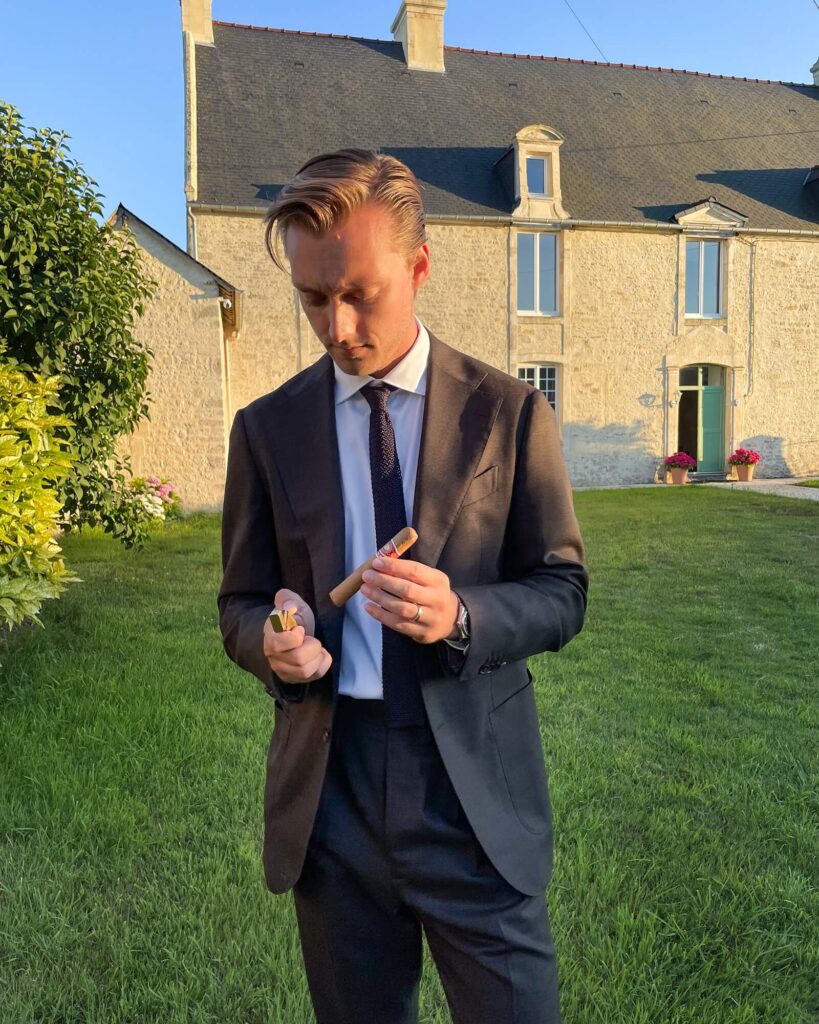
Where do you primarily draw your style inspiration from?
A key part of my journey has been discovering icons across different eras—from the 1930s and 50s to today—who share a common throughline that transcends time. They rely on principles that are almost scientific: objectively flattering silhouettes, harmonious color palettes, and rich, tactile textures like suede and linen that have a depth and character you can feel. It’s a way of dressing that isn’t just subjective trend-chasing, but a timeless framework for elegance.
Can you describe an art form you create and what inspires you to pursue it?
The primary art form I create is my writing. What makes it so meaningful to me is the ability to immerse myself completely in things that fascinate me—to obsess over them, research them endlessly, travel to a specific location, absorb every sensory detail, and then share those discoveries with others. I want to know exactly what the cicadas sound like in Provence or the exact history behind the cut of a specific Italian suit, and then capture that essence on the page using a distinct rhythm and energy that transports the reader directly into that world.
One of my favorite writers of all time is Ian Fleming. I love how deeply observant he was—he believed a good writer is someone who observes the world and remembers almost everything about it. Whether he was writing about an airport in Istanbul or diving in the Mediterranean with Jacques Cousteau, Fleming communicated atmosphere through precise details that made you care deeply about the subject.
That is my main goal with writing: to grab people and say, “Look at this, care about this, because it’s incredible.” It’s about igniting that same spark of interest in the reader. Alongside my writing, I also do architectural design, which serves as another pure creative outlet for me.
Is there an object or piece of craftsmanship in your life that holds deep meaning? What makes it special?
That’s a tough question because I hold onto a few meaningful pieces—like a beautiful over-and-under shotgun my grandfather gave me, a 1972 Nikon film camera I love shooting with, and a small collection of vintage typewriters I write on.
If I can cheat a little bit, though, the objects that matter most to me are the ones I don’t own yet: the cars I dream of driving. Ever since I was a kid playing with model cars, I’ve been obsessed with automobiles. Right now, I’m particularly focused on acquiring a Series 3 Land Rover, an MGA, and a Jaguar XK 120.
To me, a classic car isn’t just a physical object. It represents exceptional design, a specific historical era, personal style, and a way to move through the world. Growing up in America—the land of car culture—getting my driver’s license at sixteen represented absolute freedom and independence. Living in Europe without a car means taking public transit a lot, which makes me miss that feeling even more. A great car symbolizes total freedom, and it’s something I think about constantly as I look toward adding them to my life.
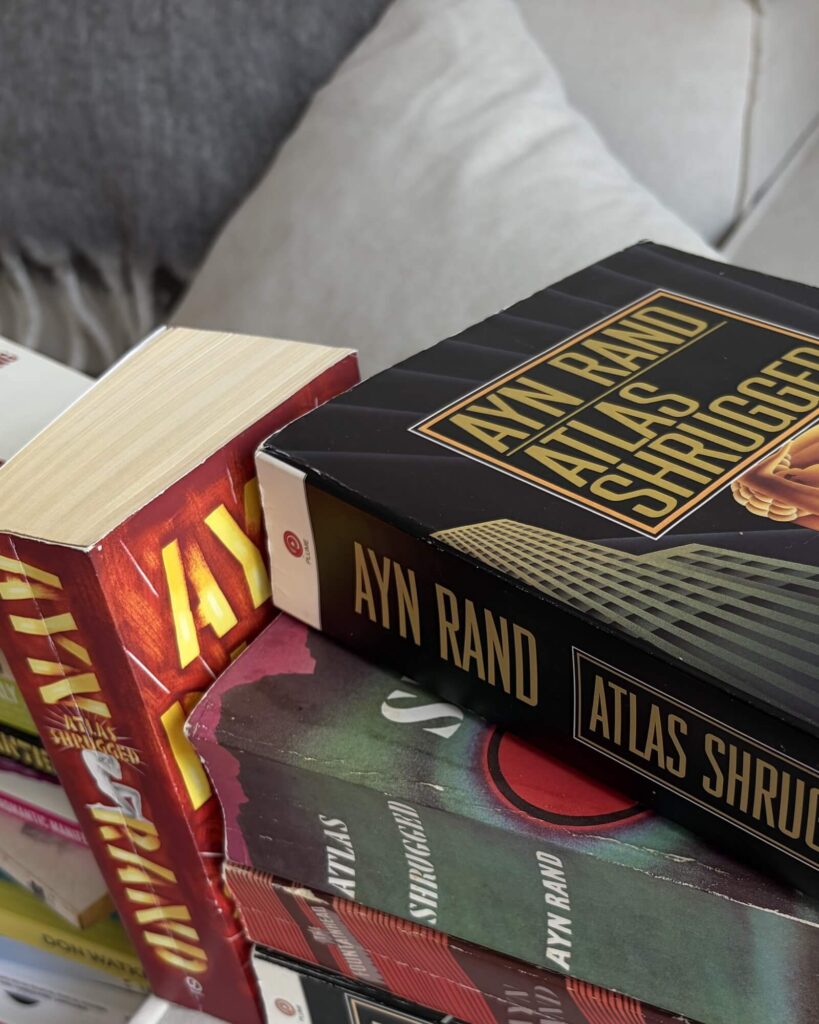
What are your three favorite books and why?
My favorite books come from my two favorite authors: Ayn Rand and Ian Fleming.
My all-time favorite book is The Fountainhead by Ayn Rand. It portrays the ideal man through the protagonist Howard Roark, an uncompromising architect who lives entirely by his own rational judgment and independence. Rather than building classical structures just because society expects them, he insists on creating modern, functional designs that reflect his own vision. Rand’s second major novel, Atlas Shrugged, is her magnum opus and another favorite of mine. It presents a massive, sweeping narrative about a collectivist society that seeks to exploit and enslave the “men of the mind”—the producers and innovators who drive the world forward. When these creators go on strike and refuse to work, they reclaim their freedom. At its core, the book explores how to live a good life and pursue personal happiness as the highest moral value.
My third favorite choice would be the entire collection of James Bond novels by Ian Fleming. As a writer, Fleming’s observation of the world in the 1950s and 60s is unmatched. The vivid, authentic way he describes late-night casinos, the fine details of dining, or the experience of driving a 1930s Bentley is deeply romantic, exciting, and inviting. He builds an atmospheric world that completely draws you in.
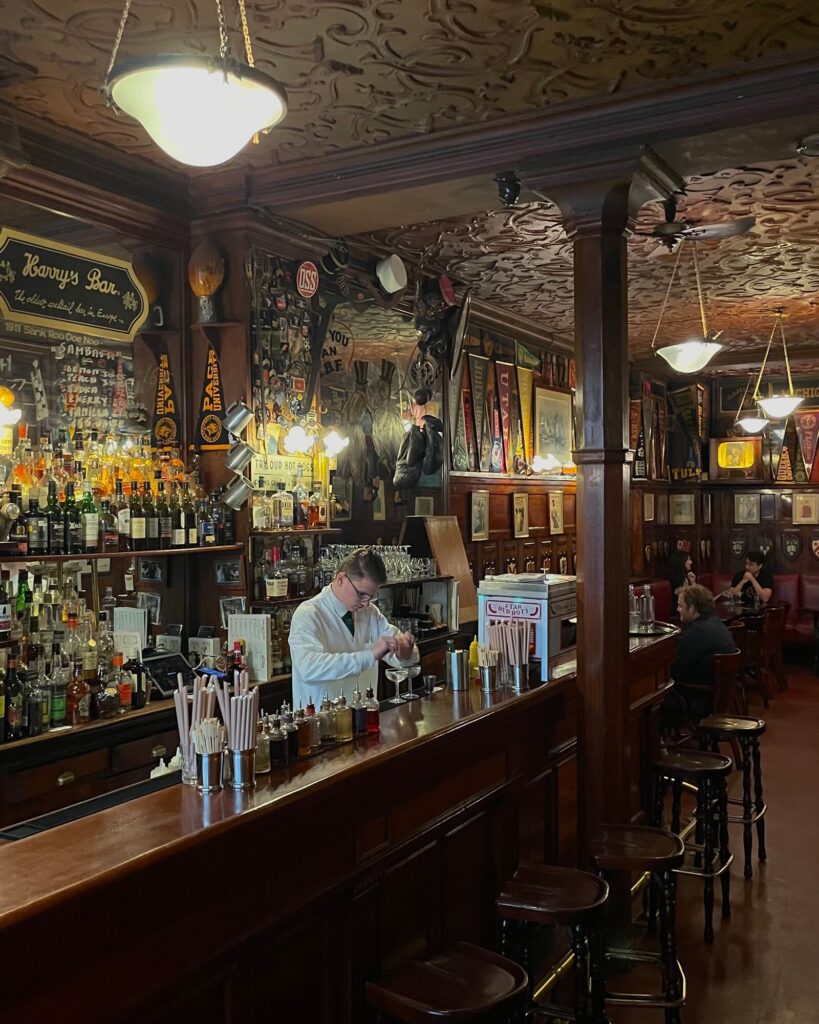
What are your three favorite restaurants and bars and why?
My absolute favorite bar is Harry’s New York Bar in Paris. I discovered it during my first few weeks living there, and it immediately felt like home—I know the bartenders, and their drinks are exceptional. Finding a good classic cocktail in France can be surprisingly difficult unless you go to a high-end luxury spot, but Harry’s has been doing it right since the 1920s.
When Prohibition hit New York, they literally dismantled the original bar—including the wall panels—and shipped it over to Paris. Though many associate Harry’s Bar with Venice, the Paris location is the original historical spot that started it all, and it’s even credited with inventing the Bloody Mary. It’s been run by the same family ever since, and they make a seriously fantastic drink.
For my favorite restaurant, it isn’t in Paris yet—I haven’t explored the city’s dining scene enough to name a definitive favorite there. My top pick is the Grand Central Oyster Bar in New York City. I love oysters, and my ideal meal is a spread of ice-cold New England oysters on the half shell paired with French champagne. Located right inside Grand Central Terminal, it has incredible history and a unique romantic atmosphere. I’m naturally drawn to transient places—like train stations or airports—where people sit, pause, and contemplate while passing through.
My favorite coffee shop is Café Le Rostand in Paris, which serves as my primary writing cafe. While tourists flock to Les Deux Magots or Café de Flore, the Lost Generation writers, including Ernest Hemingway, also frequented Le Rostand right by the Jardin du Luxembourg. It’s an ancient, picturesque building that stays quiet enough for me to sit undisturbed for hours to write. To make it even better, there’s a resident cat named Rostand who comes over to sit right beside me while I work.


