




This story originally appeared on the Gents Cafe Newsletter. You can subscribe here.
Disconnecting from the noise of the world to connect with the (many) sounds of music? That’s what Heartbeat Magazine offers: a printed magazine that serves as a physical, tangible anchor in a digital world made of scrolling and songs suggested by an algorithm.
The vision of Anja Charbonneau, Founder & Creative Director of Heartbeat Magazine, was clear right from the outset: after years crafting the visual language of Kinfolk, and creating “distinct little worlds” through her own publishing imprint Broccoli, she wanted to launch a publication entirely dedicated to sounds, offering a human-curated escape focused not just on music, but on the entire sonic environment.
In this “Scent of Paper” interview, we sat down with Anja to discover how the first issue of the magazine came to be—from the creative concept behind the design layout to the choice of content and featured writers: leave the noise behind, and discover their story.
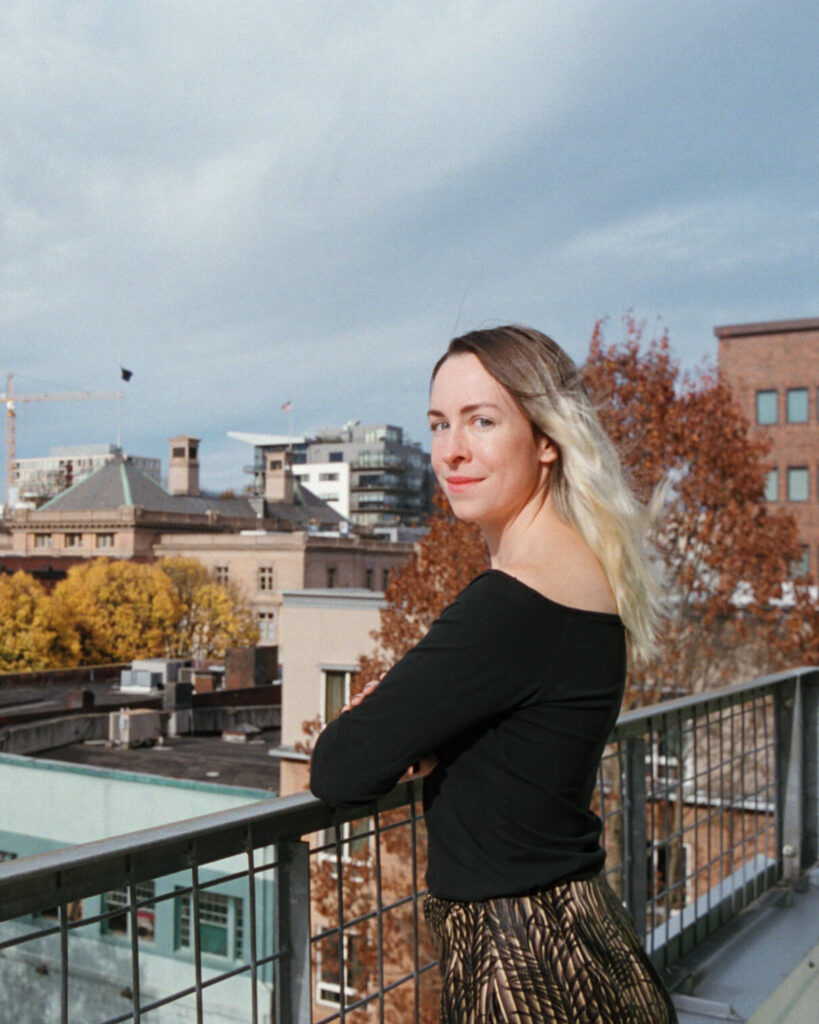
Tell us about your background—including your time at Kinfolk—and what eventually led you to launch Broccoli, the publishing house behind Heartbeat?
I originally found my way into the magazine world through working as a freelance photographer in Portland, shooting for small brands, designers, and boutiques. When Kinfolk moved their office to Portland and was hiring an art director, I read the job description and realized I already knew how to do almost everything required. As a photographer, you work so collaboratively with clients to build the art direction together. I was lucky they took a chance on me, especially since I had never officially been an art director or a graphic designer before. I started in 2014 and spent four years there as an art director and creative director, working across the magazine, the website, books, and even event series. It was an incredibly educational, multifaceted role where I saw how something rooted in print could translate into other forms and real-life experiences.
Eventually, the company moved its headquarters to Copenhagen. I didn’t want to relocate to Denmark or attempt to manage a creative team from across the world, so I decided it was time to move on. Having seen the inner workings of the industry, I told myself I would absolutely never start a magazine of my own because it is simply too difficult!
But of course, the stars ultimately aligned. Oregon became the second state in the US to legalize cannabis, and I found myself right back in the publishing world, launching Broccoli to celebrate the creative side of weed culture. It was really the first of its kind in that sphere, and we ended up publishing twenty issues over eight years. The name “Broccoli” was a lesser-known slang word for weed; I thought it was cute, the letters looked beautiful written out, and most importantly, the title was available!
Because I am endlessly curious and have a hard time focusing on just one thing, we soon started experimenting. We self-published hardcover art books—one featuring our signature cannabis flower photography, and another collaborating with artists who create miniature snail dioramas. Suddenly, we weren’t just a magazine anymore; we were an art book publisher. Today, the original Broccoli magazine no longer exists, but we kept the name to serve as our overarching publishing house. Why come up with something new when we could just reshape the narrative around the identity we had already built? Now, we treat our new publications—like Heartbeat—as their own distinct little worlds within this larger Broccoli universe.
Looking back, my passion for print was always there, even if I didn’t realize it could be a career. Growing up far from a major media hub like New York, the idea of being an art director never even occurred to me. However, I spent my high school years buying magazines, cutting out the beautiful ads, and collaging them into big, crazy scrapbooks. My parents were avid thrift store and flea market shoppers, so my eye was trained early on to search for the hidden treasure in the pile. I was always surrounded by books, heavily drawn to fairy tales and photography, and practically lived at the library. I definitely took the scenic route, but eventually, all of those early passions led me exactly where I needed to be.
What was the exact ‘void’ you felt in the industry that made you realize a magazine like Heartbeat simply had to exist?
It is quite funny, actually. With the other titles we’ve created—like our cat magazine, Catnip—the void was incredibly obvious. No one else was doing it, or in the case of cat magazines, they simply didn’t exist in print anymore. There was a very clear, empty space waiting to be filled. But with Heartbeat, the situation was entirely different because there is certainly no shortage of music magazines out there. The void wasn’t necessarily a lack of music media; rather, it was a specific type of conversation around music that we felt was missing, which led us to wonder what it would look like if we approached it through our own unique lens.
Our core editorial team has been working together since the very first issue of Broccoli eight years ago. Because our sensibilities are so deeply dialed in, it is quite natural for us to translate our perspective across entirely different themes. When the hypothetical idea of a music magazine first came up, we knew immediately that we wouldn’t just make it about music—it had to be about sound as well. Opening the dialogue to encompass sound allows us to explore nature, which is a beloved, recurring theme across all our titles. We love to analyze the natural world and unearth special stories from it, and the way nature is so deeply infused throughout Heartbeat makes it distinctly different from traditional music publications.
Furthermore, we are completely genre-agnostic. We didn’t design this with one specific audience or one particular style of music in mind. I always like to say that even the most well-listened, deeply dedicated music fan will discover something in our pages that they have never heard of before. We actively seek out stories about things that perhaps only existed for a fleeting moment, are incredibly ancient, or are entirely hypothetical. It is that beautifully broad, unconventional scope that makes creating this magazine so genuinely fun for us.
We are completely genre-agnostic. We didn’t design this with one specific audience or one particular style of music in mind.
What is it about the nature of sound that fascinates you the most on a personal level?
I love this question because, for me, everything can be fascinating if you really take the time to think about it. How do plants grow? Why is the sky blue? How does sound actually work? When you dive into these subjects and ask these simple questions about the everyday life we live, the answers are absolutely crazy. To capture that feeling, we actually included a short essay at the very beginning of Heartbeat explaining exactly how the human ear works. It is a beautiful way to set the tone for how we move through the rest of the issue.
On a personal level, I am just incredibly grateful to have access to all of my senses. Right now, for example, I can hear someone mowing the lawn outside. I don’t exactly love that specific noise, but I am glad I know it is happening because it grounds me in a precise place, a time of day, and a season.
I have certainly gone through phases where I would walk outside and consistently listen to music or a podcast. Lately, however, I have completely stopped doing that because I started feeding peanuts to the crows in my neighborhood. I carry peanuts in my pocket, and when I see a crow, I toss one onto the sidewalk. They are incredibly smart birds, so it doesn’t take long before they begin to recognize you. Now, because my ears aren’t distracted by headphones, I can actually hear the quiet, subtle sound of their wings as they fly toward me, knowing I might have a snack for them. It is such a tiny detail, but it genuinely excites me to realize these wild birds are my friends now. It is just a random example, but that subtle rustle of feathers is a special sound I actively look forward to hearing because it makes me feel so deeply connected to my immediate environment.
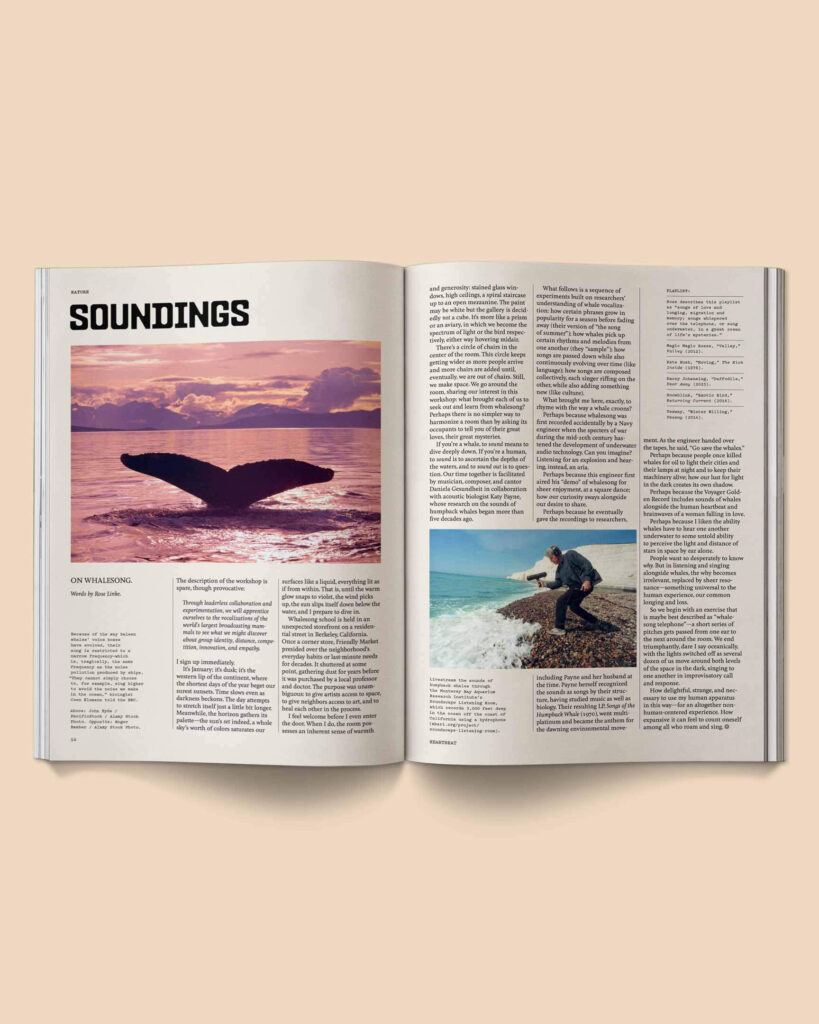
You’ve described the magazine as “a curated mixtape of sonic tales”. How do you go about researching and selecting the people and the “sonic tales” you feature in the magazine?
When we start our editorial process, our team of three editors usually has a few core ideas we already know we want to include. From there, we open up a massive call for submissions. We create a comprehensive pitch, sharing the loose thematic direction we are considering for the issue, and invite writers to send in their ideas. We receive an absolutely astronomical amount of story ideas—literally hundreds of them. Going through that list is a bit daunting, but it is incredibly fun because you quickly start to spot trends in what people are thinking about. If too many people pitch the exact same concept, even if it initially seemed interesting, we know we need to steer in another direction because we are constantly looking to uncover more surprising lines of thought. The most exciting pitches for Heartbeat—and truly for all the magazines we make—are the ones where a writer submits an idea that only they could execute, featuring people only they have access to. When you realize they are the absolute only person who could tell this specific story, it gets me incredibly excited because I know you won’t find it anywhere else. That level of uniqueness is really special.
Over time, we have built a beautiful, global community of contributors around the Broccoli universe to help source these tales. We have a great system in place, utilizing our newsletter and publishing on Substack, which is a fantastic space filled with circling writers. We always try to keep our editorial door as open as possible. I firmly believe that the more people you invite in, the better your chances are of discovering something entirely original; if you only ever rely on the people you already know, the content can quickly get a little too familiar.
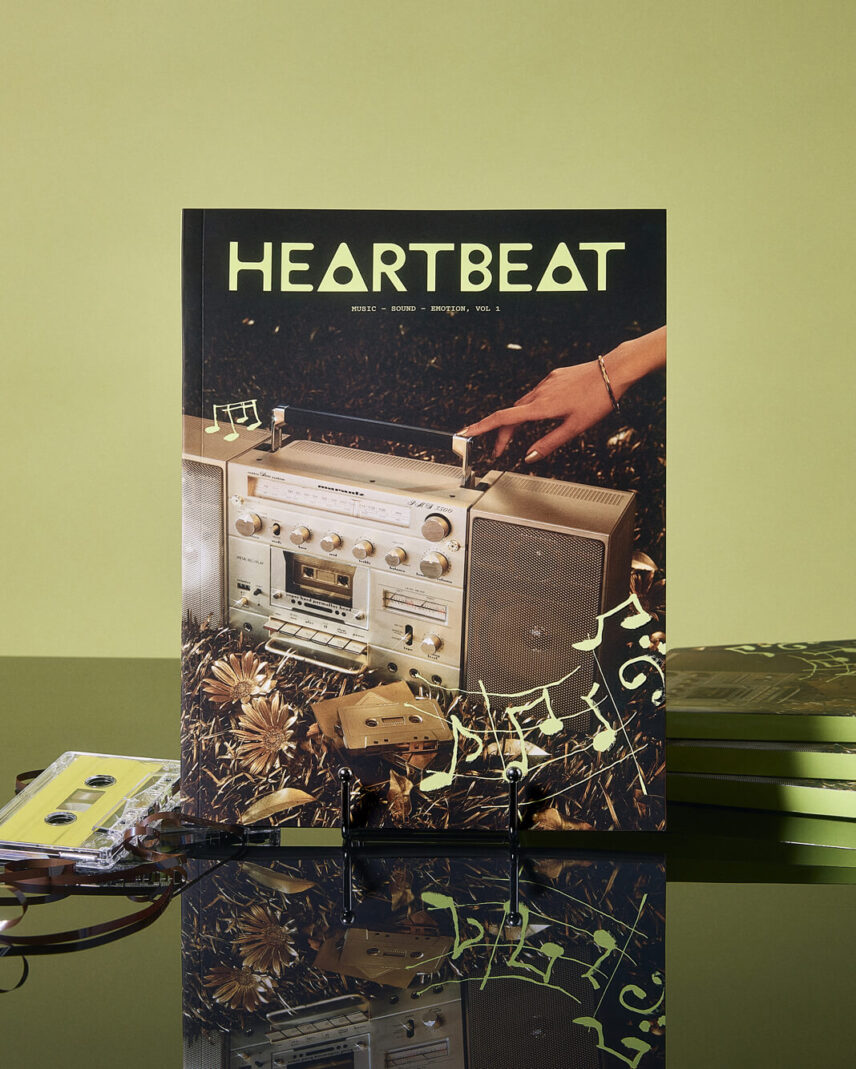
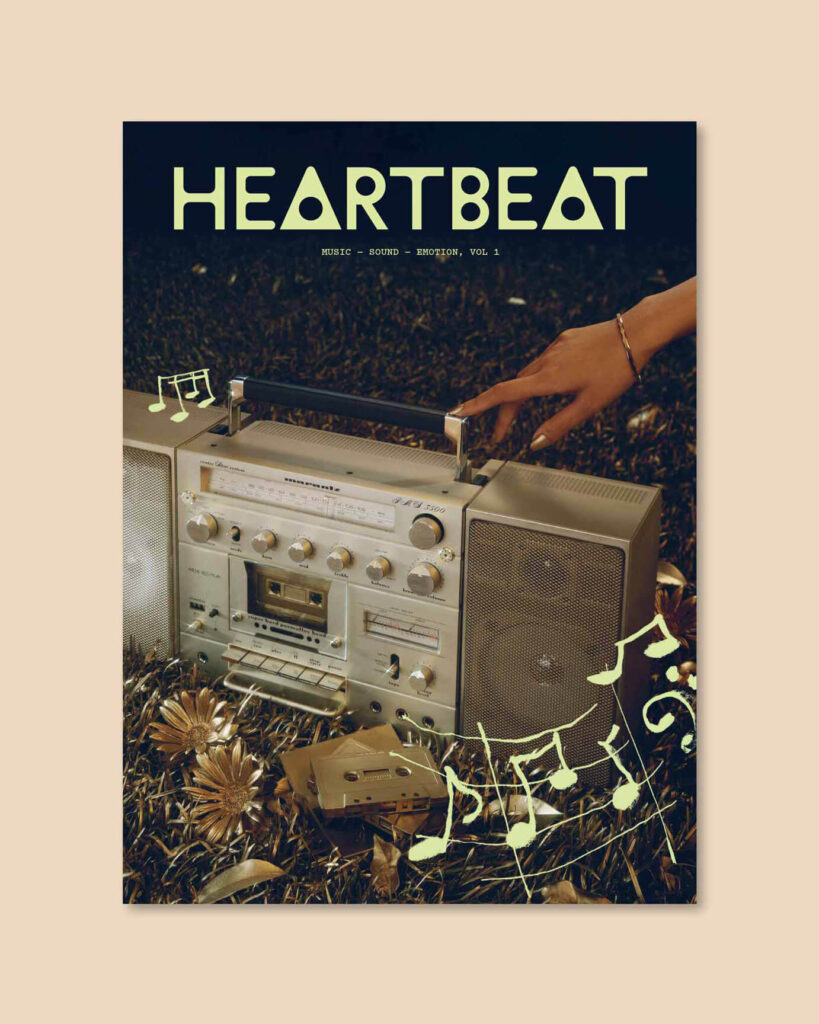
That being said, we do have a trusted group of regular contributors who appear in almost every project. We love their ideas so much that when they pitch, we know we can completely trust both their artistic excellence and their perfect grasp of our tone. A great example of this is on the cover of Heartbeat and throughout the section dividers, where you will see these little, scribbly music notes. Those were created by an illustrator named Lauren Doughty, who lives in the UK and has worked with us for years. She always adds this wonderful splash of imperfection. Her artwork helps break up the cleanliness of the graphic design with a bit of abstraction, randomness, and that raw human touch.
We do have a trusted group of regular contributors who appear in almost every project. We know we can completely trust both their artistic excellence and their perfect grasp of our tone.
The visual language of Heartbeat is incredibly distinctive and recognizable, from the choice of photography to the paper and typography. Beyond the written word, what are you trying to communicate to the reader’s senses through these physical details?
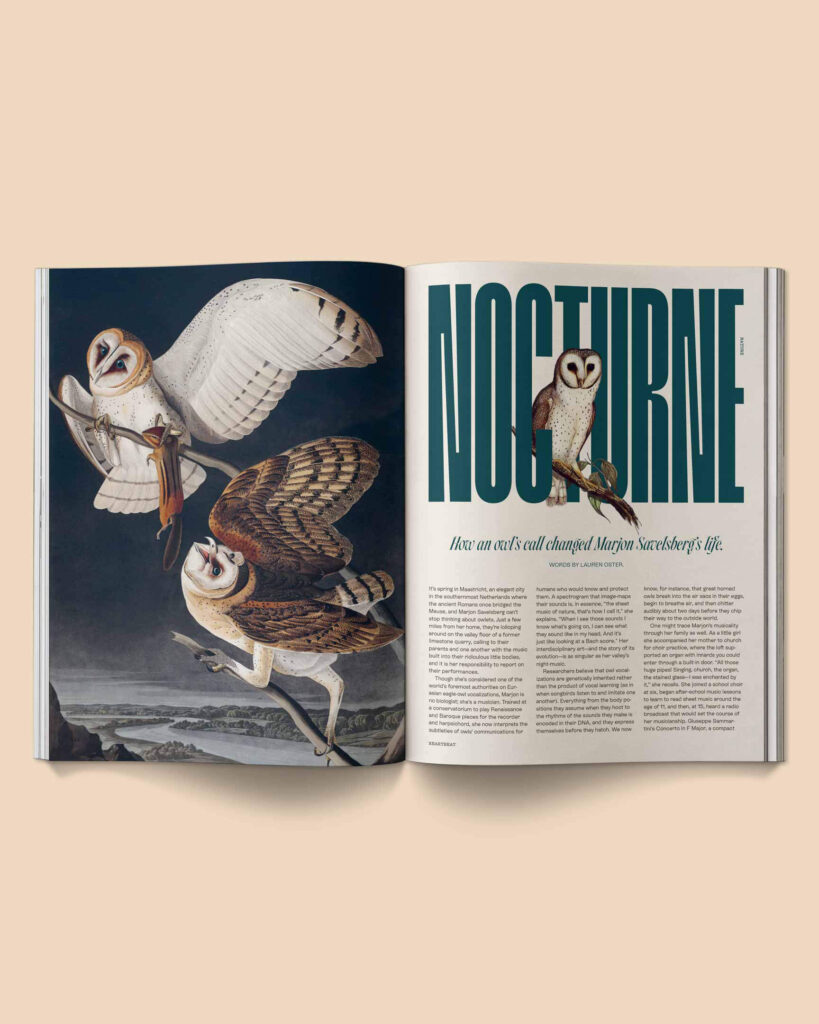
When developing the look of our magazines, we always draw heavily on nostalgic visual reference points. When I initially brief our designer, I usually write up a few conceptual notes to set the mood. For Heartbeat, the underlying concept was actually a bit goofy: we imagined an alien consciousness arriving on Earth in the 1980s, embedding itself inside a computer, and trying to communicate its newfound understanding of music through generated images and words. We asked ourselves what it would look like if this intelligence was outputting its best guess of what music is, what it looks like, and what it feels like. That playful narrative naturally led to a very distinct 1980s aesthetic.
Because of this, it is a very dense magazine by design. Certain sections are laid out to feel almost like a vintage reference book, packed tightly with information and strict key lines. But as you turn the pages, it transitions into other parts that feel incredibly colorful, wild, and visually expansive. In the back section, which we call “On the Pulse,” we wanted to evoke the dense, text-heavy feeling of a directory or a vintage phone book filled with classifieds.
Those shifting visual references directly dictated our paper choices as well. In the very beginning of the magazine, where we lean into that referential, periodical design, we use an uncoated paper because it inherently feels older and more tactile. Then, when you reach the big, bold features in the middle with the crazier art, we switch to a coated matte paper. I firmly believe that the physical feel of paper communicates an idea just as much as the text does; it subtly helps transition the reader’s mindset from one section to the next.
That tactile communication extends all the way to the cover. We use a soft matte lamination that feels incredibly gentle and satisfying in the hands. To sharply contrast that physical softness, we used a bright, almost acidic neon Pantone ink for the title and the hand-drawn musical notes so they really pop off the page. We also added a touch of clear gloss to help those specific elements catch the light. Sometimes we even experiment with metallic holographic foils on our covers. It is an absolute joy to play with those physical, sensory features to elevate the entire reading experience.

Many articles in Heartbeat are accompanied by small, curated playlists. How do you see these digital sounds interacting with the physical page?
Almost every story in the magazine has a short playlist attached to it. We wanted to find a way to recommend music to the reader without relying on obvious album lists or traditional rankings. We don’t do reviews, and we aren’t here to critique people’s creations or dictate what is objectively good or bad—though, naturally, if it made it into the magazine, we think it is quite good!
Instead, we asked our writers and artists to provide a list of five songs or albums connected to the piece they were working on. These could be tracks they were listening to while writing, music that was thematically linked to the subject, or simply essential listening for anyone wanting to dive deeper into that specific genre. We wanted to create an experience where you could read just one single article, take notes, and walk away with a wealth of new music to explore.
Lately, there has been a lot of online conversation about people leaving streaming services and searching for less algorithmic ways to discover music. I believe Heartbeat is a perfect example of how you can achieve that, because we give you so much rich, human-curated material to work with. In fact, it is the kind of magazine you almost shouldn’t read cover to cover in one sitting. You should read a piece, stop, research, and explore. It is certainly dense enough to support that kind of pacing. Ultimately, we really hope people dive into those little sidebars and captions, discovering new sounds in a way that feels intentional, where you feel like you are truly earning the discovery.
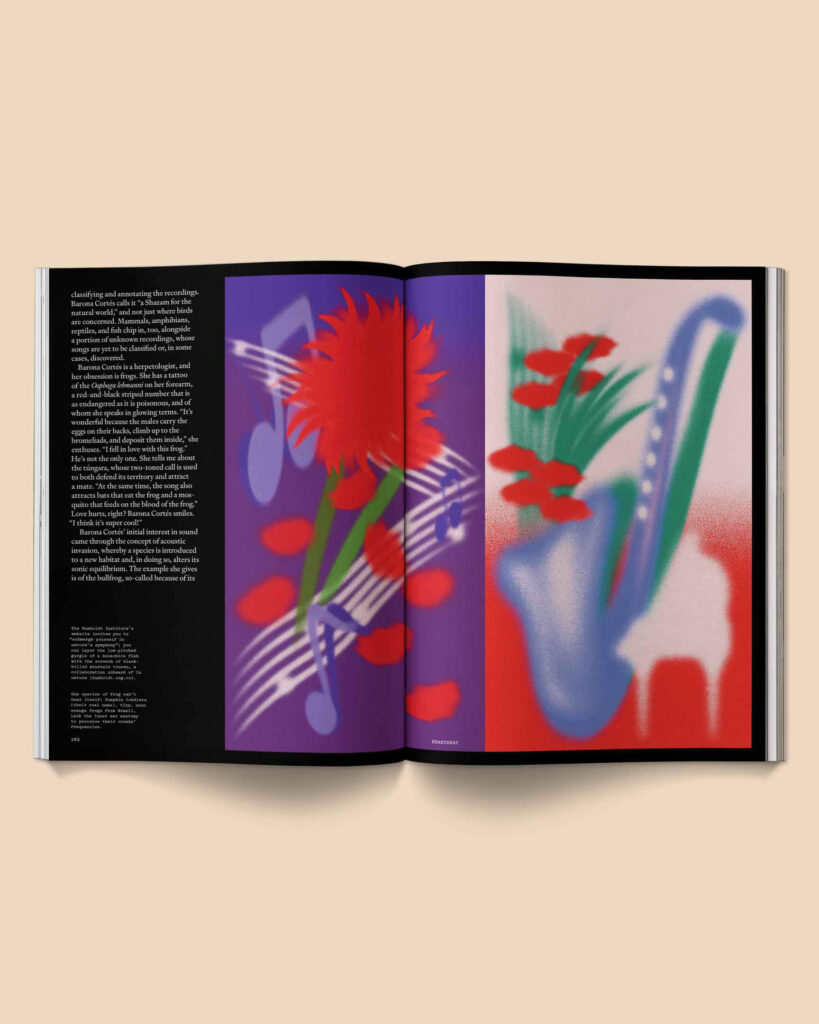
Of all the stories you’ve featured, can you share one that resonated most strongly—with your readers or with you personally?
It is so hard to choose because it is such a big magazine. Since I work on all of the art commissions, the visual pieces often stand out more to me. I have to admit, curating art for this issue was incredibly challenging because sound is inherently invisible—unless you are literally looking at sound waves translated into an image. We explicitly didn’t want standard concert band photography or the typical visual tropes you would expect to see in a music magazine. That restriction made it much harder for artists to know exactly what we wanted, and the visual identity really took shape organically through my research and the submission process.
But one of the early submissions that truly stood out was a series of photos of the Lakeside Lounge by Minh Tran from Oakland. They are such fun, vibrant images. The Lakeside Lounge is a Black jazz club in Oakland, and the patrons featured in the story are likely in their sixties, seventies, or eighties. They have probably been going there for decades; it is their spot. It is where they hang out, show up in these absolutely incredible outfits, share food, and play music together. The pure happiness, emotion, and profound sense of longevity within that community was so beautiful to see.
It makes you realize that versions of this community likely exist all over the world—places where people have shared a space and a bond for decades. But there is also a sense of nostalgia and a touch of sadness, because it is a finite thing. As the patrons get older and the people who run the club inevitably move on, you have to ask yourself: will someone continue the legacy of this space, or are we just getting a really cool, fleeting look at it while it is still around? It leaves you hoping that whatever communities we are building today, we will still have that same connection thirty years from now.
You can look at the photos through that deep, reflective perspective, or you can just look at them and think, these people are in the most fabulous outfits I have ever seen, having an absolute blast. What was especially important to me is that Min actually hangs out there a lot. He isn’t just dropping in, snapping pictures, and extracting from their environment; he is genuinely a part of the community too. And they are just fabulous pictures.

In the “On the Pulse” section, you feature people sharing sounds that shape their lives. Could you tell us more about that section, and what is a sound that has shaped your own life?
In this section, we wanted to find a way to include more voices in the magazine, giving people short features to talk about the important sounds in their lives. We deliberately wanted to span a wide variety of people in terms of how they connect to music. For instance, some of the people we included aren’t making a career out of music at all. We featured someone’s teenage daughter who isn’t even on social media and simply plays for fun. It was so refreshing to include someone young who isn’t trying to be popular or push a professional agenda. It is beautiful to feature people in a magazine purely out of their genuine love for what they do, rather than as a calculated step in their career.
It was fascinating to hear from people interacting with sound in so many different ways, and we specifically wanted them to come from all over the world. That diversity of location, interest, and passion is incredibly fun to see gathered together. Truly, we could have included hundreds of people in this section because absolutely everyone has a sound they connect to. Even if you aren’t a “music person,” you still interact with the sonic world—whether it is the noise of a lawnmower outside or something far more personal. We even have a writer who explored the history of hearing aids because that is a device they rely on, which offered such a wonderful, vital perspective to include.
When you are making a 200-page magazine—especially one created with the understanding that it might only ever be a single issue, depending on demand—you still only have so much space to work with. “On the Pulse” was our way to pack in as many ideas and as many people as possible at the very back of the book. We included their websites or Instagram handles so readers can actively look them up and learn more about their work, bridging that gap between the physical page and their ongoing projects.
As for a sound that has shaped my own life, there are probably many, but I would have to say the sound of the cello is deeply important to me. I learned to play when I was a teenager but stopped when I moved away from home. I had this relatively short, intense period of time with the instrument, and it is currently sitting down in my basement. Every so often, I tell myself I am going to start playing again, and I really just need to make it happen. I probably need to sign up for lessons just to have the accountability of someone asking me if I practiced my scales! It is such a beautiful instrument, and it is said to perfectly mirror the range of the human voice. There is something about the cello that hits people on a profoundly emotional level, whether they realize it or not. I would absolutely love to pick it back up again.
So far, you have published only one issue of the magazine: how has the community responded to it, and what’s something unexpected—for example a feedback—that you have received?
The response has been really positive; people genuinely love it. However, because it isn’t an obvious, traditional music magazine, you do have to think about it for a few seconds—or have someone explain it to you—to fully grasp what it is. From a marketing perspective, that makes it a bit more challenging. With our cat magazine, for example, you put a big, cute cat on the cover and people instantly know what they are getting into. Heartbeat requires a little more audience participation to understand why you might want it. That is exactly why the cover has to do so much heavy lifting. If you see it out in the world, you have to be viscerally drawn to it.
We ended up finding this incredible, archival stock photo from 1981, and it just felt so perfectly “Broccoli.” It beautifully captures that sense of nostalgia mixed with a little bit of weird nature.
The cover immediately poses a question: what is this magazine? It is highly attractive to people who love vinyl records and analog stereo equipment, because the featured cassette player belongs to that era of beautiful analog receivers. There is a psychological connection that happens when people see it; they immediately feel a personal tie to that era of sound. Once you actually start talking to people about the magazine’s broader concept, they absolutely want it.
In terms of unexpected feedback, I think the coolest thing is simply knowing how far the magazine is traveling and finding its way around the world. We featured a beautiful photo series of record collectors in Brazil, and I know for a fact that there are at least six or seven physical copies of this magazine currently in Brazil, sitting safely in the hands of those record collectors. I love to imagine who else might stumble across it—sitting on a coffee table, out in a park, or at a local coffee shop while one of those collectors is out reading it. There is just so much incredible, unknown potential when you create a physical object that can be seen and experienced by so many different people, even if they aren’t the ones who bought it. It holds endless possibilities, even if I don’t always know exactly where it ends up.
What are your thoughts on the enduring appeal of printed magazines in today’s increasingly digital and fast-paced world?
I absolutely love it. I firmly believe that people are never going to tire of having beautiful books, magazines, and objects of design in their homes. It is truly interesting to watch how the conversation is evolving around physical media. People are starting to collect again—even my husband and I are buying DVDs and VHS tapes now, and we have always collected vinyl records. There is a profound joy in living with the objects that come into your life; the familiarity you build with them over time is deeply interesting. It is just so nice to be able to turn an idea into something real and tactile. I am a heavy internet user, online just as much as anyone else, but I deeply cherish being able to walk into my room, pull a physical object off the shelf, and completely disconnect with it. It is incredibly special.
Magazines are amazing because they contain so many different ideas all at once. As a reader, you simply have to give yourself over to whatever is coming next. You never know what is going to be on the next page because there is no algorithm dictating your experience. There are no digital tabs to switch between or instantly close. Yes, you can physically close the magazine, but if you keep turning the pages, there is always a surprise waiting for you. We intentionally try to publish evergreen stories; they are never about breaking news, immediate releases, or current trends. This ensures that even if you pick the magazine back up two years from now, the stories will still feel profoundly relevant and interesting.
At the same time, physical magazines inadvertently capture a very specific moment in time. As editors, we are naturally influenced by the world we are currently living in. When we finally finished Heartbeat, I remember one of our editors joking that we had low-key made a climate magazine: there is so much deep conversation about nature throughout the issue, and you simply cannot talk about nature today without acknowledging how it is changing and what we are collectively witnessing around us. It is fascinating how the reality of the world inevitably seeps in. Even when the content itself feels entirely timeless, you can still crack open the pages and discover a perfect, tangible time capsule of that exact cultural moment trapped inside.


