


This story originally appeared on the Gents Cafe Newsletter. You can subscribe here.
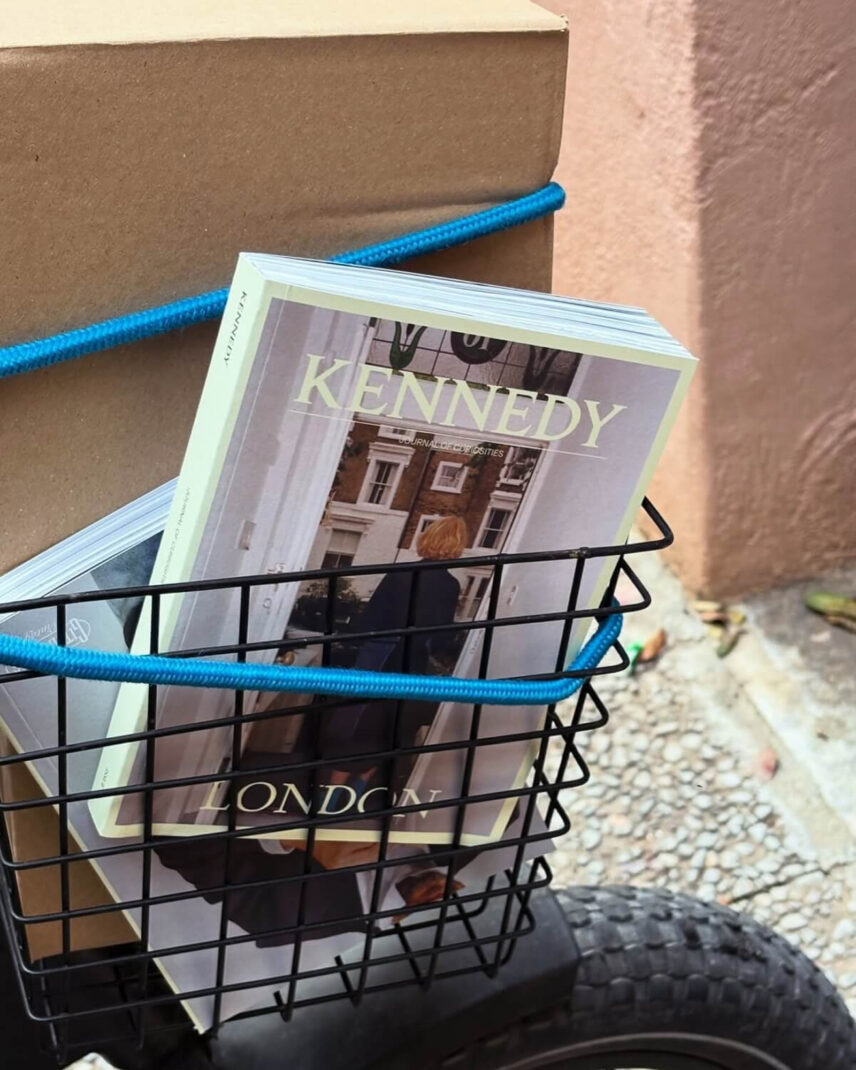
In a world where we are lost in an ocean of information, it’s becoming harder and harder to understand who is real and who is not. Coming from a background in photography and music, Chris Kontos founded Kennedy Magazine with the precise aim of finding and capturing that authenticity through his images and his interviews.
In this Scent of Paper interview, Chris tells us how having genuine, friendly conversations with the people he features allows him to avoid the clichés of mainstream magazines, what he means by “the magic of photography”, and how he unexpectedly ended up opening a wine bar in Athens as a real-life extension of Kennedy Magazine.
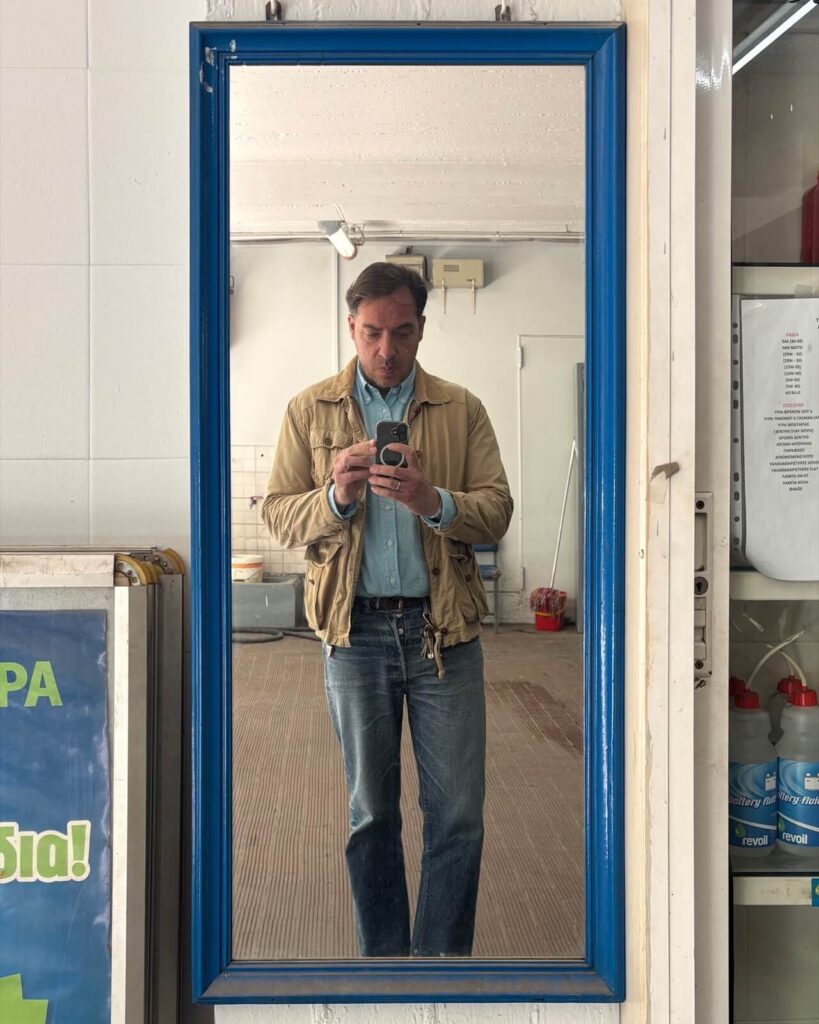
You’ve always defined yourself as a photographer first. Can you look back at your earliest memories with a camera and tell us what first sparked your interest in the medium?
I think from really early on, like when I was a teenager, cinema was a big thing for me. I was watching a lot of movies from a quite young age. There were maybe two movies that really caught my attention as a teenager: one was Blow-Up, which was about the life of a photographer and it kind of inspired me, and the other was Jean-Luc Godard’s Breathless. Those movies were my beginning in photography; somehow they inspired me to take photos.
Around the time I was 16, I started borrowing a camera from my dad and I started taking pictures of my friends. We would go around our neighborhood in Athens, and I would photograph them. I knew this was what I wanted to do, so I told my parents I wanted to study photography. I was really confident in that decision, and it’s all I’ve been doing all my life.
Even though cinema was the beginning and it has the gift of the moving image, photography has the magic of a single moment. That was the fascination for me—that it is only one moment. I usually take just one picture; I don’t take a lot of pictures. I think when the moment is gone, it’s gone. So even if the photo ends up not being exactly as you expected, you are fine and happy with the result. I think that is the whole point of photography. If you take too many, the magic is gone.
I usually take just one picture. I think when the moment is gone, it’s gone. I think that is the whole point of photography. If you take too many, the magic is gone.
Before founding Kennedy, could you share a bit about your personal background and career journey?
I was always a photographer, and I worked mainly for Greek publications. My primary job was as a photographer for one of the largest newspapers in Greece, specifically for the magazines that accompanied the paper, and I was also doing fashion work.
However, I was also a DJ. Through music, I got to know a lot of people around the world, and this opened doors to fashion and more international cultural circles. By the time I launched the magazine in 2013, I already had a lot of connections with people from magazines and fashion globally.
So, a career that was initially somewhat local expanded through music, allowing me to build relationships with many people outside of Greece. Then, the magazine expanded it even further, bringing me a much more international audience than before.
You launched Kennedy in 2013 as a ‘Journal of Curiosities’. What drove your decision to start this project?
The decision was driven by the desire to create something you can actually hold in your hand, because I believe in objects. I thought making an object would be something more solid and real for my photography and my writing. When a friend of mine and I started the magazine together, our initial idea was to make it like a portfolio of our work.
As for the subtitle, the name actually comes from a Blogspot I ran for many years before the magazine, which was called indeed Journal of Curiosities. So the magazine was a continuation of what I had been doing online for a few years, where I wrote about my daily life, food I liked, clothes I wore, and photography. In a way, the magazine became the printed version of that blog.
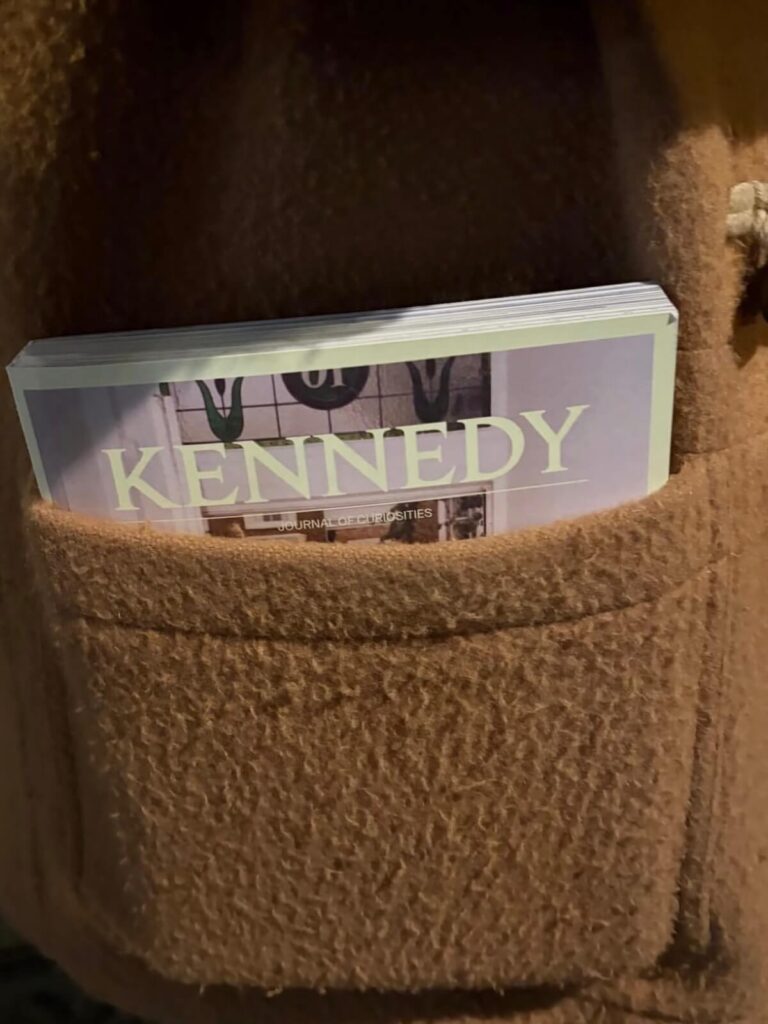
What were you looking for when you settled on the name Kennedy for your project?
There’s no real meaning behind it, actually. Believe it or not, the name of the magazine comes from a song I was listening to when I was thinking about starting the project. It’s a song by a British band called The Wedding Present, and the title was “Kennedy.” I just thought it was a good name. There was no background story to it, somehow. It was just a name I felt was appropriate, so I chose it, and there was no other thought behind it. I just said, “That’s the name,” and that was the end of the story, really.
Kennedy Magazine has such a distinctive editorial and visual identity. How would you describe the soul of the magazine?
All the values of the magazine lie in one word for me: honest. This goes for both the visual side and the text.
The magazine consists mainly of interviews, and its writing is really genuine and intimate. My way of interviewing people is like talking to a friend. Most magazines feel sterile and too editorial somehow. What we try to do is exactly the opposite, and this is the difference that makes Kennedy interesting, in my opinion.
The visual side is also the same; I think it’s honest because of my approach to photography—just taking one photo and that’s it, whatever happens. In my photography, I try not to aim for a big impression; it’s more about being subtle and authentic.
The aim of Kennedy Magazine is to explore the views and ideas of individuals who have influenced our aesthetics and cultural wanderings. Through these conversations, what exactly do you look for in an interviewee?
I don’t understand why interviews always have to be entirely about what they do. Many people approach someone who makes clothes and ask them only about clothes. When I started the magazine, I knew right away I wanted the conversations with people to be about them—about who they really are and their personal life. I think people are genuinely interested in those things.
A publication that had a really nice approach to interviews for many years, in my opinion, was Vanity Fair. In the 90s and early 2000s, I really liked their interviews. I want to have a style of interviewing that truly goes to the depth of someone’s personality, rather than focusing so much on their profession. That is the main thing.
What draws you to a story or a person? What makes someone stand out to you?
It’s simply people I have admired through the years. When I started Kennedy, my idea was to interview all the people I really admire—like my heroes in music, photography, and art. That’s still how I choose the people who feature in the magazine.
Sometimes I already know them, and sometimes I try to get in touch expressly for the interview. Other times, the people who work on the magazine with me—I’ve had many collaborators over the years—use their own personal connections to reach out to people they really want to feature. But the primary goal has always been to include people who are at the top of my list as personal heroes. I still have a long list of future interviews right now; many times I thought it would end, but there’s always someone new coming up.
For many years, the magazine didn’t have a reference city or a theme; it was just called Journal of Curiosities and had no set concept. From the tenth issue onwards, I started focusing on a city or a country, or even something completely different like when I did a family issue, or a recipe book about food. Now, every issue revolves around a theme, so every person featured in the magazine has to be connected to that specific concept.
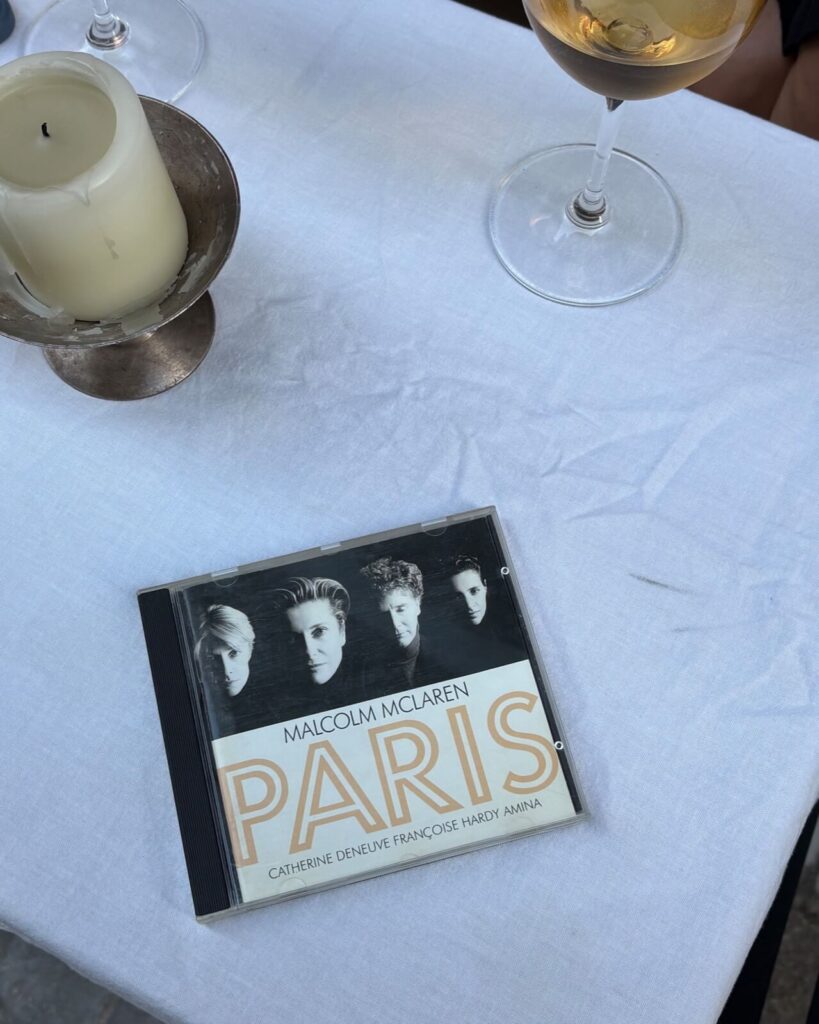
Your interviews feel intimate and personal, not just through text but also through photographs. How do you manage to capture both things?
Usually, I have a camera with me while we talk, and I take pictures right in the moment of our conversation. Other times, I take a completely different approach and do the photo shoot separately. But generally, I prefer talking to someone and taking pictures along the way. For instance, when I sit at a table with someone and we eat, I think the result is somehow more spontaneous.
As for the text itself, even though I spend a lot of time with each person, I usually put the entire conversation into the interview for the magazine. I don’t do a lot of editing.
Of all the stories you’ve featured, can you share one that resonated most strongly—with your readers or with you personally?
I think the latest issue packs several great pieces. There was one with the singer of The Charlatans, Tim Burgess, and another with the founder of Drake’s, Michael Hill; or one with Angela Hill, the founder of Idea Books. All of those interviews were really, really good to me; I was very proud of them.
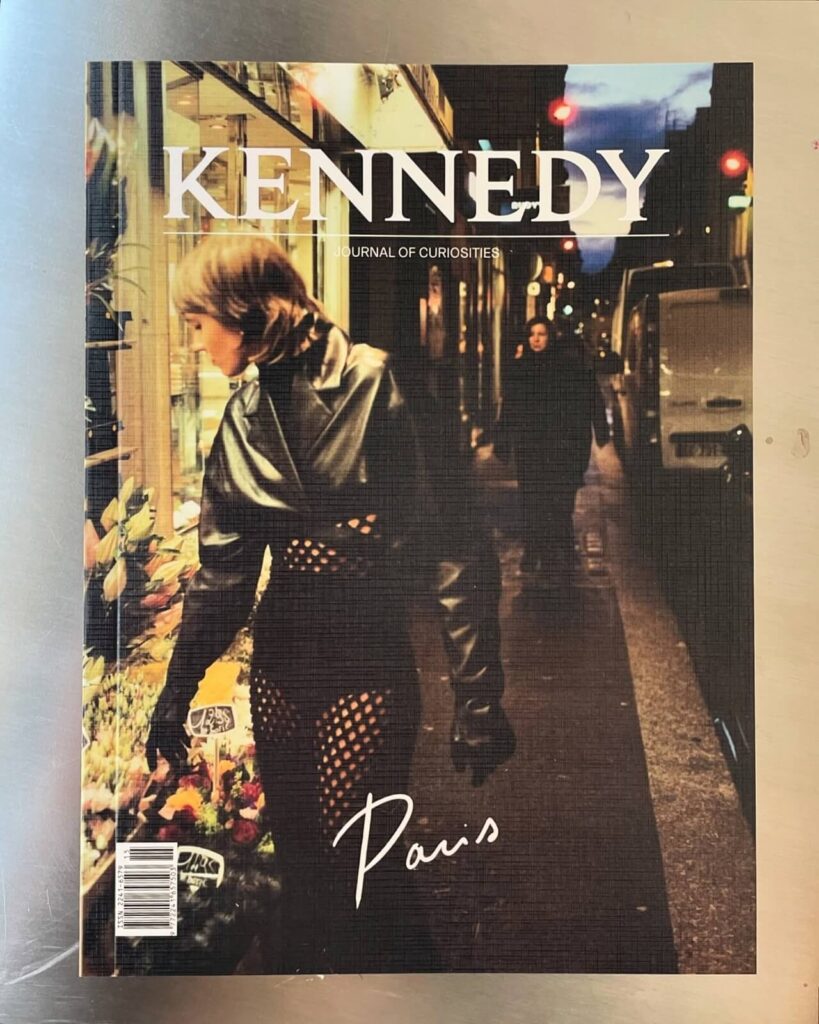
If I look back further into the past, there are many as well. One I remember clearly is with Lawrence, the frontman of Felt, one of my favorite bands. There was also an interview with painter Jean-Philippe Delhomme in the Paris issue.
In general, an interview has to feel personal to me—that’s what makes me feel that I’ve succeeded. The ones I really like are those where the tone of the conversation becomes as friendly and intimate as it can possibly get with someone.
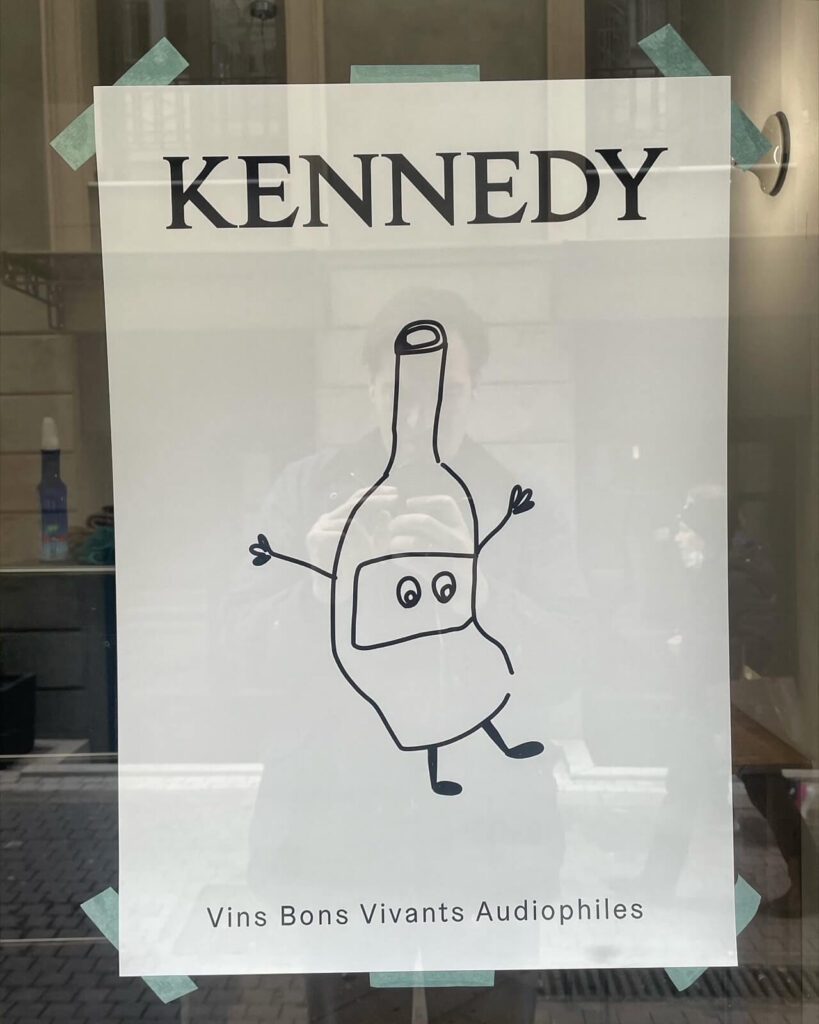
You’ve expanded the ‘Kennedy world’ from the printed page to a physical space with your wine bar, Kennedy Vins. Can you tell us more about this new chapter?
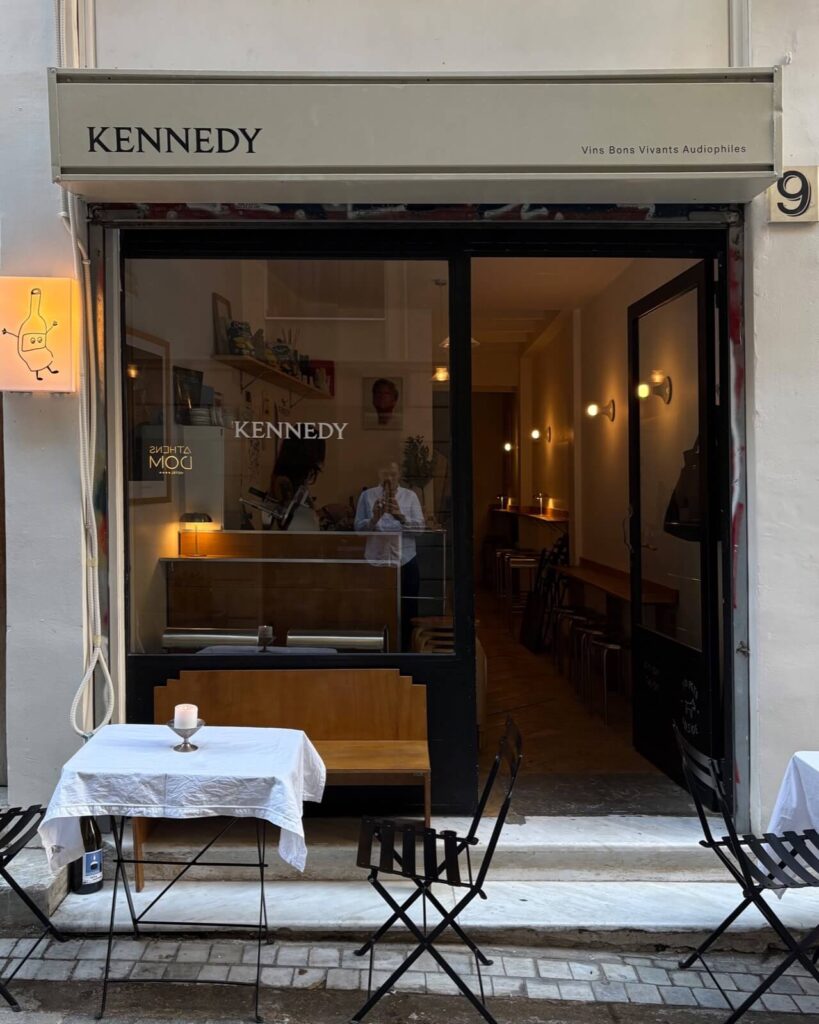
It has been a most unexpected evolution. Just like with the magazine—where the printed publication was a continuation of the blog I had because it needed to become a tangible object—I felt that Kennedy also needed to have a physical space. It’s a place that represents all the things I like about life: good wine, good music, and high-fidelity sound. This was the natural continuation of what I do with the magazine.
I wanted a place where my readers, or the people who like Kennedy, could hang out and have a drink. The idea there was to build a community. Interestingly, we get a really international crowd; it’s mainly people visiting from different parts of the world who come to the place, rather than locals from Athens.
Wine is another passion that I got into over ten years ago, when I first started drinking natural. I began getting to know many people in the restaurant and wine businesses, and then it became a bit of an obsession, somehow. So the primary reason I started the bar was because I wanted to represent and showcase many of the winemakers whose wines I loved in Athens.
What was the biggest challenge in the creation of Kennedy Vins?
It was a massive challenge. It took me two years because I did everything through my own efforts, together with my wife. It was a really big project, and to be honest, there were many times during the construction of the bar when I thought about quitting, but I gave it my best and we managed to do it.
I’m happy that I didn’t give up, but still, running a bar and being in the hospitality business is a lot of work. You have to be heavily involved in the day-to-day operations, and I work many hours myself at the bar every single day.
As for the music side of things, it’s mostly vinyl and CDs—absolutely no streaming. I bring records from home every day. I handle the music myself, though occasionally friends of mine will ask if they can come down with their own records and play a set. We’ve done maybe four or five events like that so far. In terms of musical taste, we play a lot of jazz. I like it a lot, and I think it fits the atmosphere of a bar perfectly.
What are your thoughts on the enduring appeal of printed magazines in today’s increasingly digital and fast-paced world?
I think that now, on Instagram and social media, everyone pretends to be something else, and what is missing is originality. For this reason, everyone wants to quit social media; that’s what I hear from everyone, and I am one of them. What I try to do with the magazine is exactly this: to be original and to show that there is always another side to things.
I’m positive that there is going to be a big shift back toward physical media. It is already relevant, but it will become even more so because I think everyone is sick of social media right now. A physical publication is something you can keep, hold, have there, and read again in the future. On social media, if you miss something, it is somehow gone forever; you just have to keep scrolling for the next short video.
To feed my creativity, I try to buy printed stuff all the time, like books or magazines. I also research a lot online and even on Instagram actually, where I keep a collection of saved posts as a sort of moodboard for things that look interesting. But as always, I get inspired a lot by cinema. When I watch a good movie, it stays with me for a really long time. A book can do the same, along with many other things. I also buy a lot of music; I buy records almost every week—both vinyl and CDs. Right now, I have around 4,000 records and maybe 2,000 CDs!
I think that now, on Instagram and social media, everyone pretends to be something else, and what is missing is originality.
You also often share your outfits on Instagram. When did you start developing such an appreciation for style, which is not fashion?
I’ve changed styles many times through the years, and most of the ones I adopted came from music culture. I think something that is missing from style nowadays is the depth that music used to give it. For example, when I was a teenager, you could be a Goth and dress like a Goth, or you could be into hip-hop and dress in that way. For me, underground music movements always affected me deeply.
When I first started choosing my own clothes consciously, moving away from what my mother bought for me, I was heavily influenced by the Beastie Boys because stylistically they were doing something amazing. I liked the Adidas trainers a lot, the tracksuits, and all that stuff. At the same time, I was also listening to indie music, so it was a mix of both.
As I grew older during my teenage years, I found British Mod style really interesting, so I started wearing suits and ties, adopting a sort of skinhead Mod style for many years. That, too, was entirely music-related.
After that, I think I went through a major phase where I was influenced by Belgian designers like Martin Margiela and Raf Simons—that lasted for maybe ten years. Eventually, I started being influenced by Japanese Ivy books and that entire aesthetic. To this day, I still dress somewhat in that style, while continuing to pick and blend influences from my past.


