



This story originally appeared on the Gents Cafe Newsletter. You can subscribe here.
A single taste can sometimes unlock a new world, shifting the perception of a familiar object forever. It’s a moment of profound realization when you discover depth and complexity hidden within something you thought you already knew.
For Carlos Eduardo Bitencourt, founder & CEO of Cafezal, this moment came while he was working as an engineer in London, as he first discovered specialty coffee. That early passion eventually grew and led him to create a brand rooted in both his Brazilian heritage and Milanese design.
In this Brand Talks interview, Carlos shares the story of an evolving vision, how his engineering background drew him toward direct trade sourcing and the technical details of roasting, and why he decided to launch the Manifesto of Italian Specialty Coffee, an initiative aimed at moving the movement from a niche interest into a broader cultural dialogue.

Can you take us back to the moment you first discovered specialty coffee? What shifted your perception of what coffee could be?
I was living in London back in 2011, right around the time the specialty coffee scene was just beginning to emerge in Europe. Back then, the specialty movement was profoundly focused on quality and quality only, and it had a slightly different atmosphere than the current market. Trying it for the first time was like having a completely new door opened for me. Experiencing a product with such distinct tasting notes and exploring different brewing methods made me realize that I had absolutely no idea coffee could actually be like this.
At the time, my background was in engineering, and I was working in consulting in London. But experiencing that level of craft planted a seed in my mind, making me wonder if I could one day build something of my own in the coffee world. From that day on, I spent my time exploring the few true pioneers in the city back then. Places like Workshop, Caravan, and especially Ozone were the early destinations that completely shifted my perception of what coffee could be.

At what point did the idea for Cafezal begin to take shape in your mind, what was the initial vision?
From that initial discovery, I started to ask myself what my role in this world could be. I considered dealing in green coffee, perhaps importing beans from Brazil and Latin America into Europe. I even spent my holidays visiting coffee farms while I was still living in London, and continued to do so after moving to Milan in 2015. Through those trips, I realized that my true passion lies in the backend of the process. Perhaps because of my background as an engineer, I was naturally drawn to the technical details—sourcing, roasting, and cupping the product itself, rather than just the front-of-house experience.
Initially, I thought about creating an online platform for direct trade. However, as I settled into Milan and continued taking roasting courses, the vision evolved. I decided I wanted to open a physical coffee shop that included its own roastery. The goal was to build a brand that could touch people and connect directly with the final customer, while still being rooted in the journey of the green coffee bean. That vision materialized in 2017 when we opened our first space on Via Solferino in the Brera district.
Looking back, when I first tasted specialty coffee, my knowledge was absolute zero. But when you discover a new world that fascinates you—whether it is watches, vintage cars, or coffee—it quickly becomes an obsession. I treated it like a deeply dedicated hobby, spending a couple of years researching everything from natural to washed processing methods, until I finally built the expertise needed to bring this vision to life.
When you discover a new world that fascinates you—whether it is watches, vintage cars, or coffee—it quickly becomes an obsession.
You’ve mentioned that in the early days, the locals were friendly but skeptical. How did you manage to introduce them to the nuanced world of specialty coffee?
I have always believed in an approach centered on proximity and genuine connection. In the very beginning, I wasn’t the one working directly behind the counter, so it was crucial for me to instill this philosophy in our baristas. I wanted the brand to feel inherently inclusive rather than exclusive or intimidating. To achieve this, we made a strategic decision regarding the taste profile of our core offering. We intentionally created a house blend that wasn’t overly complicated. While we always had highly complex single-origin options available for those looking to explore, our main product needed to be accessible and comforting.
The goal was to build a space where anyone walking in could immediately sense the deep know-how, attention to detail, and passion behind the brand, without feeling pushed away if they didn’t know the specialized terminology. We wanted to handle every customer with respect, whether they were simply someone who wanted a quick, well-made cup of coffee to start their day, or someone truly eager to dive into the universe of specialty beans. It was all about introducing the local community to this new movement in a warm, welcoming, and entirely inclusive way.

The name Cafezal translates to ‘coffee plantation,’ honoring Brazil’s heritage. How do you balance the traditional Italian espresso culture with that vibrant Latin flair to create a lifestyle that feels both refined and accessible?
Let me answer that from another perspective. The difficulties of opening a modern, specialty coffee shop in Milan were clear to me from the beginning. But at the same time, I knew that this location would be an incredible leverage in the future, because Italy will always be one of the greatest coffee nations in the world, thanks to its profound espresso culture. Integrating my Brazilian heritage was very natural for me because it is simply who I am. I wanted to include those Latin elements little by little into the business. However, you have to remember that our first store in Via Solferino is only a 50-square-meter space. My initial concept was to fill the room with plants to reflect a true cafezal, a coffee farm, but the space didn’t allow me to. Because of that, connecting the space physically to the origins of the coffee was something we had to introduce step by step.
Ultimately, the idea was to lean heavily into very Milanese, very Italian elements—working closely with local architects and utilizing recognizable Italian design forms—and build the brand around that structural elegance. We wanted to bring together two of the most important worldwide elements of coffee: the Latin American origins, which account for over sixty percent of the global coffee supply, and the rich Italian espresso culture, set right here in Milan, the international capital of design.

Today, Cafezal has evolved into a multifaceted ecosystem, spanning a roastery, academy, laboratory, and even a members-only club. How central is the concept of community to your mission, and how do you engage with it?
When you create a brand, you naturally embed many of your own personal elements into its foundation. I have always been interested in a wide variety of disciplines, so when I entered the coffee world, I knew I didn’t want to just open a standard brewing bar or a simple coffee shop. I wanted to build something far more comprehensive. Today, that ecosystem includes our e-commerce platform, our B2B operations, catering, private events, the physical stores, and the dedicated coffee shop within our academy. I believe that having this multifaceted approach ultimately gives our community the clear perception that we truly know the depths of what we are talking about.
My ultimate goal with the Milano Coffee Academy, for instance, is for it to become the go-to destination for everyday people to visit when they want to discover coffee techniques and deepen their personal knowledge. Similarly, I continue to push heavily into the B2B sector because I see it as a vital channel to develop the Cafezal brand and introduce our culture to entirely new spaces.
Taking this approach is complex, because there are so many moving parts to manage simultaneously. If you look at it from a purely transactional or short-term economic perspective, it might not seem like the most efficient revenue-maker. However, I firmly believe that blending the inspirational aspect of coffee education with this diversified business model is the best path forward. Building a brand that is deeply connected to its community and strong across multiple areas ultimately pays off much better in the long run.
Building a brand that is deeply connected to its community and strong across multiple areas ultimately pays off much better in the long run.
Can you walk us through your philosophy when it comes to sourcing green beans and defining your signature roasting profiles?
Our ultimate aim is to become fully direct trade. We already operate this way with a few origins; for example, our sourcing from Brazil has been one hundred percent direct trade for the past three years. To me, true direct trade means exactly that: I send a bank transfer directly from my account straight to the farmer’s account. I love this approach because it builds a personal, transparent relationship with the producers, entirely bypassing intermediaries, importers, or exporters. I am traveling to Colombia next week with the plan to transition our sourcing there to fully direct trade by next year.
This model is undoubtedly the best way to support the farmers. The global coffee market is notoriously difficult and volatile when it comes to pricing. By establishing a direct relationship, we ensure they are paid fairly and reliably, and in return, we secure the exact quality of coffee we want. If a farmer knows I will consistently buy fifty bags a year for Cafezal, they will naturally set aside the best bags tailored exactly to the profile I like. It’s a special treatment you have to earn, and it becomes a mutual partnership where they select their roasters just as carefully as we select our producers. Today, we have an incredible team—head roasters, trainers, and quality control experts—but I still personally handle all the green coffee purchasing. I am constantly on my phone talking directly to the farmers because it connects back to what I love most about this industry, and it ensures our core philosophy is maintained in every single cup.

You recently presented the Manifesto of Italian Specialty Coffee, bridging the worlds of bakery, fine dining, and mixology. Why was it essential for Cafezal to lead this dialogue and move coffee from a niche interest into a broader movement?
I think there are many players in our sector—consultants, roasters, coffee shop owners, and passionate coffee lovers—who deeply want to promote modern, specialty coffee and new brewing methods. The industry here is incredibly vibrant. However, after speaking with many of my peers, I noticed how difficult it is to get everyone sitting around the same table. The levels of interest, the timing, and the specific priorities often vary heavily from person to person and business to business.
Because of this fragmentation, we decided to take the initiative and launch the Manifesto of Italian Specialty Coffee. The idea was never to be selfish or to create something exclusively for ourselves; rather, we wanted to ignite a small flame. Cafezal sparked this flame, but it is meant to illuminate the broader movement. We know other businesses are thinking along the same lines, even if their specific priorities might differ slightly from our own.
For example, one of the main principles in our manifesto is the acknowledgment that coffee history did not simply begin with the specialty movement. It started long before that. There is a profound, historical tradition of coffee, especially here in Italy, and we deeply respect that heritage. For us, communicating that bridge between tradition and modernity was vital. Ultimately, I see an industry that is eager to take action and a public that is increasingly willing to listen. Our objective was to launch this manifesto to clearly define what modern coffee is, to honestly present its advantages alongside its challenges, and to make as much noise as possible in the mainstream press.

What is your favorite time of day to disconnect from the business and simply be present with a coffee?
Well, it doesn’t happen very often! But when it does, it is usually very early in the morning when I first arrive at the office, before the daily noise of the business begins, or when I am traveling to another continent and my part of the world hasn’t quite woken up yet.
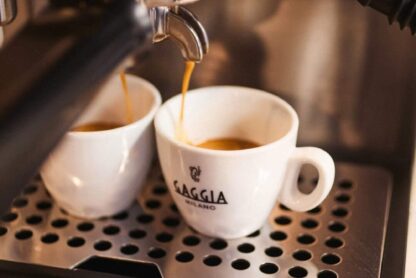
The other perfect moment is late in the evening, after a great dinner with family and friends. By then, the business is finally sleeping, and I can truly be present to just enjoy the cup in front of me. While I do drink a lot of filter and drip coffee to appreciate the different flavor profiles, I have an espresso machine at home. At my core, despite my deep love for all modern brewing methods, I will always be an espresso guy.

Imagine you could share a cup of coffee with any figure from history: who would it be?
I would choose Amyr Klink, a Brazilian navigator. He was the first person to solo-cross the South Atlantic in a rowing boat. He is a detail-oriented explorer who has been to Antarctica at least 40 times. In the maritime world, he is something of an ‘anthropologist’ and a thinker. He wrote a great book recounting that first crossing, called A Hundred Days Between Sea and Sky. Among many stories, he details the preparation for his journey, which took over two years. He began the book by saying: my fear was never leaving.