




This story originally appeared on the Gents Cafe Newsletter. You can subscribe here.
Some see running as a physical exercise or a competition; for others, the angle is radically different, and running is first and foremost a state of mind, a way to start the day at the right pace or to carve some personal space into a busy week.
Among those who live running in its purest form is Jurian Elstgeest who, after a decade-long career working for giants of the running industry around the planet, set out to create his own brand and really embrace his personal vision of running.
In this conversation, Jurian shares how 4T2 was shaped after the pursuit of simplicity, why they will never release a seasonal model, and how a simple slogan turned out to be a powerful way to connect a dedicated community of running enthusiasts.

Can you recall the first time you fell in love with running?
I can actually recall the first time I didn’t love running. My dad used to take me to the beach, and I would run with him for maybe one or two kilometers at best, but then I’d just stop, play in the sand, and wait for him to come back. I really hated it back then.
It wasn’t until my mid-teens, when I started doing track and field—specifically the decathlon—that things changed. I was decent across all the events, but I was a bit faster on the run. I didn’t care much for sprinting, but I fell in love with running through the 400 meters, which closes out the first day of the decathlon. It is an interesting discipline because for the first 200 meters, you feel great—you’re running at about 80% rather than a full sprint, focusing on technique, stride frequency, high hips, and controlled breathing. You feel like you’re flying. But as soon as you round that corner into the final stretch, everything slowly starts to fall apart. At that point, it becomes a mind game as much as a physical test. You go from feeling incredible to finishing completely destroyed, and I loved that dynamic. That’s what made me truly fall in love with running.
After track and field, I actually stopped running for a while and went back to playing football. It was only in my late twenties or early thirties that I decided to quit football. I was pretty fast on the pitch, which meant I was constantly getting kicked by opponents and picking up injuries. I realized it wasn’t worth it because I wanted to run half and full marathons and keep running in the future, so I made the switch to focus seriously on just running.
Around that same time, I had a health scare. On a work flight to New York, I developed pneumonia, but officials feared it was SARS. They landed the plane at JFK, isolated it, and emergency crews in hazmat suits evacuated the aircraft. They drove me straight to a hospital in Queens where I had to stay for a week, and the total recovery took about six months. That experience was a wake-up call—I realized I needed to quit smoking and start living a healthier life, so I did.
How has that passion evolved over time, and what has running taught you?
My journey with running evolved through the classic progression: after that health scare, I tried to live healthier, started running more, and gradually became competitive.
Eventually, I set my sights on running a marathon. During a new-year management meeting, while I was working at ASICS, everyone was sharing their resolutions about hitting sales goals and KPIs. When my turn came, I told my Japanese boss “I just want to deliver a good product, but I don’t do New Year’s resolutions.” Everyone in the room thought I was going to be fired, but my boss just started laughing and said, “I’ve got one for you: you should run the New York City Marathon this year.” Since ASICS was a sponsor, he got me an entry ticket.
When I started training, I never followed formal training programs; I just wore a classic Swatch watch and focused on running faster and longer. Through that, I fell in love with the rhythm. Today, even though I’m not as fast as I used to be during my triathlon and Ironman days, that sense of rhythm still carries me forward. Running became a lifestyle: morning routine, yoga and meditation all rolled into one. I have my first coffee, then go for a run to synchronize my breathing, heart rate, and body movement.
Now I run practically every day, often together with my dog. We typically do 5 or 6 kilometers a day during the week, and up to 10 or even 15 on weekends. If I go a few days without running, like when I recently had the flu, I get restless and hard to be around. My wife will literally tell me, “You’d better go for a run.” I’d say I’m almost always roughly marathon-ready.
In terms of what it has taught me, coming from track and field gave me a deep appreciation for proper technique, focusing on active footwork, avoiding overstriding, and keeping your hips positioned correctly over your feet, which benefits the entire body. But on a deeper level, running has taught me the power of morning clarity. In a perfect scenario, I love starting out while it’s still dark and returning as the sun comes up. Whether I’m at home or traveling for work in Asia, waking up at 4:30 or 5:00 a.m. for an early morning run gives me immense mental clarity for the day ahead.
I love starting out while it’s still dark and returning as the sun comes up. Waking up at 4:30 or 5:00 a.m. for an early morning run gives me immense mental clarity for the day ahead.
After spending years leading product and strategy inside massive athletic footwear brands, you chose to launch 4T2 as a lean, independent venture. What was the exact moment or realization that drove that decision?
I’ve always left companies proactively whenever I needed a new challenge. I require big challenges, otherwise I get bored and lose my energy and patience. My last project before 4T2 was building out the European business for a Chinese brand, which was fantastic. Having worked for Nike with the Americans, ASICS with the Japanese, and then a Chinese company, I experienced completely different cultures, and I think this has contributed greatly to my growth.
However, after years in corporate leadership, I got frustrated by how many compromised decisions big companies make regarding their strategy, market approach, and customers. I wanted to give it one proper try and do things my way.
The actual spark didn’t come from me—it came from my wife. She put me on the spot and said, “You’ve always claimed to know better, and you’re always telling me that the corporate decisions were wrong and how you’d do it differently. Why don’t you put your criticism into practice? If you were to do it your way, how would you start and build a brand?”
Starting a new brand—and especially in a specialized space like running footwear—is notoriously difficult, so I might never have taken that leap on my own. But after she challenged me, it took just one week to put the entire business plan on paper. Everything was already in my head, and years of corporate frustration poured straight onto the page.
The core question driving the whole plan was simple: if you could start a running brand today without any legacy history, ongoing corporate baggage, or weight carrying you down, how would you do it? That became the foundation of 4T2.
“Running is ugly,” as you state in your company manifesto. What does running mean to you?
When I first conceived the company, I actually wanted to register “Gone Running” as the brand name because that phrase captures what running means to me personally. When I’m out running, my whole physical and mental state is “gone running”—I’m away in my own private space. It has nothing to do with competition, winning, being the fastest, or going the furthest; it’s a form of meditation. However, “Gone Running” is technically too generic, and registering it ultimately proved to be very expensive, while we wanted to invest all our capital directly into making the product.
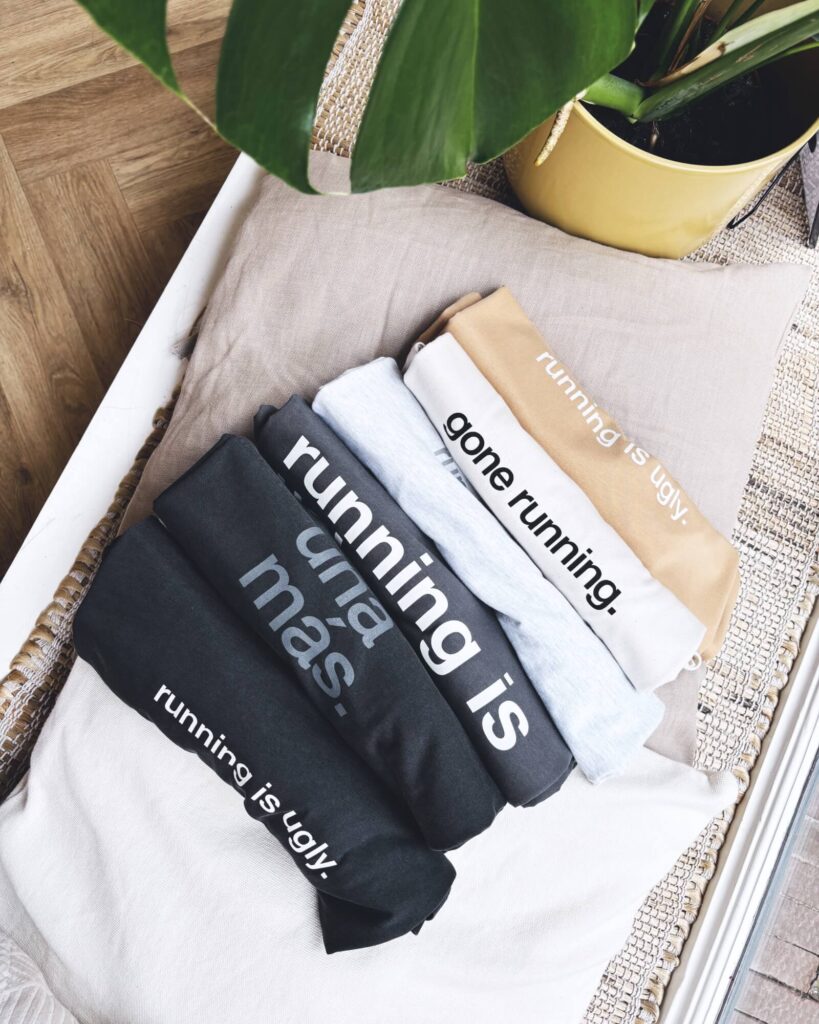
As we built the brand, I didn’t want to tell another boring story about carbon-plated shoes. Through conversations with runners over the years, we explored what running truly means to people once they set aside personal bests and race times. You see this depth often in trail running, where it’s less about exact distances and more about the adventure and outdoors. We discovered that runners have deeply personal, candid perspectives on the sport—and that’s where lines like “Running is ugly” and “Running is boring” came from. We put those quotes on our t-shirts, shoes, stickers, and postcards.
If you’re a runner, you instantly understand why running is ugly. Non-runners might be confused, but every runner gets it. The classic example is finishing a marathon: you cross the finish line after going through total hell, feeling completely victorious with your hands in the air and a huge smile on your face. Then, when you see your official finisher photo later, you look at yourself and think, “Oh my god, I look like shit.” Running is ugly.
It’s a candid truth, and it creates a great moment of shared connection and a smile when runners pass each other on the road wearing those shirts.
How did you come up with the name 4T2, and what core values does it represent?
After understanding “Gone Running” wasn’t going to be the official brand name, I wanted to find a unified identity that could be expressed just as easily with a logo or the full name. My co-founder and lead designer, Aisha, was very clear that she didn’t want to just stick a logo on a shoe—she wanted the shoe’s design itself to be unique and instantly recognizable. I challenged her to do that, and she delivered in a massive way.
The name 4T2 operates on three distinct levels. First, “42” represents the 42 kilometers of a marathon. Because we sell a lot of products in the U.S., Americans often ask what 42 means, and when I explain that it’s a marathon measured in kilometers rather than 26.2 miles, it’s a subtle nod to our European roots that they really appreciate. Second, coming from my background in triathlons, “T2” stands for Transition 2—the moment you get off the bike after 180 kilometers and lace up your running shoes for the marathon. Triathletes get the reference instantly. Third, 4T2 sounds like “for trails, too,” reflecting our belief that running spans far beyond just road running to encompass trails and everyday movement.
We created a simple, clean logo and set strict visual rules for ourselves. We only use Helvetica Neue, and the only capital letters we ever use across our brand copy, products, and shirts are the “T” in 4T2—with rare exceptions made when collaborating with partner brands. On our lifestyle cotton tees, we usually avoid placing the logo on the front, opting instead for candid phrases like “running is ugly,” “gone running,” or “una más” so the messaging speaks for itself.
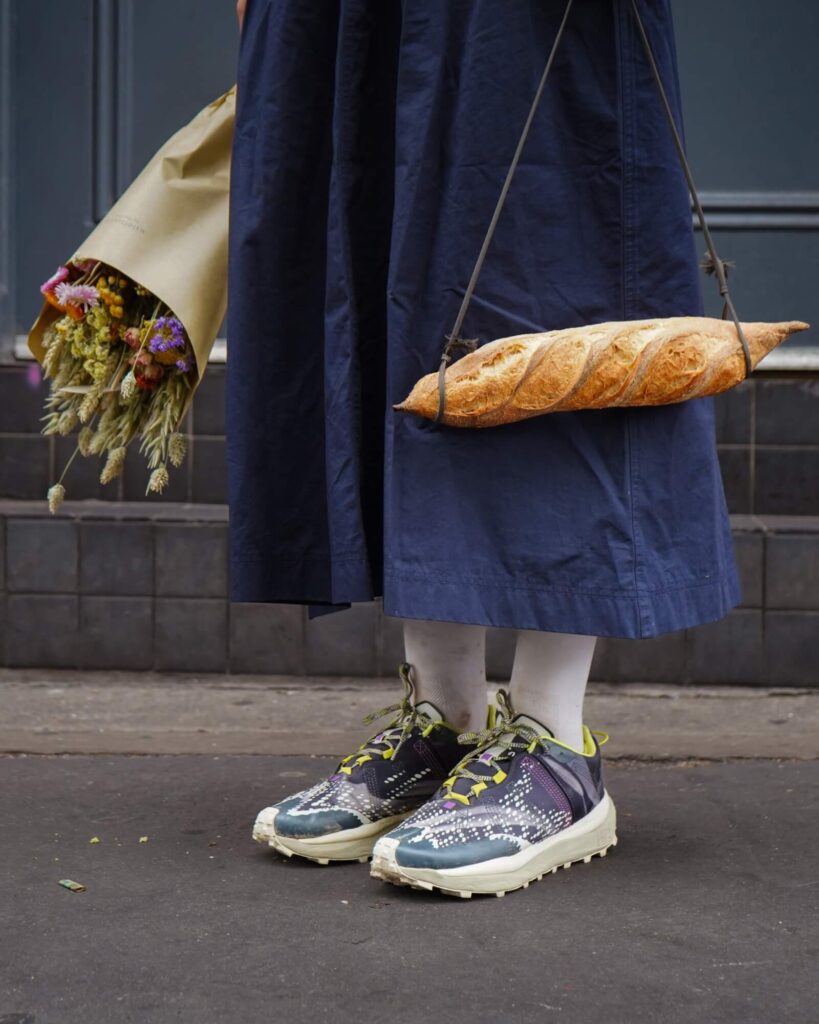
As for our core values, 4T2 is built on authenticity, simple aesthetics, and versatility. All our shoes are designed to be unisex, avoiding overly masculine or feminine tropes, and they are styled so runners can easily mix them with other brands or wear them for hiking and daily life.
From a community perspective, we don’t care about traditional influencers or follower counts. Instead, we look for “friends of the brand” who have an authentic personal relationship with running. Through our social runs, I’ve met incredible people who use running as a crucial daily tool. I once ran in sub-zero temperatures in Frankfurt with a woman who explained that she uses the rhythm of running to mentally disconnect and process her high-stress job working with individuals facing mental health challenges. Another friend of mine is a “running therapist”—a psychologist who conducts sessions while running alongside clients because people open up much more naturally when their bodies are moving rather than sitting face-to-face in an office.
At its core, 4T2’s identity centers on how deeply and authentically running is intertwined with real human lives. That stems from my past corporate frustration with brands constantly hyping technical specs and minor weight reductions. I wanted a brand that shifts the conversation back to the lived experience of running.
At its core, 4T2’s identity centers on how deeply and authentically running is intertwined with real human lives.
Instead of replacing old models with seasonal updates, you focus on adding components that genuinely make sense to your audience. Could you tell us more about this intentional approach?
When starting 4T2, I wanted to put into practice everything I had learned about building a more sustainable, lower-CO2 business model. I carefully avoid greenwashing or using sustainability as a cheap marketing angle, but I was genuinely determined to strip away the wasteful corporate practices of traditional footwear brands.
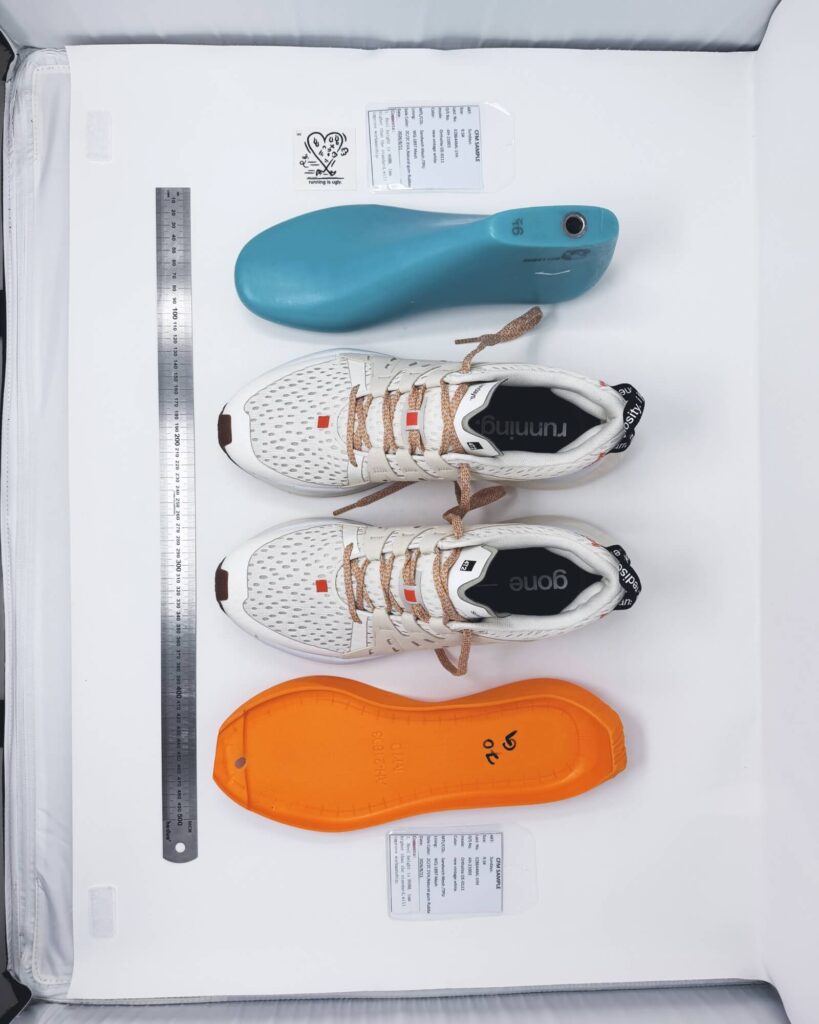
One step toward this goal included completely eliminating seasonal schedules: instead, our cycle is design—develop—produce. Once it’s in our customers’ hands, we gather their real-world feedback and incorporate those improvements directly into the next small production run. For instance, our “weekdays” model in vintage white has gone through five or six production runs, and every single batch gets subtly improved without us slapping a new version number on it.
We keep our lineup intentionally lean, creating a few core shoes with distinct purposes. Furthermore, our shoes are constructed using modular components, opening up possibilities for resoling and custom builds to keep footwear on feet longer. We apply this exact same iterative approach to our apparel line, which began accidentally after customers kept asking to buy the giveaway t-shirts we sent to our initial buyers.
This model allows us to bypass the fast fashion mindset entirely. In the four and a half years we’ve been selling, we’ve never had to liquidate inventory or rely on clearance discounting, except for occasional promotions within our existing customer ecosystem. Runners appreciate this consistency: when they find a shoe they love, they know it won’t be arbitrarily overhauled or made obsolete next season, while I get to run a business that actively solves the corporate frustrations I felt for years.
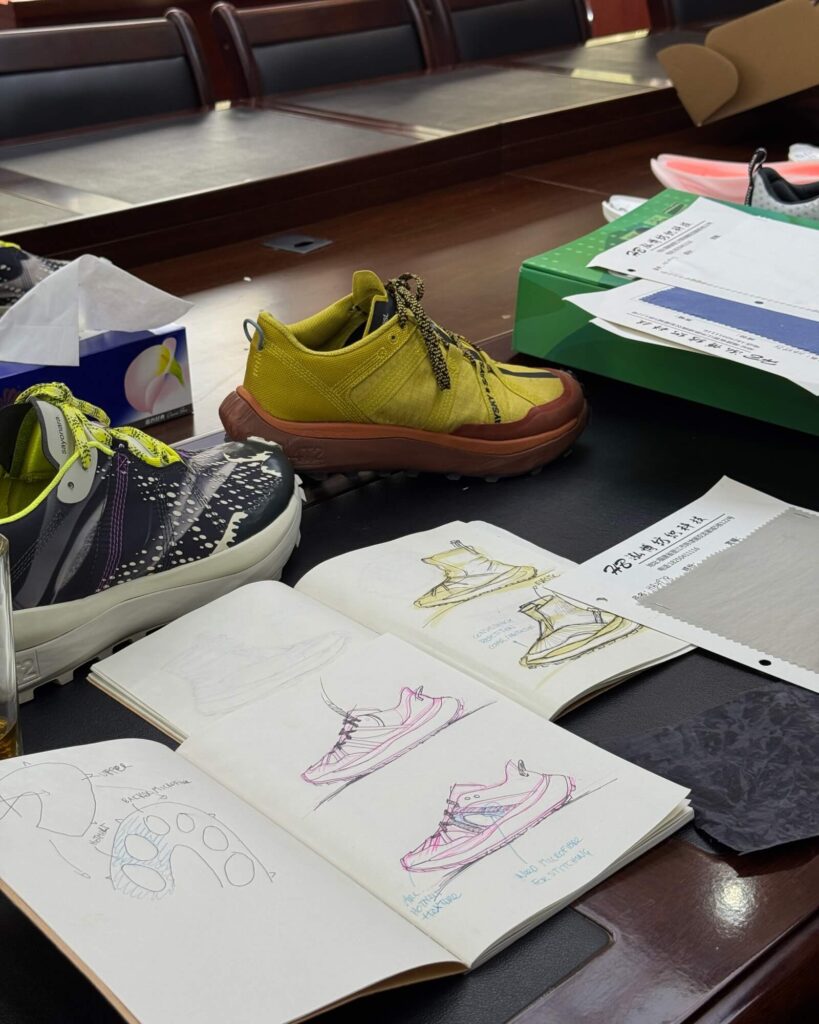
Your shoes have very curious and unconventional names. What is the story behind how you name your products?
Product naming is always a collaborative, playful back-and-forth between Aisha, myself, the rest of our team, and occasionally even friends of the brand and customers.
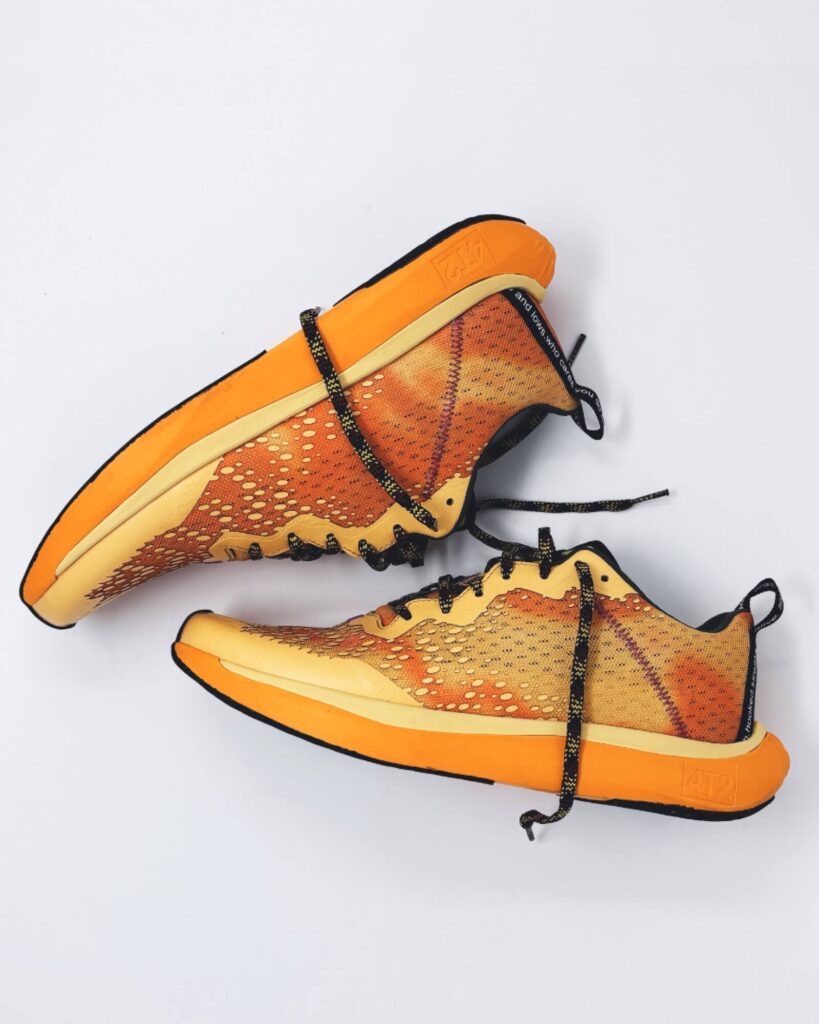
When we started out, we knew our first product had to be a daily trainer, a shoe you could run a 5K or 10K in, but that was also grippy, strong, and stable enough to wear to the gym. Someone joked that it would be a shoe strictly for Monday through Friday, and the name “weekdays” stuck. Naturally, when we set out to make a more cushioned, comfortable, higher-stack shoe for long weekend runs, we called it “sundays,” taking a bit of cheesy inspiration from the Commodores’ “Easy.” Once those two were established, we decided to stick with that naming philosophy.
For our trail lineup, Aisha suggested “get lost,” because trail running is ultimately about getting lost in nature. “sayonara“—meaning farewell in Japanese—became the name for our ultra-trail shoe, representing that long journey ahead where you won’t see your support crew for hours. “one more” was built as a lightweight trainer, named for that mindset of pushing for one more lap, one more mile, or one more race.
When it comes to our colorways, that’s where we really start having fun, even if it occasionally confuses Google’s search algorithms, which would prefer us to just say “white” or “yellow”. For instance, “one more” is a shoe model, while “acid dreams” is a colorway. We also created “sayonara, rolling stone,” drawing a lot of inspiration from music and ideas that pop into our heads mid-run. We’re currently developing a highly breathable trail shoe designed for warm European summers and humid Asian climates called “sabrosa”—which means juicy in Spanish, but is also a nod to one of my favorite instrumental tracks by the Beastie Boys.
You put a lot of effort into cultivating a genuine sense of community around 4T2. How do you foster connections beyond the shoes?
This aspect of the business is constantly evolving, and for me personally, it’s the most exciting part of building 4T2. Since we took a non-traditional approach to how we speak about running, we quickly built a following of customers who recognized themselves in our manifesto.
I’m not a trained marketeer, designer, sales director, or brand builder. Coming from a decathlon background, I’m more of a jack-of-all-trades who is okay at everything without necessarily specializing in one single discipline. In corporate settings, you design products 18 months in advance based on abstract forecasting data without ever connecting with the final runner. Making shoes is something I’ve done for years, but building an authentic, direct relationship with our community was entirely new to me—and it has proven to be an incredible source of inspiration.
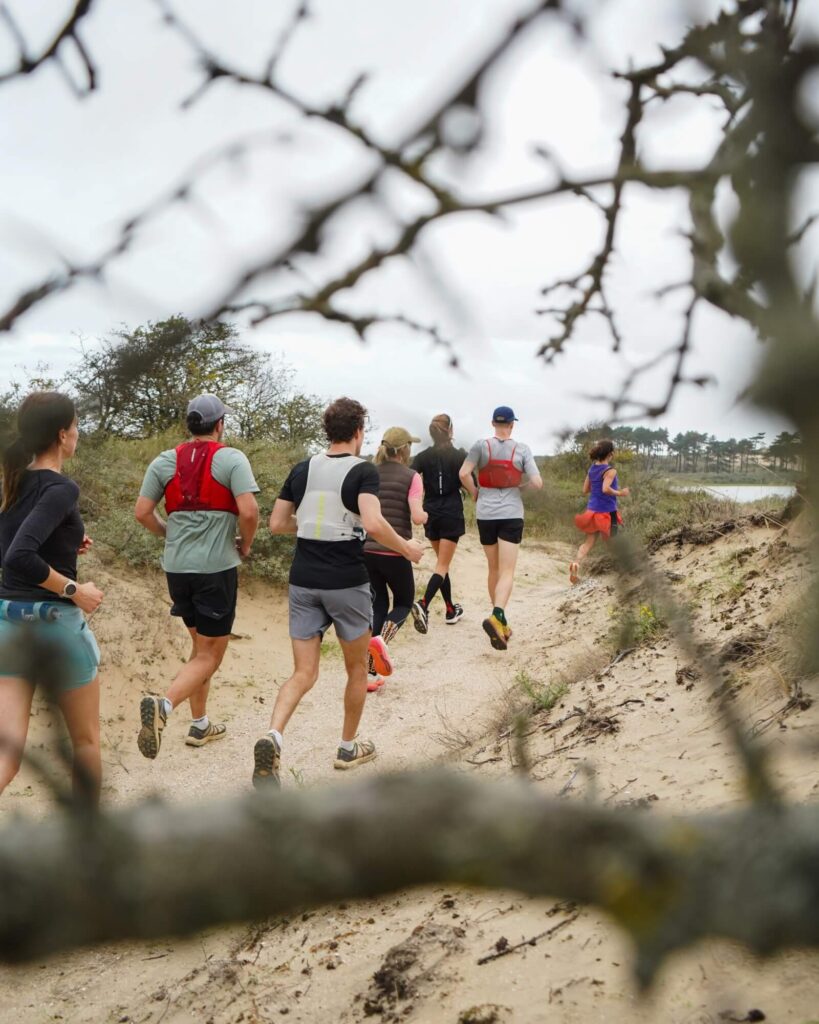
When it comes to community events and social runs, we take a very different approach than traditional brands. Whether we co-organize a run with local crews, independent retailers, or a neighborhood coffee shop, the focus is solely on enjoying the run together rather than pushing a shoe release. People in modern society are completely overexposed to constant marketing messages and aggressive sales pitches across media and events. I firmly believe that if you act authentically and respect people’s intelligence, they will appreciate that you aren’t constantly screaming product releases in their faces. When the moment is right, those who align with what we stand for will naturally decide to try our shoes or apparel on their own terms.
You’ve given your community the opportunity to actually own a piece of 4T2. What made you decide to open up investment to your runners?
Opening up investment was a direct extension of our community-first philosophy. When I first pitched 4T2, I asked myself what the ultimate proof of concept would be—the real test of whether people truly love your products, your brand, and what you represent. During long winter training runs, I realized that if we could make our customers genuinely happy, they would actually want to own a piece of the company.
Setting that up was initially a huge operational hurdle because traditional investment structures involve endless paperwork, high legal fees, and heavy administration, the last thing a young brand needs. However, I eventually discovered a local fintech company in my hometown that digitized the onboarding process using blockchain technology. After discussing it with my two original angel investors—a close friend and my wife—they gave me the green light to move forward.
After a few months of setting up the legal structure and collecting interest, we officially opened the program. Today, we have over 100 private investors holding certificates, ranging from a couple thousand euros up into the six-figures. The most amazing part is that the vast majority of these investors were complete strangers from all over the world who reached out simply saying, “I love what you’re doing, I want to support this, and I want to see you succeed.”
As we transition from a startup into a scale-up, having that backing from real runners provides incredible motivation. My primary drive doesn’t come from new launches, but from knowing people feel deeply connected to what we are building. Beyond that, I loved democratizing the process. Usually, private equity and venture capital firms give wealthy individuals exclusive early access to high-growth companies, leaving everyday people to only buy stock much later at an IPO when the massive gains have already been made. Opening up 1 million euros worth of certificates—of which we’ve already allocated over a half—allows smaller everyday investors to share directly in our valuation growth and secondary market trading rounds.
Ultimately, I want to build a profitable, healthy company that delivers real returns to our certificate holders, while growing 4T2 beyond a footwear brand into a broader community movement.
How do you see 4T2 enriching modern running culture in the years ahead?
Looking ahead, our focus is on a meaningful growth that protects the integrity of the running experience.
As part of the 4T2 experience, my vision for the future is to establish roughly 10 to 20 signature spaces worldwide that serve as hubs to facilitate and support local running communities. Rather than seeking mass distribution everywhere, we want a tight family of retail environments. You won’t see 4T2 on the shelves of major retail chains or mass online marketplaces, which I don’t believe serve premium customers well.
I come from a retail background and deeply love independent retailers who are navigating a tough landscape today. I want people to experience our brand in a physical space, but you don’t need thousands of doors to achieve that. We will continue supporting a select group of valuable, independent retail partners who share our ethos, keeping the brand personal, grounded, and genuinely connected to modern running culture.