




This story originally appeared on the Gents Cafe Newsletter. You can subscribe here.
Over the last couple of years, I’ve noticed something slowly changing in my life. My iPhone had become the centre of almost everything I did. It was my calendar, my notebook, my camera, my source of entertainment and, of course, how I listened to music.
As useful as that is, I began noticing something else. I was scrolling more than I wanted to. I’d meet friends for coffee and inevitably everyone would drift toward their phones. I’d often turn mine face down on the table, hoping to keep the conversation going. It made me realize that I wasn’t just using my phone; I was depending on it.
For a brief moment, I even considered getting rid of my iPhone and buying a flip phone. As a photographer and content creator, however, that wasn’t a realistic option. My work relies on social media, so instead I asked myself a simpler question: How can I use my phone less when I’m not working?
Ironically, I used my phone to research ways to use my phone less.
One suggestion came up repeatedly: replace digital habits with physical ones. Write notes on paper. Hang a calendar on the wall. Read physical books. And, perhaps most interestingly, return to physical media for entertainment.
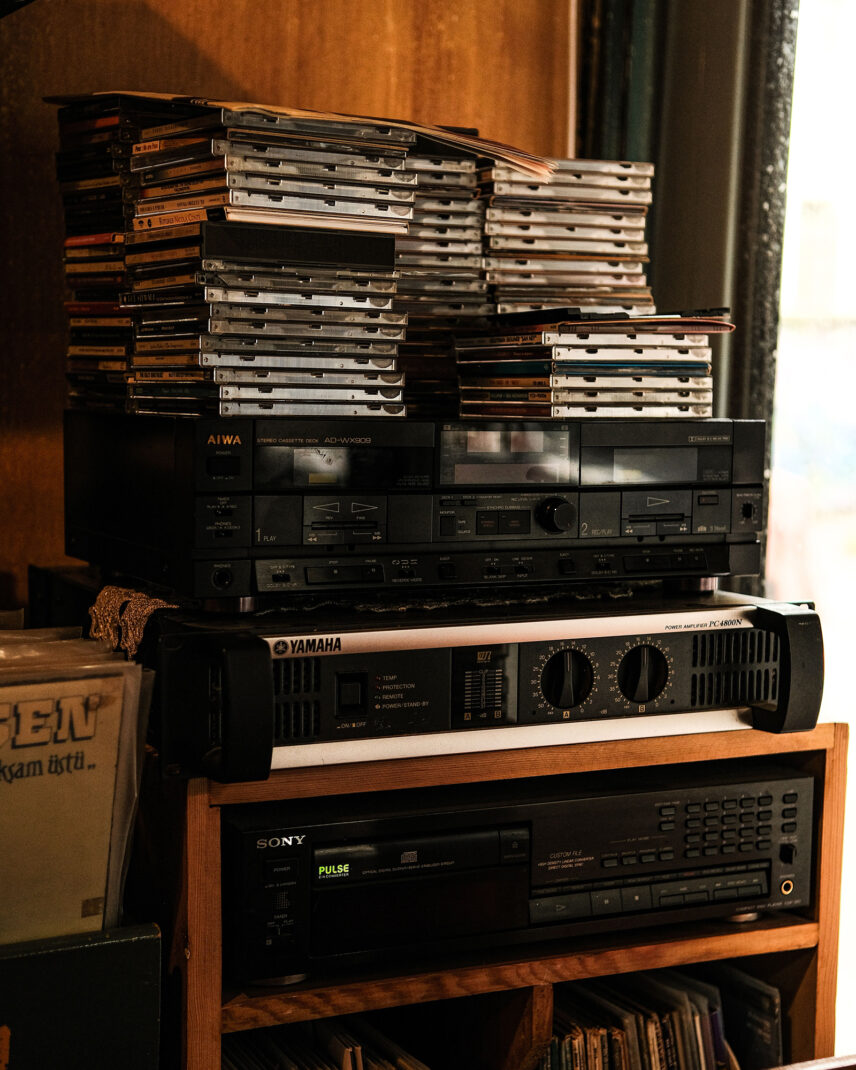
A few weeks later, while wandering through a local thrift store, I found a Sony stereo from the mid-2000s. It looked almost brand new. I plugged it in to test it, grabbed a Johnny Cash CD from the shelf and pressed play. As soon as the opening notes of I Walk the Line filled the store, something clicked. I took the CD out, placed the stereo in my cart and walked back to the shelves.
Before long, I had a small stack of albums in my hands; Johnny Cash, Metallica, Bon Jovi, Frank Sinatra, Garth Brooks and a few others. I hadn’t planned on starting a CD collection, but somehow, I left the store with one.
What surprised me wasn’t the sound quality. It was the experience.
Streaming services have given us access to millions of songs, yet I often found myself listening to the same playlists or skipping through tracks after only a minute or two. With so much choice, it became strangely difficult to choose anything at all.
A CD asks something different of you.
You choose an album. You place it in the player. Then you sit back and let it unfold the way the artist intended.
I remembered buying Linkin Park’s Meteora in high school and listening to it over and over on my portable CD player until the batteries died. I knew every lyric, every transition and every song; not just the singles.
Artists don’t simply write collections of songs. They build albums. They carefully choose the opening track, the pacing, the emotional highs and lows, and the closing song. It’s a complete work meant to be experienced from beginning to end. Somewhere along the way, many of us stopped listening that way.
The biggest surprise came over the following weeks.
Every time I stopped into Goodwill, I’d browse the CD shelves and usually come home with one or two albums. At $1.99 each, I realized that buying around five CDs a month cost almost exactly what I had been paying for my Apple Music subscription.
The difference was that my money was building something.
Instead of paying every month for temporary access to millions of songs, I was slowly creating a collection that reflected my own taste. Every album had a story behind it; where I found it, why I picked it up, or a memory it brought back. My music wasn’t simply stored on a server somewhere; it was sitting on a shelf in my living room.
I’m not giving up streaming. It’s still one of the best ways to discover new artists, and it’s incredibly convenient when I’m driving or travelling. But when I’m home, I find myself reaching for a CD more often than my phone.
What started as an attempt to spend less time looking at a screen unexpectedly changed the way I experience music. Listening has become more intentional. Albums have become stories again instead of background noise. And perhaps that’s the real lesson.
Sometimes the value of older technology isn’t nostalgia; it’s that it invites us to slow down. In a world designed to keep us endlessly scrolling, there is something deeply satisfying about choosing one album, pressing play, and simply listening.


