





This story originally appeared on the Gents Cafe Newsletter. You can subscribe here.
Some scents can transport us across decades in an instant. That’s how the heavy, comforting sweetness of roasting cocoa can spark memories of machines in motion, of workers molding and wrapping chocolate bars, of a father leading the family company.
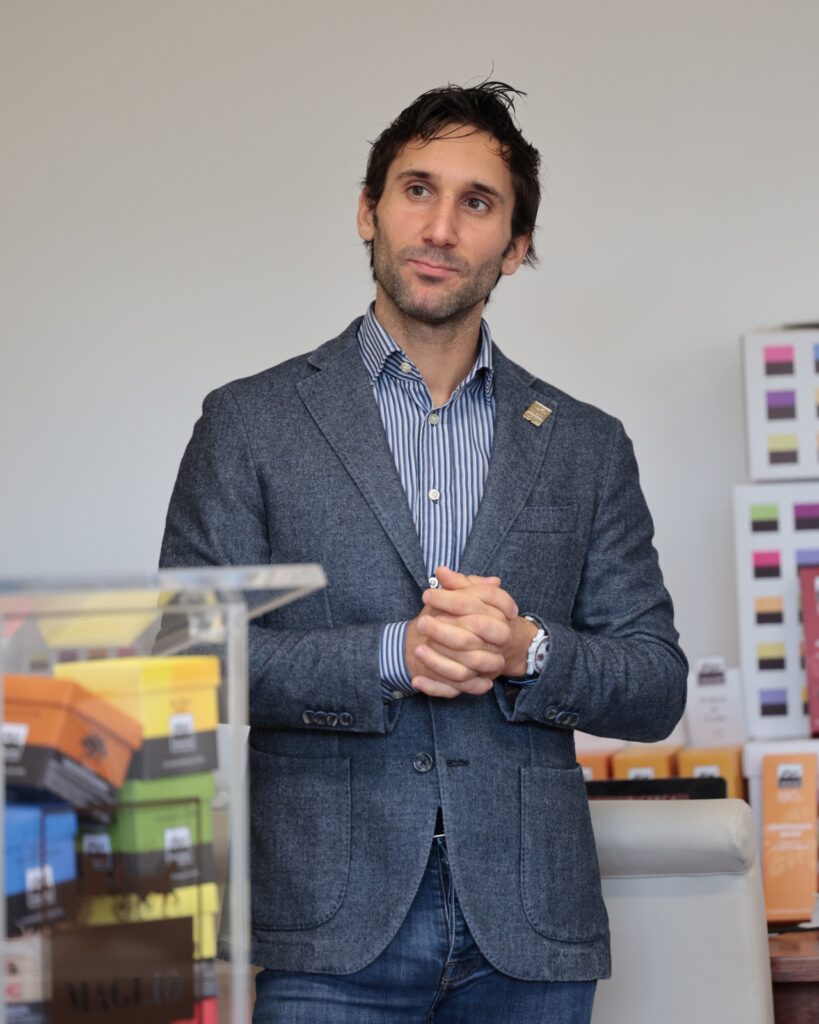
For Vincenzo Maglio, General Manager of Cioccolato Maglio, these childhood impressions define the pulse of a 150-year-old legacy he now helms together with his brothers Benedetta, Art Director and Visual Designer, and Matteo Maria, Research and Development. We sat down with him to explore the delicate art of balancing tradition and innovation, retrace the evolution of chocolate from an aristocratic luxury to a pleasure meant for everyone, and understand the rigorous effort required to ensure that every bar reflects both human craftsmanship and the purest raw materials.
In this Brand Talks interview, Vincenzo guides us through the sensorial journey of chocolate, inviting us to understand what makes good chocolate good, and why the bean-to-bar approach is challenging, but rewarding…
For someone born into a family like yours, chocolate isn’t just a product, but the very air you breathe. If you close your eyes, what specific image or scent from the workshop resurfaces as your first, authentic childhood memory?
My memories from when I was little definitely start from around five or six years old, the time I first entered the company environment. I remember going to the factory to see the production, and the scent that immediately comes to mind is the roasting of the cocoa—that aroma that comes out the moment you refine the chocolate.
There were so many people, everything looked huge to me: the machines, the cooling tunnel, this continuous production cranking out chocolates from their molds. There was even a man filling the molds, because back then the pouring was done by hand as the chocolate was worked. You could always smell this flavor; in fact, it sticks to your clothes, so it truly stays with you, not just as a memory. The moment you opened the door that led from the offices into the production floor, you were hit with this scent of processed chocolate.
To me, it felt like being in Willy Wonka’s factory. I would stand there watching the workers pour and unmold the chocolate bars, arranging them on trays, wrapping them up… It was a continuous process, and they were so incredibly skilled and fast that you just stood there mesmerized. Now, of course, everything is automated, but I remember those tables full of ribbons, packaging, and boxes, with all these ladies wrapping the bars. I was absolutely fascinated by all of it.
I also remember specific scenes, like my father teaching the trade to newly arrived operators, for example working on the machines that coat dried fruit in chocolate. It’s a process done entirely by hand, and I remember him holding this large ladle filled with liquid chocolate, showing the operator how to pour it in at the exact speed to achieve a uniform coating.
When I got a bit older, around twelve, I would help out in the warehouse during the summer mornings. I’d assemble cardboard boxes and pack the products inside. During the summer, we also made jams and marmalades to de-seasonalize the business. All our long-time collaborators still remember those hot summer mornings in June and July when we would sit inside cutting pere petrucine. They are a local type of pear we have here in Salento—small, very sweet, and sugary. We had to chop them up by hand with a knife so they could be cooked down into jam. I remember crates upon crates of these pears arriving, and as a young boy I would constantly ask, “When are all these pears going to end?!” because I couldn’t wait to go play at the beach. That’s definitely one of my fondest memories.
Leading a company with 150 years of history means constantly dialoguing with the past. What is the lesson from your forefathers that helps you distinguish what needs to be innovated from what is eternal and should never be touched?
There are certainly iconic products that we want to treasure and preserve, but I wouldn’t define them exactly “untouchable”. Rather than being left completely unaltered, they can undergo subtle updates to bring a sense of contemporaneity to the recipes and refine them, without ever distorting their core identity.
To give a concrete example, in the early 1900s, my great-grandfather, Dante Maglio, invented and began producing orzata, a beverage made from almond fiber. Around 1965, my grandfather, Vincenzo, brought a contemporary touch to that product. He transformed it into proper almond milk, maintaining his father’s original recipe but updating the process. He realized that it was better to extract the essential oil rather than the fiber, to achieve a smoother consistency. He effectively updated the product by utilizing modern tools that were not available in the early 1900s.
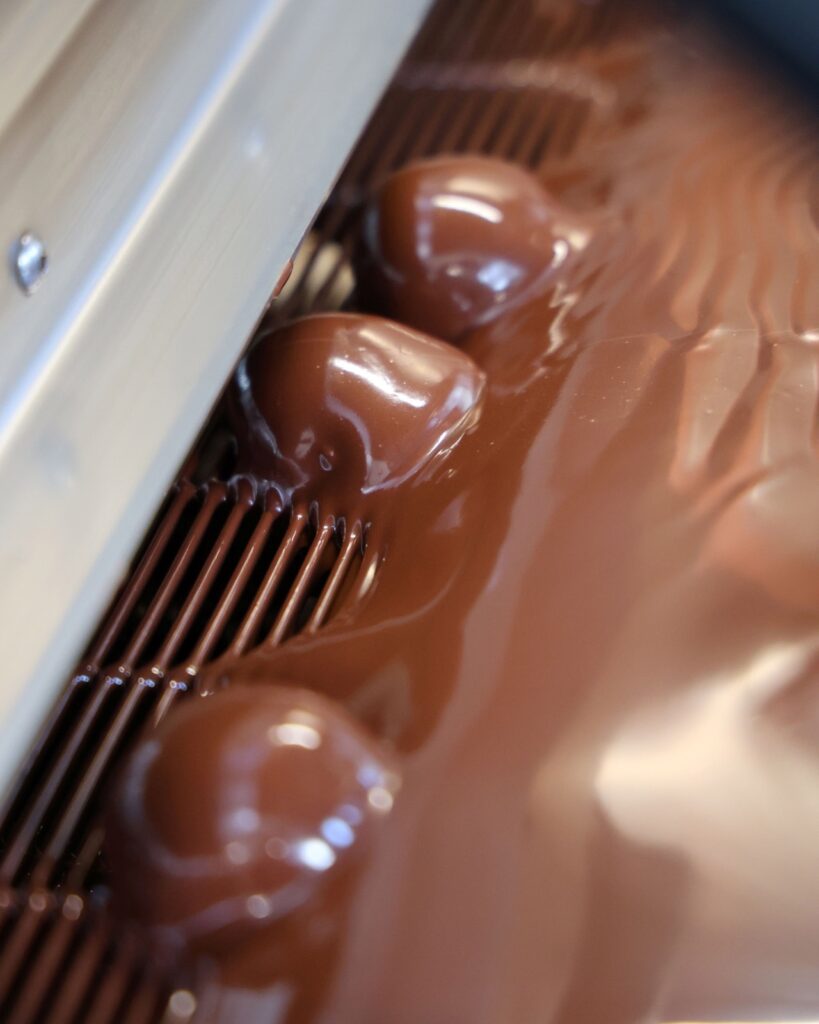
Another example is our Delicatezze line, which consists of almond paste pralines coated in dark chocolate. These recipes were originally written down by my great-grandfather, and they are still in our catalog today in 2026, but they also underwent an evolution: in the early 1900s, these pralines were typically served at aristocratic receptions and had to be consumed the day after they were made. Today, through controlled production, we guarantee an eight-month shelf life. It is still the exact same product, based on the same recipes and partly made with the same tools used a century ago, but adapted to modern standards.
Unfortunately, I never had the chance to meet my great-grandfather Dante or my grandfather Vincenzo. However, my father entered the business at a very young age and had the chance to learn their values and working ethic—which he passed down to me. In a way, from them I learned to have an immense respect for the product, be uncompromising in the selection of raw materials, and value human craftsmanship. Before advanced technology existed, experimentation and recipes relied entirely on skills acquired over time on the shop floor. My father learned everything on the field; for some things, there is no textbook theory—the learning comes entirely from the people working alongside you.
You define chocolate as a “sensorial journey.” In what way does one of your creations manage to touch the various senses? And what suggestions would you give to someone who wants to savor a good chocolate to the fullest?
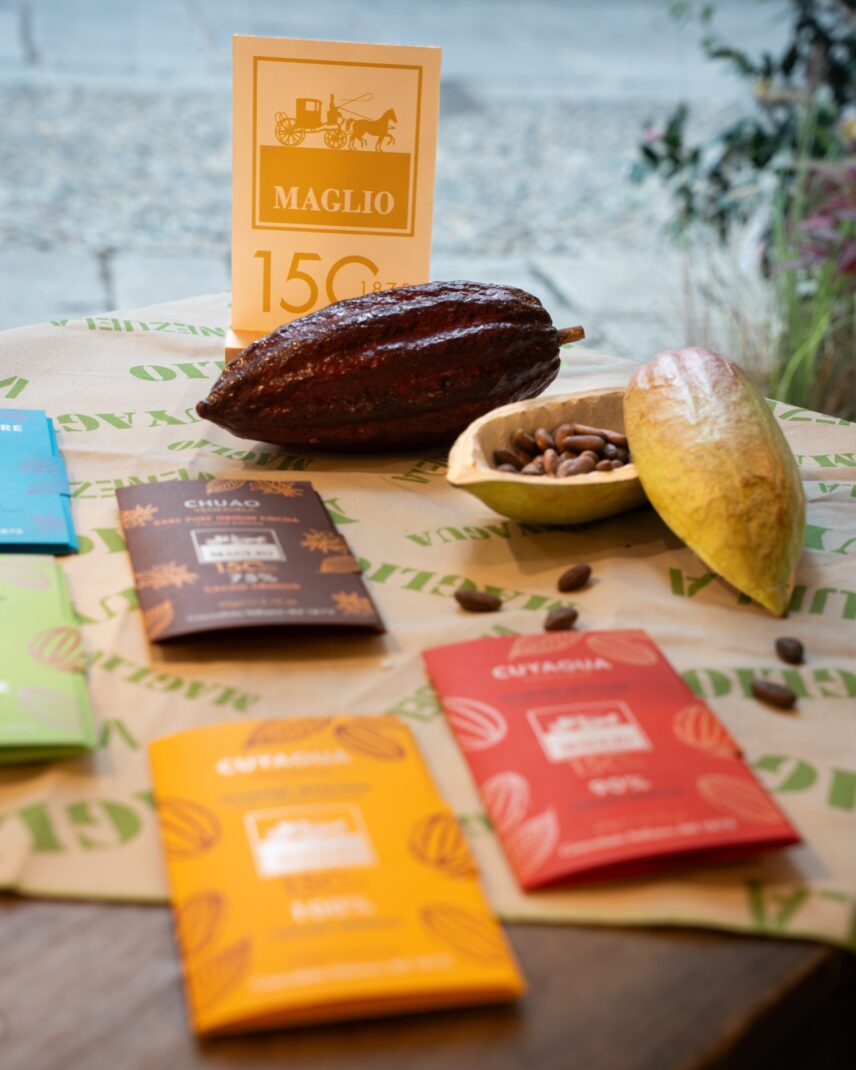
It is definitely a sensorial journey. As cocoa processors, we start right from the reception of the bean, but years ago we took it a step further: we are almost a tree-to-bar company now, which means our work starts in the plantations.
When I visit our partners in South America and set foot in a field, I begin to sense all these aromas in the air—the scent of plantain, banana, coffee plants, and flowers. Cocoa naturally absorbs the fragrances of its surrounding environment. When you taste one of our chocolates, you can actually perceive that entire world: a bit of fruitiness, floral elements, a certain citric note or a creamier hint of banana. We offer a wide range of single-origin chocolates that allow you to experience these distinct profiles, and we view some of them almost as “meditation chocolates” meant to help you relax.
Chocolate naturally triggers positive endorphins in the brain and boosts your mood, but when you add these complex layers, it brings a genuine sense of peace and satisfaction. When you eat a chocolate, those 60 seconds you spend savoring it must give you pure sensorial joy. It should leave your mouth feeling completely clean, with no unpleasant aftertaste. If it doesn’t make you say “wow,” then it’s time to change brands.
For anyone who wants to enjoy chocolate at its best without getting overly technical, there are a few simple guidelines to follow, moving through the senses.
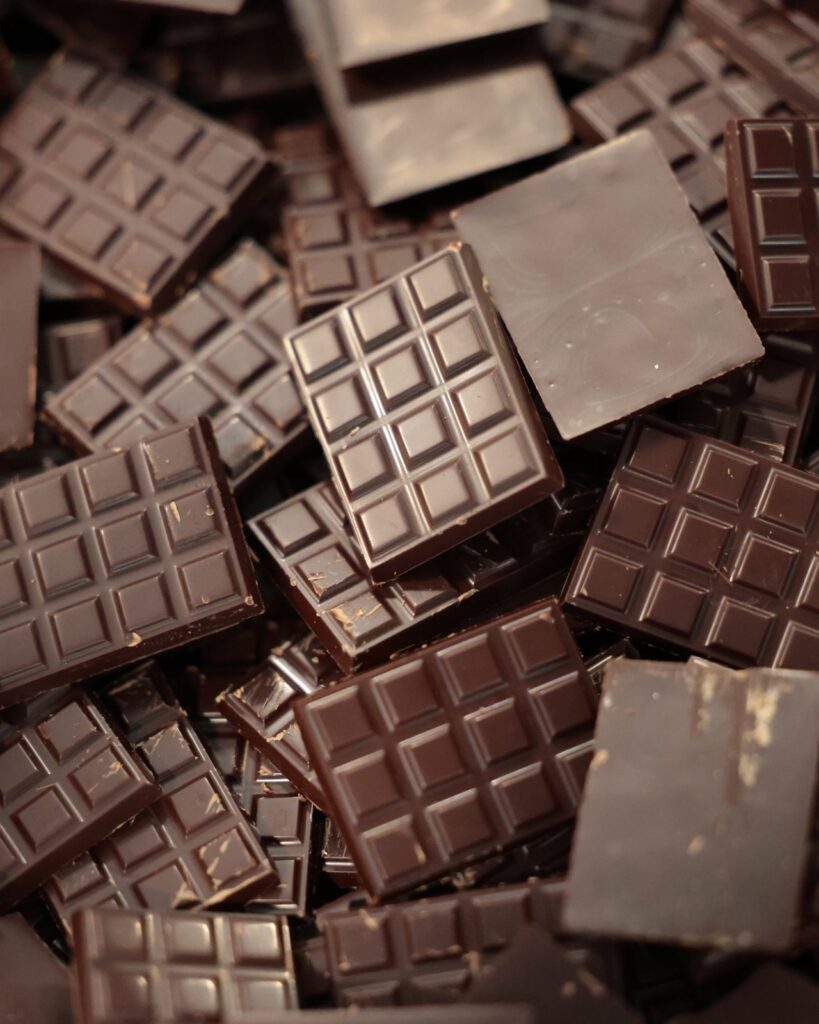
First is the visual phase. Before you even taste the chocolate, look at its surface. It should look completely uniform and glossy, without any streaks or white coaching. If it looks white, it means the chocolate has suffered a thermal shock and the cocoa butter has surfaced.
The second step is actually auditory. You bring the chocolate close to your ear and break it: it should make a sharp, clean “snap” sound.
Finally, you move to the tasting: you don’t really smell chocolate by bringing it directly to your nose. Instead, you rely on the mouth—utilizing both the front and the back of the palate, where you perceive acidity. On the initial taste, you catch the primary aroma, which is the intensity of the cocoa itself. Then, through the back of the mouth and the retro-nasal passage, the secondary aromas emerge. That is when the true sensorial journey unfolds, and you begin to detect notes of flowers, red fruits, hazelnut, or walnut. Following these simple steps lets you appreciate chocolate with a slightly more discerning palate.
Chocolate naturally triggers positive endorphins in the brain and boosts your mood, but when you add these layers, it brings a sense of peace and satisfaction.
Today, the term “Bean-to-Bar” is widely used, sometimes inappropriately. For a historic brand like yours, how important is it that the final customer understands the effort and dedication behind transforming a single seed into a finished bar?
It is extremely important. First of all, the bean-to-bar process is not something that many companies actually do. In Italy, we are very few—perhaps three or four structured companies that produce chocolate starting directly from the cocoa bean, at least at a larger corporate scale. Through our catalogs, tastings, and videos, we have always aimed to show and educate the final consumer about everything that happens before the chocolate is even made, especially the work we continuously carry out on the plantations.
Cultivating cocoa at the source opens up a whole other chapter. There are specific times of the year for flowering and harvesting. The harvest must be timed precisely, evaluating the fruit’s readiness based on its size and maturity. Then comes the fermentation and drying processes, which must take place right on the plantation. Fermentation requires specific, tropical temperatures—which is why cocoa grows in the equatorial belt. Some have tried to grow it in the Mediterranean, but it doesn’t work because cocoa needs constant humidity and a very balanced heat that doesn’t burn the plants.
To achieve high-quality chocolate, we follow very strict protocols during this initial phase. For example, fermentation must occur inside wooden boxes holding a maximum of one hundred kilograms. If you put 300 kilograms in a box, the beans at the bottom get crushed, which ruins the process. It is a highly scientific chemical process. It takes a specific number of days and requires volteo—the turning of the beans inside the boxes to re-oxygenate them. The subsequent drying must be done gradually under the sun; on the first day, you might expose it to the sun for an hour and a half, then three hours the next day, and so on.
The best way to understand if a chocolate is any good is to start by checking the label for a clean ingredient list. The very first ingredient listed should be cocoa mass or cocoa paste. If you see cocoa aroma, extracts, or cocoa powder, you are not dealing with real cocoa but with a derivative, which is inherently much cheaper. The second factor is the price. If you find a 100-gram bar for 50 cents, I urge you to look at the back—there isn’t even cocoa paste inside; it’s made with an essence. We really try to help people understand the relationship between the price and the labor involved, just as it happens in the worlds of wine and olive oil. If we consider a reasonable minimum price for a decent 100-gram bar that reflects quality ingredients and proper processing, you should expect to spend at least 4 to 5 euros.
We are truly building a culture around this. Many clients don’t even know that cocoa comes from a tree; they assume it’s a small plant. It’s actually a tree, and the fruit—called mazzorca or cabosse—grows directly on the trunk, not on the branches. The more productive the tree is, the lower down the trunk the fruit grows, because that’s where the sap flow is strongest.
Through our catalogs, tastings, and videos, we have always aimed to educate the final consumer about everything that happens before the chocolate is even made.
More than ten years ago, you undertook an ambitious challenge in Cuyagua, Venezuela, recovering a pure Criollo plantation that lay abandoned. What drove you to invest in that specific location, and what was it like on a human level to see those trees reborn alongside the local community?
Everything started because we received a sample at our office—a sample of cocoa paste from the Cuyagua community, located in the northern part of Venezuela, facing the Caribbean Sea. We liked it very much, and we wanted to go further. We asked them to send us the raw cocoa beans, and after running a series of tests, we realized the product was extraordinary: it possessed fresh notes while simultaneously delivering a very intense aromatic profile. I like to define it as a rhythmic chocolate. When you taste it, it gives you peaks and softer, descending curves, then another peak, and then it drops smoothly again. It isn’t a chocolate that just tastes flat and linear without giving you any sensations. As it melts, it constantly reveals different undertones: you can perceive walnut, hazelnut, red fruits, floral notes, a distinct freshness, and a very pronounced bitterness.
So we launched into production with this cocoa. To give you an idea, the community’s land spans about 50 to 60 hectares, which is very small, and they were only producing about a ton and a half of cocoa across that entire area. In a non-intensive, standard plantation, the normal yield is a one-to-one ratio—meaning one hectare yields one ton. There are intensive plantations that force the harvest to get 2.5 or even 3 tons per hectare, but a respectful, normal cultivation usually hits a one-to-one balance depending on the year. In Cuyagua, they were down at 0.02 tons per hectare, which was less than half of what it should have been.
Over the years, we taught them good farming practices: how to harvest, how to prune and clean the trees, and how to respect the environment. We introduced the use of natural fertilizer made from the cocoa pods themselves, letting them macerate until they crumble back into the soil. We implemented these good practices because they lacked extensive knowledge of cocoa cultivation, and that became our work. For five years, we held the worldwide exclusivity for this product. Now the contract has changed, so they are free to distribute and sell it all over the world, especially since their production has successfully reached that one-to-one ratio and they have a large harvest.
Word of mouth from that project spread, and other Venezuelan communities approached our partnership. Today, we collaborate with several fincas and communities in Venezuela: Cuyagua, Porcelana in the Andes region, Canoabo, El Tigre in the Mérida area, Carenero, and Chuao, which is another legendary Venezuelan cocoa. Then, in 2017, we replicated the exact same project model from Cuyagua in Esmeraldas, Ecuador. We maintain our presence there as well, and have created a consortium of eight different neighboring communities.
On a human level, the most beautiful return has been the direct, tangible help we provide. We always explicitly state that our bars do not carry the Fairtrade logo, and that is a deliberate choice. To us, that logo often means paying an association without knowing exactly where the money goes. Instead of adhering to those organizations, we write “Cuyagua product from the Cuyagua community” on the packaging, include a QR code for full traceability, and feature real photos taken on-site.
You can truly see the impact on these families. When we first arrived, we brought first-necessity items and supplied proper work tools—like building those wooden boxes for fermentation, because previously they were processing the cocoa right on the ground. Raising their standard of living has been our greatest pride. The price we pay them is absolutely a fair price, not the industrial market rate, which significantly improved their livelihood. But the greatest joy was seeing the happiness on the children’s faces. When we arrived, they threw a celebration for us wearing hand-stitched clothes they had made the day before. These are very remote, impoverished areas, so seeing the children—who are the sons and daughters of the producers—take such care to embroider clothes was incredibly moving.
We also established a strict rule that children must remain within the village and are not allowed into the fields. There are no fences in the plantations, but there is a clear path you must cross, and the children stay inside the village, ensuring there is absolutely no child labor. I am in constant contact with our local representatives so everything is thoroughly monitored. That is the real difficulty of doing true bean-to-bar: you must have actual, verifiable control over the entire supply chain.
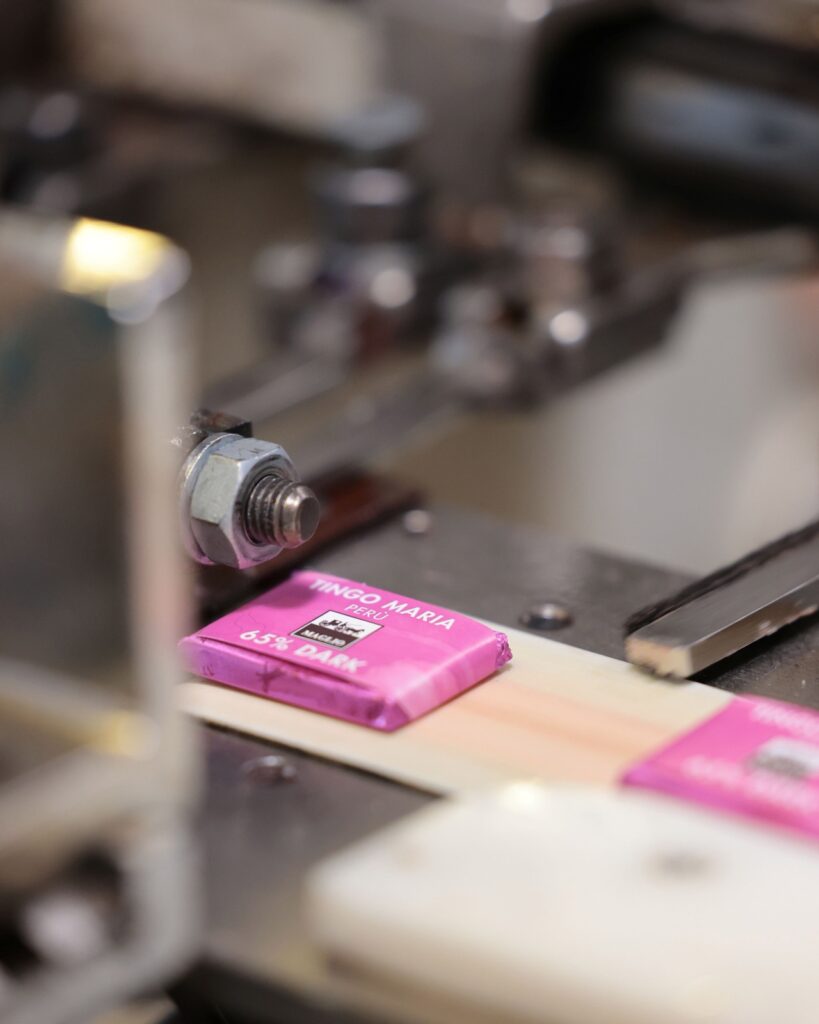
Your packaging exudes a distinctive elegance. How much does “beauty” matter in the pleasure of tasting something that is created to be eaten?
Packaging is certainly a defining element of our identity. Previous generations already focused on this, and used packaging that was quite cutting-edge for its time: my great-grandfather, Dante Maglio, created hand-drawn posters at the turn of the 20th century that read “Dante Maglio, Maglie”. He was already linking his name, the brand, and the location where you could find him, grounding the company’s communication in creating a beautiful presentation from the very beginning.
But today, compared to the past, high-quality presentation is essentially the baseline. You buy with your eyes first, and then you confirm that initial impression through the actual quality of the product. For this reason, starting in 2000, we used the slogan “All the colors of chocolate,” because the chocolate we make is truly meant for everyone, and did a complete restyling of the brand and packaging, which established our current look.
If you had to describe the evolution of the Maglio company through three iconic products, which ones would you choose and which historical moment do they represent?
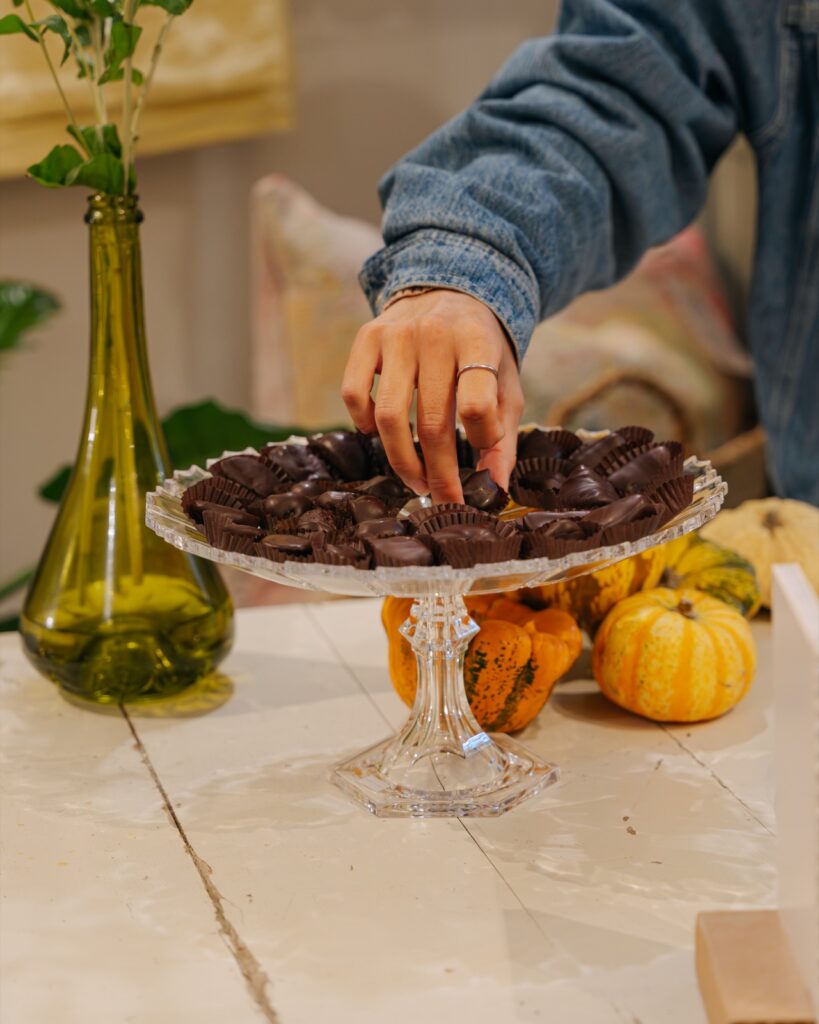
The first product definitely represents our beginnings, our birth in 1875 and the late 19th century. That product is the Delicatezze—the almond paste praline coated in chocolate. At the time, the middle class couldn’t afford to spend money on chocolate, so it was a luxury reserved exclusively for nobles and aristocrats.
The second product brings us to my grandfather’s era, around the mid-20th century—specifically the 1960s and 1970s—with our chocolate-covered fruit line. This marked a major acceleration for the company. The very first creation was our chocolate-covered fig stuffed with an almond, and from there, the range expanded to include candied orange peel strips, sour cherries, and more.
Finally, representing my current generation in 2026, the definitive product is our single-origin chocolate, specifically the pure Venezuelan Criollos. This is the product that truly identifies us right now.
However, it’s important to note that these are simply milestones in our evolution; the new products don’t replace the old ones. Every single one of these creations is still actively part of our catalog today, carrying our history forward as new chapters are added.
What is your favorite way to enjoy a piece of Maglio chocolate? Do you have a particular pairing or a specific time of day?
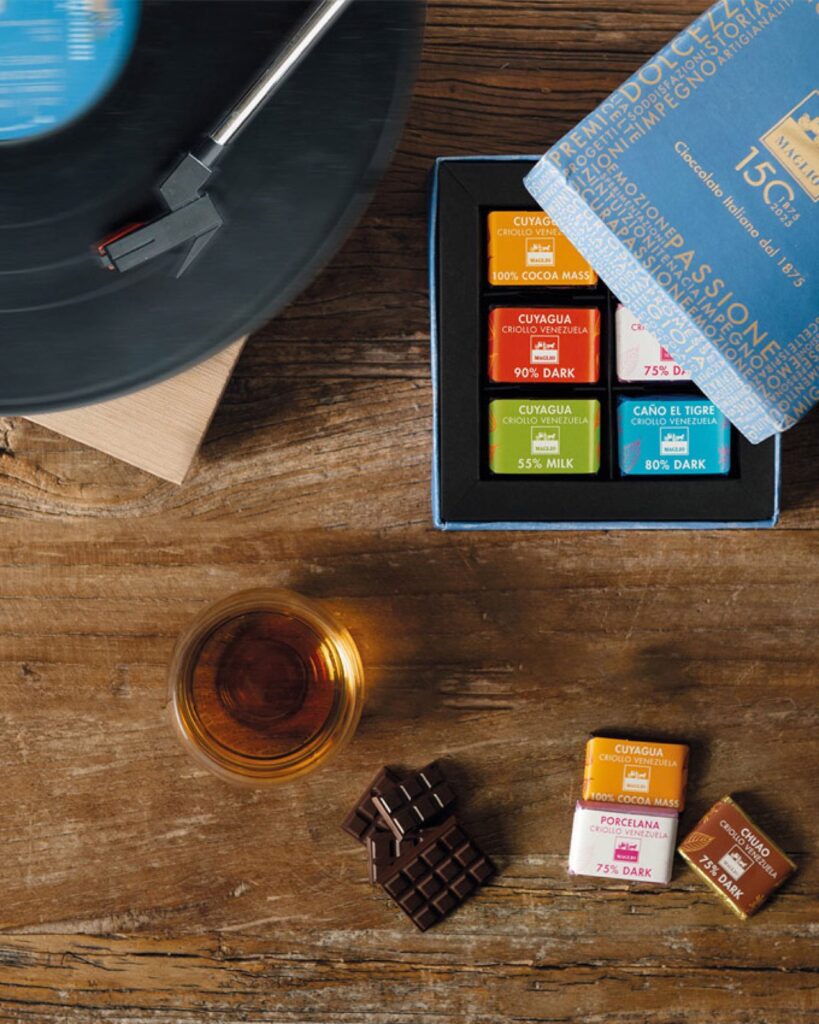
I definitely like having it during my morning break, or right after lunch with a coffee. I think having a little chocolate around 3:00 or 4:00 PM is perfect. I usually prefer our mini bars because they are just 6 grams.
Among my favorites is the Porcelana. It is a spectacular type of dark chocolate made from the original Criollo variety grown in Venezuela. They call it “white cocoa”—not to be confused with white chocolate, which is something entirely different. We call it white cocoa because of its genetics and the purity of the Criollo bean, which is completely white on the inside. Porcelana is absolutely one of my favorites.
As for pairings, I’m not a big drinker, so to fully appreciate the sensorial journey, I actually prefer to taste it on its own without adding anything on the side. You certainly appreciate the nuances much more that way. That said, pairings can work wonderfully; today, chocolate is even used in savory dishes, with people incorporating cocoa nibs or liquid chocolate into all sorts of recipes.


