





This story originally appeared on the Gents Cafe Newsletter. You can subscribe here.
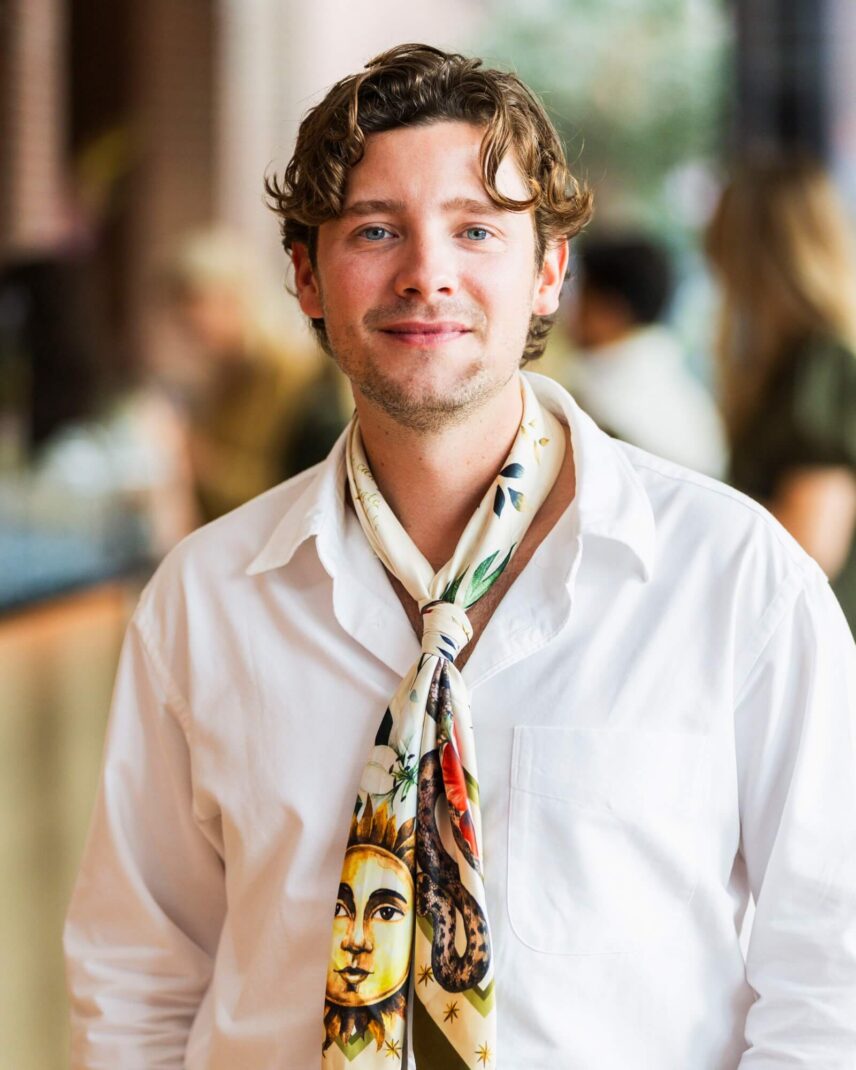
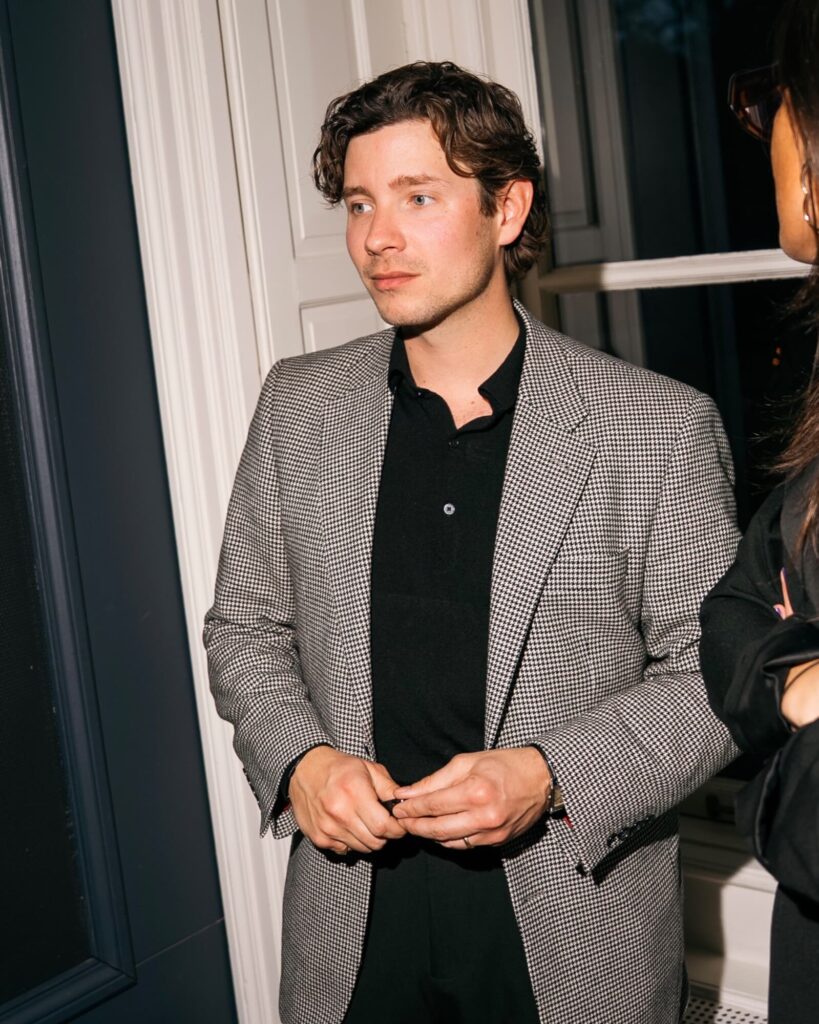
Meet Marc Witteman-Luikinga (@Marcsfits), a trainer/coach and private leadership and strategy expert based in Haarlem, the Netherlands. Beyond his lifelong passion for refined menswear, Marc is fundamentally a devotee of storytelling, believing that whether in tailoring or in business leadership, the most critical lesson is the value of taking one’s time with the narrative. This philosophy extends to the most precious parts of his life, where his morning ritual with his young family—complete with coffee, music, and a single chocolate from a local Haarlem shop—serves as a priceless reminder of what truly grounds him.
What are your main passions and how do you cultivate them?
As my Instagram handle might suggest, my main passion is menswear, which for a good part of my life has also defined my career path. Besides that, I genuinely enjoy being a father. I have a little daughter who just turned one, and it’s an amazing experience seeing her grow up. I have one day a week where I have my day off with her alone; it’s always on a Wednesday. I always try to go to the beach if it’s a nice day or just walk in the city, have a coffee, and then just be with her and play with her in our living room. It’s an amazing time to have that. What’s funny, actually, is that before we had her, everyone told me I would never be able to dress the way I do now—with formal trousers, fitted shirts… Actually, it’s going quite well. I haven’t needed to throw anything away yet, so that’s nice!
How did you first develop an appreciation for style?
When I was 18, I saw a series on Dutch television called “Hoe heurt het eigenlijk,” by a journalist named Jort Kelder. The Dutch title roughly translates to “How is it supposed to be?,” and the series focuses on manners as well as bespoke garments, from shoes to shirts to suits. It was suits that truly captured my imagination, to the point of buying Kelder’s book. That led me to apply for Suitsupply, which introduced me to the menswear business.
When you start at Suitsupply, you attend something called “suit school.” Over the course of five days you learn everything from two experienced colleagues about how a jacket and trousers should fit, the differences between wool, linen, and cotton, and even how to pin garments. It was a great way to kickstart that journey.
Later, I moved to Vienna for my studies in international business management and worked on a couple of other things in clothing. For a while, I worked at an agency selling two Italian brands to Dutch stores: Tintoria Mattei, a shirt brand that I don’t think exists anymore, and a trouser brand called Four Ten.
I then returned to Suitsupply, and eventually took on a trainer role and became part of a group called the “Key Opinion Leaders.” This was the early version of the “style expert” role you see now on their Instagram and website. We were a group of men from America and Europe who were passionate about how we dressed and possessed deep knowledge of suits and fabrics. We traveled to Biella to visit mills like E.Thomas and Vitale Barberis Canonico, and attended Pitti Uomo several times. Being in that group helped us grow our knowledge and inspiration for putting outfits together.
Most of those guys have left the company by now, but many have grown a significant online following in the field. You might know Brandon Thompson; also, “The Dons’ Club” from Germany was in that group, as was Nicolò Zaffarano from Milan, who now has his own tailoring shop and seems to be doing quite well.

What does “being well-dressed” mean to you?
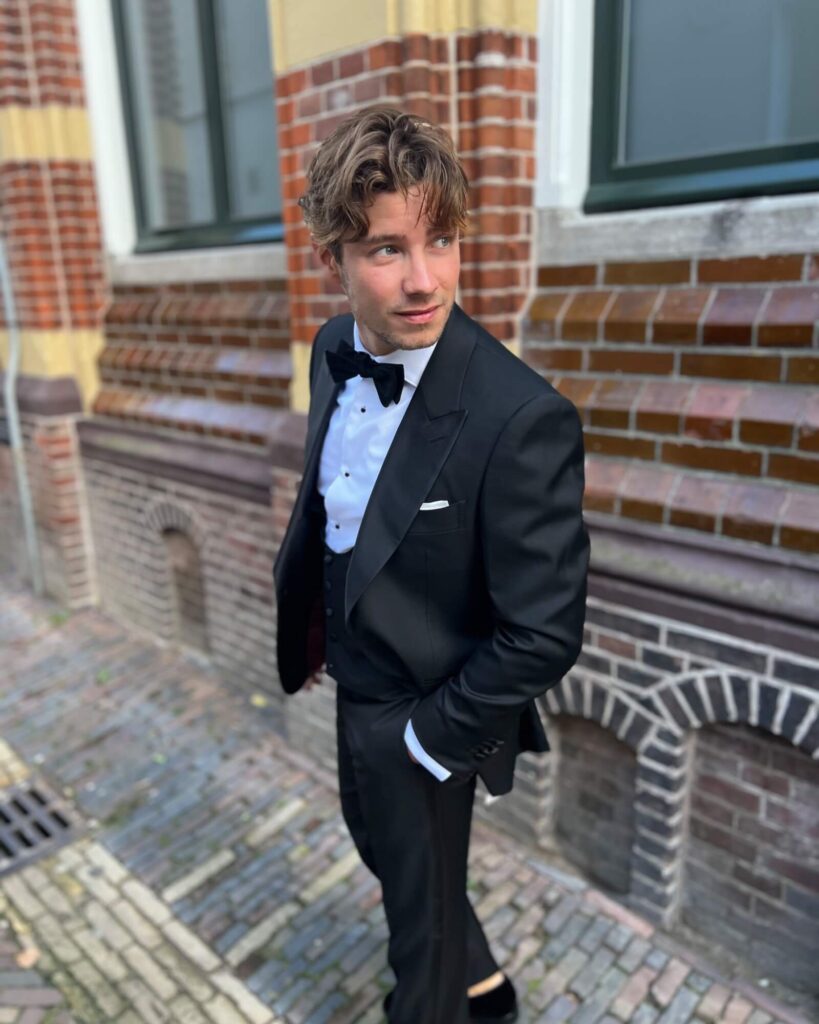
For me, being well-dressed comes down to ticking three simple boxes: the outfit suits the occasion, it fits well, and while influence is okay, it shouldn’t be a clear copy. I don’t like over-fitted, tight clothing. It’s like when you see a guy and think, “Hey, you borrowed those trousers or that sweater from your son”—that’s not being well-dressed to me. It should look clean, not dirty, and shouldn’t have holes—at least not on purpose.
Anyways I don’t really care what people wear, and it doesn’t have to match my personal style for me to think it looks good. For example, when I look at Aimé Leon Dore, I see things I would never wear myself; but it works in their campaigns and I really enjoy looking at it.
I don’t really care what people wear, and it doesn’t have to match my personal style for me to think it looks good.
What does your ‘daily uniform’ look like?
No longer working at Suitsupply sort of bursts that bubble where you realize not everyone wears an off-white suit to work every day. When I started at Rituals, I noticed again that simply wearing a shirt means you are considered dressed up.
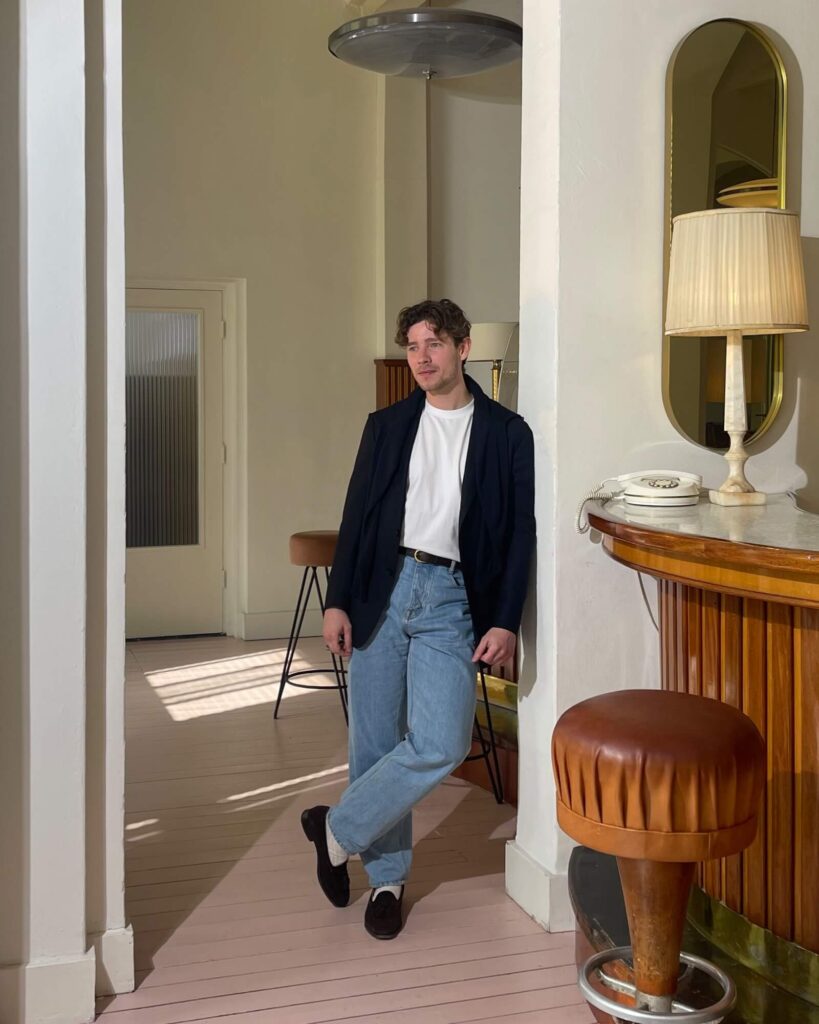
For me, the daily uniform now mainly involves denim: either a good pair of denim trousers, a denim shirt, or a combination of both, topped with a nice jacket. That is my go-to daily combo. It is casual enough for people to understand, yet still stylish and close enough to my personal taste to feel right. It’s a bit inspired by that Buck Mason way of dressing, which I find is a great combination for my current work field.
I would never sell my…
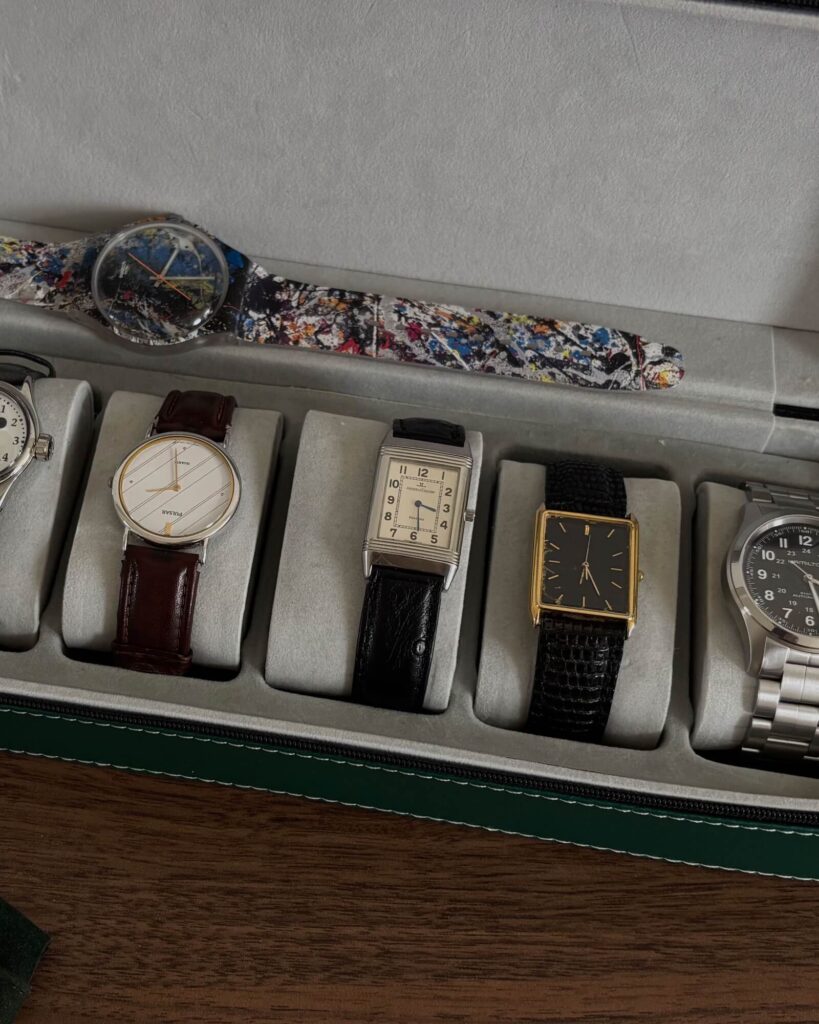
I would never sell my Reverso. I think it was two or three years ago that my parents-in-law mentioned there was a Jaeger-LeCoultre Reverso available at a local jeweler—not a vintage one, from around 2014. My wife had just bought a nice watch, and I was feeling a bit jealous! I thought, “I’ve worked in suiting and menswear for so long and I don’t even have a nice watch.” So, I just decided to go for it.
I love wearing that watch so much. Sometimes I get angry at myself because I’ve already scratched it up a bit, but on the other hand I like the history that comes with those marks. Here in the Netherlands, few people recognize it, so I get to explain what it actually is, and I love to show the reversing mechanism. I like the look on their face when they see it!
I wear it almost every day, though I do switch it up sometimes. For a while, I collected old Seiko watches, which I really like. For my 30th birthday, I got a Hamilton Khaki, which is also great because of the story of them supplying watches to the army. I recently fitted a steel bracelet to it, and after leaving it on the side for a while, now I really enjoy switching between the Hamilton and the Reverso. I would never sell them.
What’s a personal ritual that keeps you grounded?
A personal ritual is what we do during the weekends when my wife and I are off. My daughter wakes us up in the morning; she sleeps in her own room next door, so I go and get her and put her in bed with my wife.
I then go downstairs to get some chocolates we keep in our hallway—we always have them here, bought in Haarlem as a small habit. I take two cups from the cabinet, make coffee for myself and my wife, and head back upstairs. I put some music on a small speaker in the room, and we just have our moment to start the day. We each have one chocolate, just one in the morning, and we slowly wake up.
It usually takes between half an hour and an hour; we just stay in bed while our daughter plays, and we chill and watch her. It’s a super nice ritual that we have every day that the three of us are off together. It’s the most amazing thing we have at the moment. Those moments show that while a watch might be nice, it’s these times that are truly priceless.
…those moments show that while a watch might be nice, it’s these times that are truly priceless.
If you could mentor someone in your field, what’s the first lesson you’d teach?
Even though menswear is no longer my primary field of work, I’d still like to focus on it for this answer. If I were to mentor young people who feel that same passion for menswear and tailoring, I would tell them: take your time with the storytelling. I am a huge fan of storytelling and of looking at everything going on in that world.
Nowadays, on Instagram, you see a lot of dark, over-styled pictures. But if you take a step back and look at, for example, the older videos from Mr. Porter—the ones that were a bit longer than they are today—they were just great. They actually just posted a nice new video about an American-based brand (I think the founder is Italian, but the brand is based in California) called The Elder Statesman. It’s a really nice video, but it’s only two minutes long. I understand that today everything has to be short because of the algorithm, but the videos back in the day—like the ones about Pitti Uomo or Stoffa—really captured the fit and the vibe perfectly.
That storytelling drew me in so much. When I went to Pitti for the first time and visited mills like Vitale Barberis Canonico and E.Thomas, you felt it even more. So, if I were mentoring someone starting their journey in this industry or lifestyle, I would say: take your time with the storytelling. Take it all in, learn, and look at what the guys were doing back then, not just what Instagram is doing now.
What are your three favorite books and why?
Extreme Ownership is probably my favorite at the moment. The definition of “taking ownership” is far more complex and intense than people realize. It’s a term used constantly in corporate settings today, often by managers as a tool to tell people they simply need to work more. However, this book is written by Navy SEALs who talk about their experiences in Iraq. It’s a pure scenario: if you don’t take ownership there, people die. Reading that really opened my eyes. In a corporate environment—like a cosmetics brand—people don’t die if you don’t take ownership, but the book teaches you that taking responsibility for mistakes so you can learn and do better next time is essential for true leadership.
For The Courage to Be Disliked, I actually recommend listening to it on Spotify rather than reading it. It’s written as a dialogue between an older philosopher and a younger man. They discuss personal development, the desire to be liked, and setting goals. It’s based on Adlerian psychology, which suggests that while the past might influence you, it doesn’t have to define your reality. If you want to become a better presenter, for instance, looking back at the past too much won’t help; you need to look ahead and decide what steps to take now. It’s an intense but wonderful book for anyone interested in growth.
The third one, Norse Mythology, is simply because I didn’t want to list only self-help books! I have a genuine interest in Norse mythology and religion in general. I’m not religious myself and don’t believe in anything in that sense, but I’m fascinated by how religion influences how people work, think, and act. I’m not biased toward any specific faith; I just love the storytelling. Norse mythology, in particular, feels very grounded in the way the stories of the gods are told. Again, I’m a sucker for a good story.
What are your three favorite restaurants or cocktail bars and why?
We have so many wonderful places here in Haarlem, but I’ll highlight three that are special to me. First is a restaurant that recently opened called De Watermeterfabriek. The atmosphere and the vibe are just super nice—it’s a great looking space with excellent food. It’s located just outside the city center, so it’s more of a local gem, but I’d highly recommend it to anyone visiting.
Second is Café ‘t Kantoor, our go-to local pub. In the Netherlands, we call these “brown cafes” (Bruine Kroegen); it’s the traditional Dutch style of cafe. We go there with the whole family quite often and know the owner well. My wife and I even had our post-wedding party there with friends and family. It’s a small place, very close to our hearts, and it’s where we shared our first cheers after getting married.
Finally, for cocktails, there is Bar Wigbolt. My best friend and I have been going there since they first opened. They know us so well now that they usually know exactly what we want the moment we walk in. My three go-to drinks are a Negroni, a Gin Mare (a Mediterranean gin served with basil), and especially an Old Fashioned. I love an Old Fashioned, and they make a version that is amazing—they combine Bulleit Bourbon and Bulleit Rye together. Most bars use one or the other, but the combination is incredible.
These aren’t really touristy spots; you almost never see tourists in the restaurant or the cafe, which makes them feel even more authentic.


