




This story originally appeared on the Gents Cafe Newsletter. You can subscribe here.
It’s not difficult to recognise things built to last. You can tell it from the subtle textures of the fabric, the weight of a material chosen for durability over economy, from the promise of endurance woven into a garment.
This philosophy finds a great expression in Rivay. Rejecting the noisy demands of visible branding and passing trends, the brand’s commitment is to let the fabric speak for itself. Their dedication to sourcing the best natural materials, inspired by vintage military and workwear, is the cornerstone of their design.
In this Brand Talks interview, Jon Ruti & Katie Boiano, Co-Founders of Rivay, take us behind the scenes of a brand devoted to timelessness and substance—from its early beginnings out the trunk of a repurposed Land Rover Defender to building a community around their Bedford store.
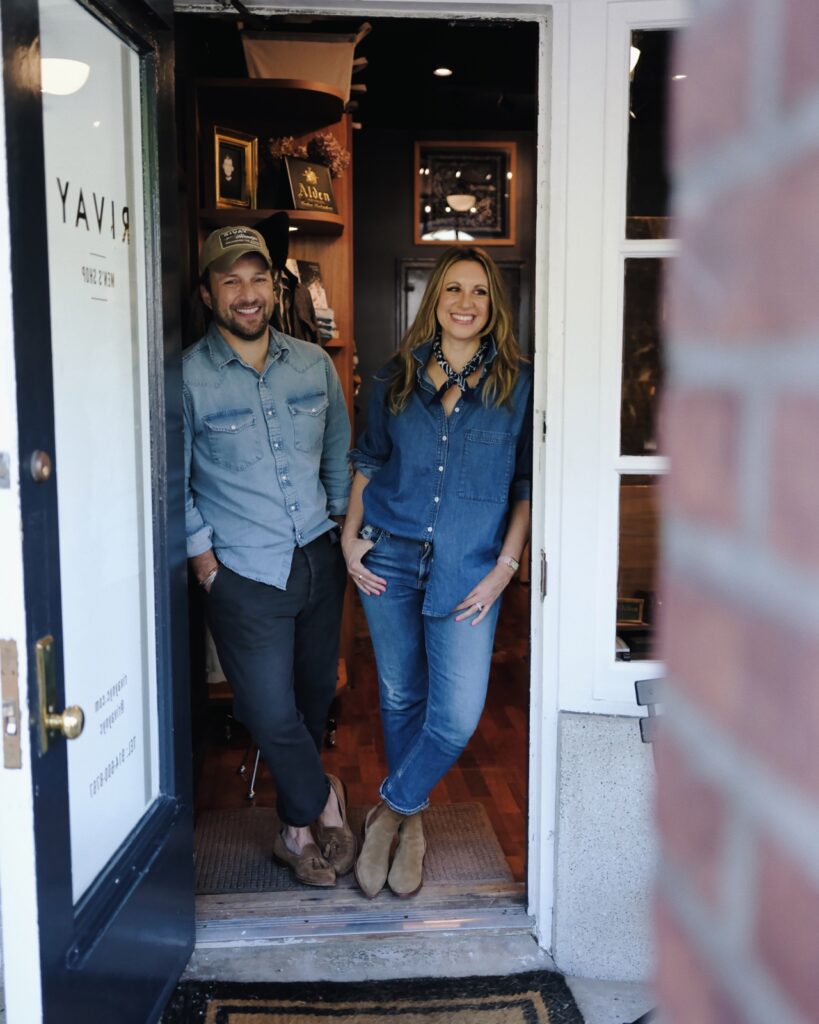
Rivay was born in 2015 after Jon shifted from the courtroom to the fashion industry to pursue a long-held dream. In the early days, you were selling clothes from the back of a vintage Land Rover. Looking back at those beginnings, what were the most defining moments that shaped the brand’s DNA?
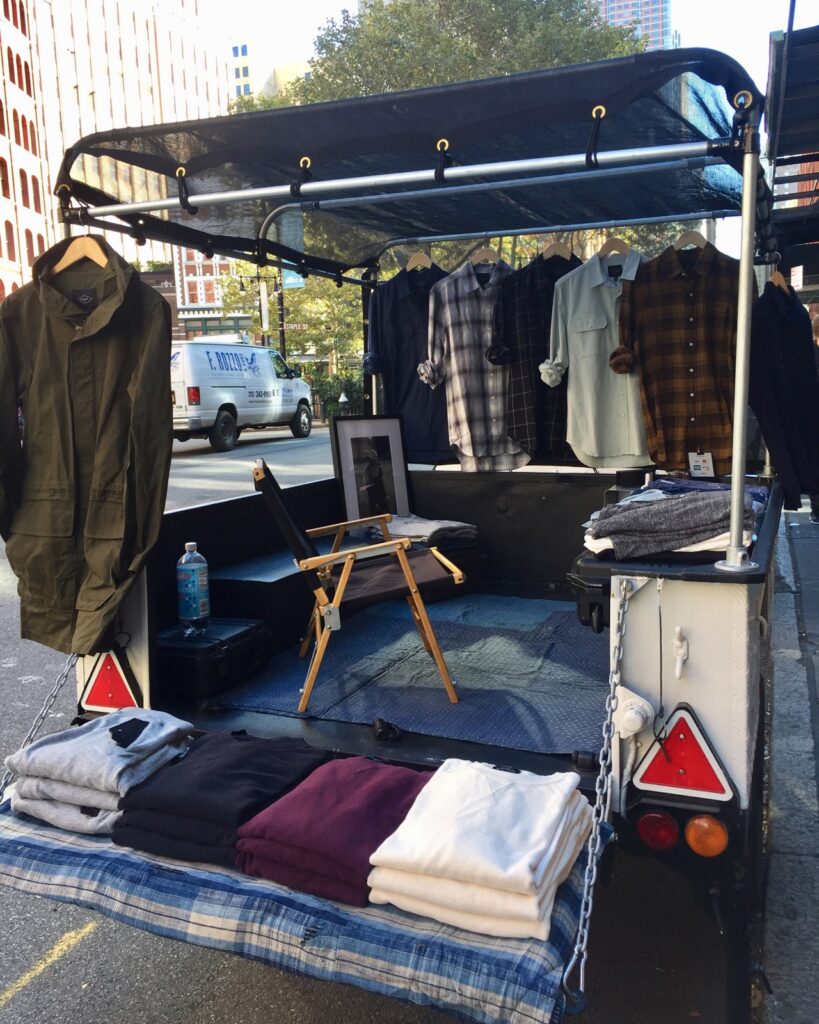
[Jon]: I come from a legal background indeed, and I started Rivay because I was always a creative guy and I just wanted to get out of law and do something creative. Some of the biggest defining moments occurred right after I left my job, when we started developing our first collection. I was always very worried when we were going to get the first pieces in, wondering how I would sell these things. This was 2015, so Shopify and websites were not where they are today. I constantly thought about how anyone was going to find me on the internet once I started making and selling this stuff—after my mom buys the first t-shirt and my friend buys the first shirt, who’s next?We never really did any paid advertising in the beginning, so one of the big moments was realizing I had to get out there and actually meet our customer. We were living in the city at the time, and I had a vintage Land Rover Defender with a military trailer. I thought, “Let’s make it into a mini shop on wheels, a mobile store, and we’ll drive into the city, park somewhere, and just see if the clothes work and if somebody likes them.” It was a way to get feedback and talk to our customers if anyone bought anything. The first time we ever parked was on Great Jones Street, a little bit north of SoHo. A couple came up and just went nuts; he loved the clothes and ended up buying something. Meeting a customer face-to-face, getting that feedback, and having them actually buy something was a truly transformative and pivotal moment for me. Everyone thought I was crazy, but it proved that it wasn’t that crazy and that you could actually get in front of your customers. That was probably the most important lesson for us: we’ve been very customer-centric since day one. We listen to our customers and we like to get their feedback.
After that, continuing to manufacture in the garment district was another major factor; I learned a lot about the manufacturing process and what went into it. We were always very focused on product integrity. I noticed that when we sold on the street, people would always touch the garments and remark that the fabric was really nice. That always resonated with me: to ensure we maintained product integrity and sourced the best fabrics we could.
Even before starting the brand, I always liked the way things felt. I was always passionate about old military fabrics, especially wools, and natural fabrics in general. One of the things I decided to avoid as we started Rivay was synthetics; I never liked them. I always believed that if a fabric was good enough for someone on the deck of a World War II carrier, then it’s probably good enough for someone walking in the rain in New York. From day one, the goal was to get the best fabrics, and we’ve always been committed to that.
What is the story behind the name “Rivay”, and how does it encapsulate the specific spirit you wanted to breathe into the brand from day one?
[Jon]: Growing up, I always loved rivets—like the rivets in the side of a Land Rover or the fuselage of an old airplane. It is one of the most ancient ways to bond two pieces of metal; it’s incredibly strong and timeless, having been around since the Egyptians, I believe. I always loved the way it looked and what it stood for. However, the word “rivet” isn’t very sexy—it sounds a bit strange and clunky.I had a very dear friend who worked and lived in Paris, and in the early days when I was talking about the name, he said, “You can’t call your brand Rivet.” He pronounced it the French way, which was “Riv-ay.” We were over a couple of beers in some bar in Paris, but it sounded great. It meant something that he tweaked for me, and it has that French sensibility to it, which I like.
It was the very first idea I came up with, and we stuck to it. This was back in the day when every brand used an “and” in between two words, which I just hated because they felt so made up. Everything dictated that your name should be “This and That” and you should design your website a certain way. I’ve always pushed back on that; I never really wanted to follow a formula and just wanted to stay with what meant something to us, our customers, and our friends.
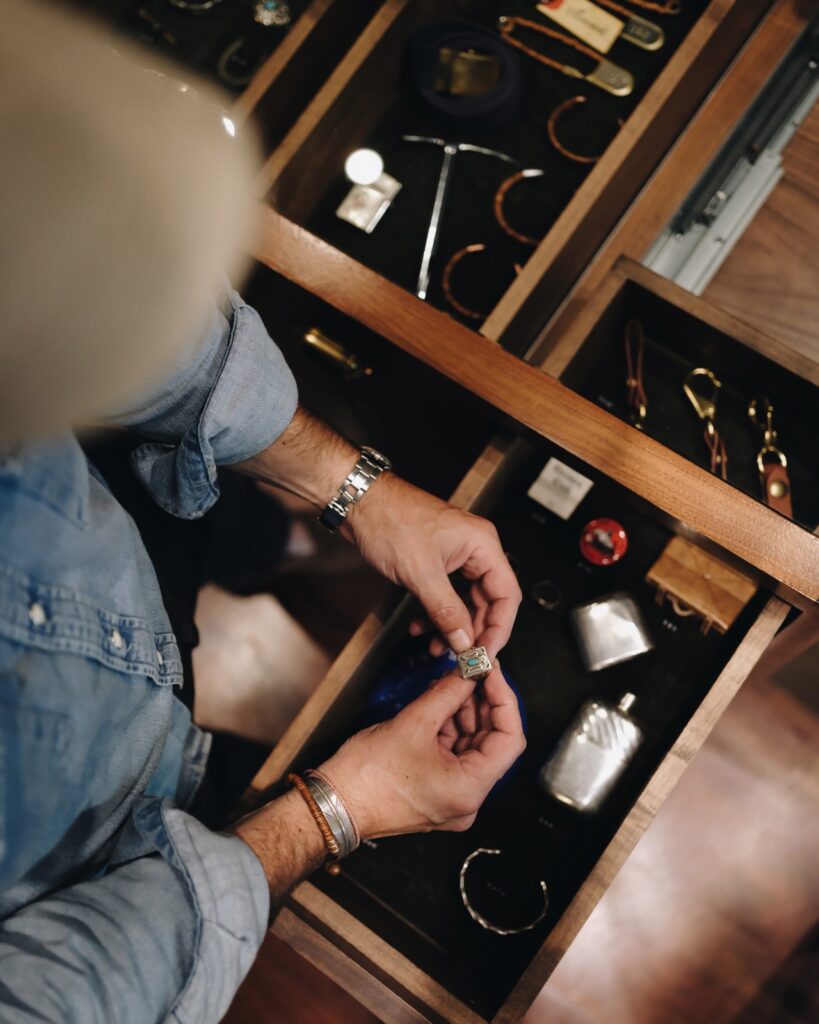
You’ve made a conscious choice to avoid visible branding, choosing instead to “let the fabric speak.” How do you approach the challenge of making a garment recognizable and iconic through construction and materials alone?
We’ve never considered designing a logo; that never made sense to us because we want the brand to be timeless so you can pass the clothes through the years, look at photos later, and see that they still look right in place. Instead, we focus on the washes, the colors, and details like the choice of buttons, which feel very us. Now, people sort of recognize our shirts or our clothing just by the way they are constructed and how they don’t look super clean and precious—it looks like they have some life to them. For instance, on the Western shirt, we have a little concho snap at the top, which is a nod to something very considered but not screaming in your face. We also do a lot of triple-needle stitching. As more people become familiar with Rivay, they start to associate these details with us.
I liken it to taking all the labels or badging off of a Ferrari or a Land Rover. If you strip away all the logos, you’re left with the shape, the materials, the construction, and the question of whether it looks natural where it is. Would it look natural in a palazzo in Italy, but also in the desert of West Texas? That’s what we are always striving for: not necessarily putting our name on the outside, but letting the fabric, shape, color, and drape eventually become our signature as people really look into the clothes. We let the garment speak for itself.
Some people have told us over the years that we need to put some kind of tag on the outside to let people know it’s Rivay, but it just doesn’t feel right. It feels salesy, and I don’t like it. Also, our actual customers appreciate that we don’t do logos.
That’s what we always strive for: letting the fabric, shape, color, and drape eventually become our signature.
At the heart of your philosophy lies a dedication to elevating classic military and workwear styles. Could you guide us through your research and inspiration process before you begin designing a new garment?
It always starts with the fabric. It bothers me today that everything seems to start with a mood board; for us, I can’t get there until I see the fabric first. When we look at, touch, and feel fabric, that’s when we get our ideas. We’ll think, “This herringbone is like Robert Redford,” or “This text is like Vincent Vega in Pulp Fiction.” That happens a lot at when we go to fabric shows, or whenever our mills come to visit us and open up their books or suitcases of fabric—that’s when the wheels start turning. We never start with a fixed theme. We have to see the fabric first, and then we start to shape a mood and a story around the collection once it begins coming together.
Fabric has character, and because I watched a lot of movies and listened to a lot of music growing up, the fabric takes on a persona that naturally matches a character, a piece of art, or an artist from a specific time period. It just flows naturally from there. I am a big believer in not forcing a square peg into a round hole; everything should flow naturally, and that’s when we know it’s going to be good.
We are also gradually building our own archive downstairs, and it’s getting crowded. Because we carry vintage items in our store, every time we go vintage shopping, I might see an amazing pocket detail, an interesting color, a specific wash, or the way a chambray shirt has ripped. You can’t get all of that from images alone. When we get inspired by a fabric, we always think about how to give it a Rivay spin by pooling inspiration from military or workwear.
A really good example of this was a style we did this past fall called the Meade. It featured a Loro Piana fabric—a double-knit Glen plaid in a nice olive drab color. I found some images of military officers, and I thought doing a Loro Piana fabric in an officer-type shirt would beautifully blend our two core beliefs: high-quality fabrics tied to military inspiration. We added suede elbow patches, ensuring it didn’t look too uniform or costumey, which could make it feel unattainable or unwearable, and it became one of our best sellers.
There is a dance today when it comes to vintage. You can find incredible, authentic pieces out there—just look at archives like Alessandro Squarzi’s. There is no point in us remaking a vintage garment piece-for-piece, panel-for-panel, because nowadays, especially with eBay, you can just go out and buy that actual vintage garment. Doing that is more sustainable and probably looks cooler anyway because it’s already beat up. We have to differentiate ourselves, so our niche—our sweet spot—is plugging modern fabrics into those historic silhouettes and putting our own spin on them.
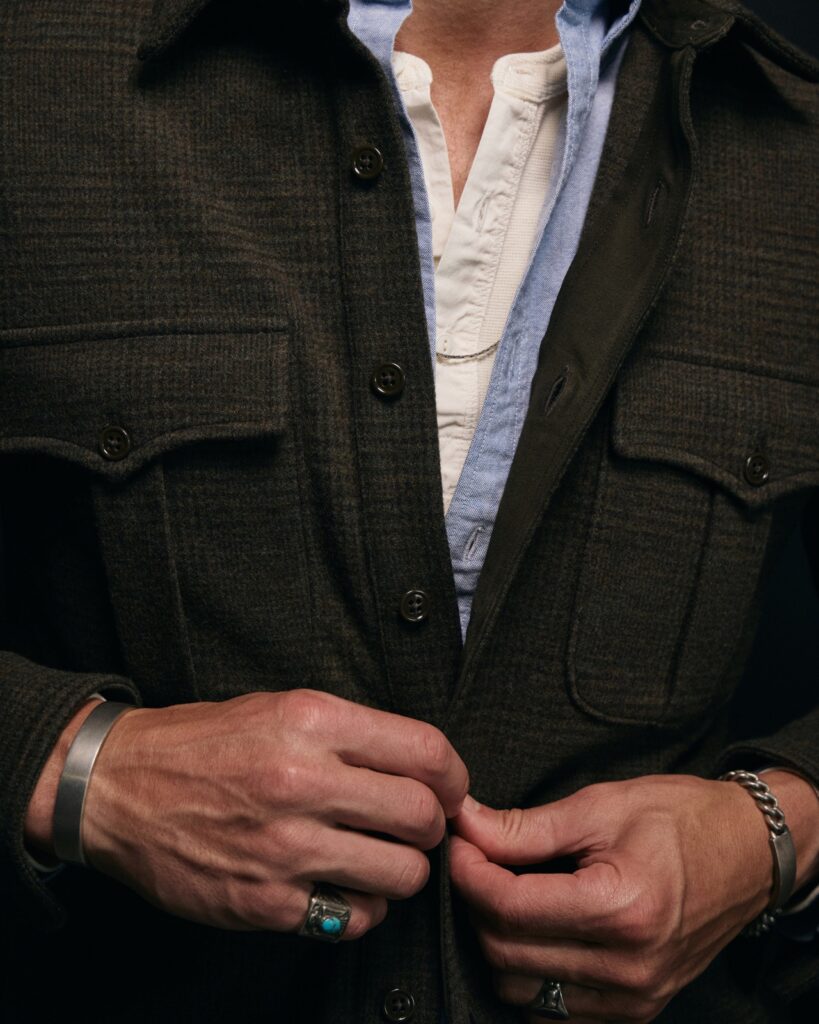
Many of your pieces are named after beloved movie or book characters, almost making them feel “alive.” How do you decide which character’s persona matches the soul of a specific product?
[Jon]: I get so deep into this—this is the kind of stuff I’m always thinking about when I’m sitting alone in the car. Every character in a movie has an arc or a specific trait, whether they are the protagonist or the antagonist. Once we see a fabric and decide it would look really cool as an overshirt, we consider how it fits. Is it drapey and incredibly cool, like Jude Law in The Talented Mr. Ripley? Or is it more rugged, like Steve McQueen out in the Northern California desert?Color also plays a huge role. We look at the color palette of a film—for instance, does the fabric look like it belongs in a technicolor movie from the late 1960s? I just rewatched the opening scene of the 1969 film The Italian Job, where he’s driving through the Alps in a Lamborghini Miura. Just looking at the fonts coming across the screen and the desaturated colors makes the wheels start turning. I start imagining what he would be wearing while smoking a cigarette and driving, and evoking that precise feeling through the garment gets me really excited. For example, our very first outerwear piece was a slimmed-down Barbour-style jacket, and we called it the Delaney. It looked like something Steve McQueen would wear in Bullitt, and when he’s driving the Mustang around, the street he turns on is Delaney. It’s a little nod to that.
[Katie]: A lot of it comes down to putting together a list of names and seeing what sounds good with the garment description. We try to use names that aren’t hard to pronounce because people will look them up. One of our best-selling shirts is the Albers, which was named after the artist Josef Albers. So it goes beyond movies; it includes artists or destinations we like, and it just has to fit the personality of the garment.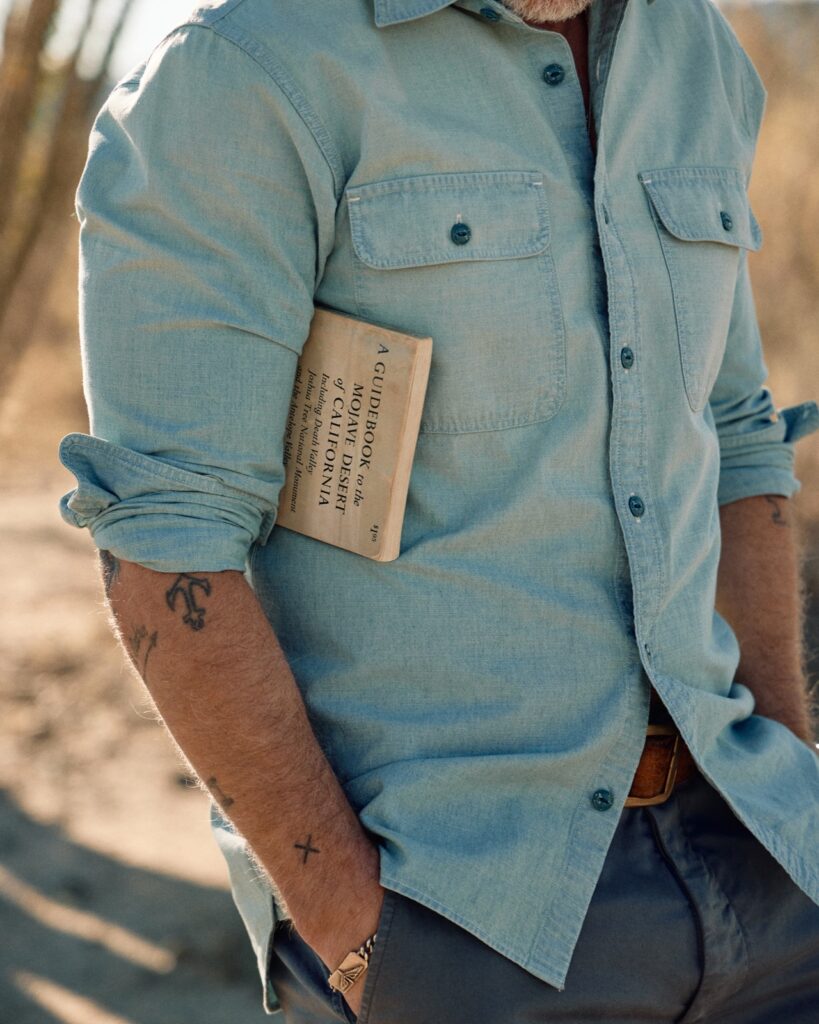
You designed your Bedford flagship as a destination where people are encouraged to hang out and talk rather than just browse. Why was creating this sense of community and “slow retail” experience so vital for Rivay?
[Jon]: Everything today is so transactional; you come in, you give me this, I give you that, and then the person leaves. But I am genuinely interested in our customers. When people come into the store, I want to know where they are from and what they do. It becomes more about hospitality and hanging out as friends. We make really great clothes—they’re fantastic and they’re going to sell—but I don’t need to lead with that. We want to make someone feel comfortable when they come in, to get to know them, and that is the cornerstone of our approach. I was never a salesy person and I never responded well to salesy tactics. It’s really about welcoming people to hang out, have a good time, and feel comfortable. Then, they realize there are beautiful clothes around them, and if they need something, we’re there for them. It’s amazing to me how many businesses just set up rolling racks in a space and are there to just sell, sell, sell. I don’t think that does anything for the community they’re in. As we expand, that’s a big thing for me; I don’t want to just dive into another city, scrape all the money out of it, and move on to the next location. We want to actually get to know the communities, do something good for them, and give people a place to come and just talk about cool stuff over an espresso, a Negroni, or a beer. Menswear can be so serious sometimes, but we just want to hang out. We make everyone feel welcome, and because we do that, they just keep coming back. We’ve met a lot of our friends that way. People in the area will just come in to say hi or introduce us to their family members who are in town. We’ve become a central hub in the area. [Katie]: Jon and I actually spend a lot of time in the store; we don’t have a store employee right now. The store is closed on Mondays and Tuesdays, open Wednesday through Sunday, and we alternate shifts. The store is only 20 minutes from where we live. As we grow, we will eventually find a store manager because it’s a lot of work, but people really like coming to see us. They get a hands-on, personalized experience, especially when they’re trying to find an outfit or need specific garment information. Since I design the pieces, I know the details inside and out, and they appreciate that. Even as we grow and bring on people to help with retail, we will always be involved to some degree because it’s fun to meet the people who are actually buying your clothes. You learn a lot from them. No survey will ever give you better feedback than being face-to-face with your customer and asking what they like about a garment. From the early days when I would park that Land Rover truck in Manhattan, that face-to-face interaction was the best tool we ever had. That’s what I hated about pure DTC brands; it was all digital, free shipping, 365-day returns, no questions asked, and constant sales. I just wanted to talk to the customer face-to-face.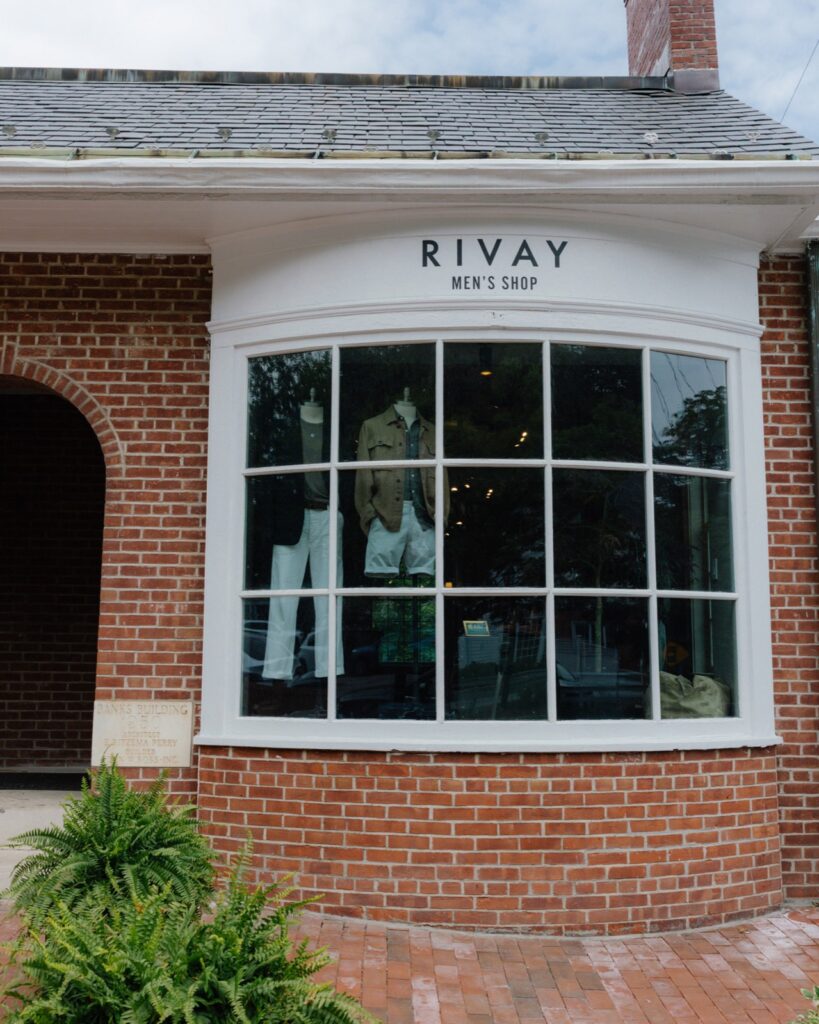
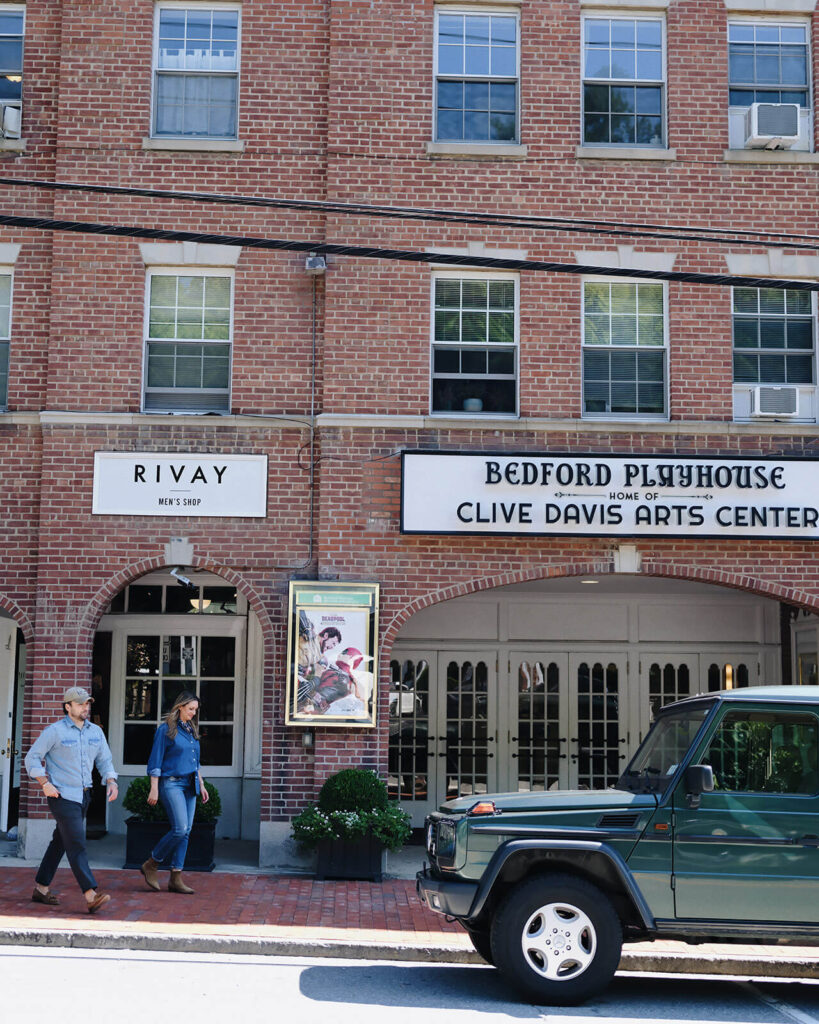
Your vintage Mercedes G-Wagen is a regular fixture in front of the shop. What’s the story behind this vehicle, and what does it represent in the Rivay universe?
[Jon]: I actually traded in my old Land Rover Defender for it. This all happened during COVID when we were living in the city and didn’t have a car, but then we moved up to the country where my mom was living and realized we needed a functional vehicle. The old Land Rover was an Australian military right-hand-drive stick shift, so it wasn’t the most comfortable to drive. To give you some context on its functionality: for my sister-in-law, we had to put a lawn chair in the back because there were no rear seats, so she’d just be sitting in a lawn chair while we drove around. We needed something that, much like the brand, was rugged but still refined. When I went to Copley Motor Cars—the guys I always work with—to trade in the Defender, they told me they had this 1990 G-Wagen diesel. It originally came from Norway, spent its life on a cranberry farm in Massachusetts, and it was definitely well-used. It had over 250,000 kilometers on the clock, rust on the outside, and the interior smelled like Norwegian cigarettes.We got in it for a test drive, and it was cool because it had the perfect balance: it looked like it could be driving through the Sahara Desert, but it also looked like you could park it in front of a hotel in Monaco. It has this chameleon effect. There are no tints on the windows; it is exactly what it is and nothing more. It doesn’t purport to be a fancy, modern G-Wagen. It is just a utilitarian tool with the right amount of comfort, like automatic windows and a radio.
The beauty of the transaction was that it couldn’t have been easier, which goes back to my theory of avoiding forcing a square peg into a round hole. I am a big believer that big purchases or big decisions should happen smoothly; if they don’t happen seamlessly, they weren’t meant to be and I generally steer clear of them. But with this, I drove up there and the dealer offered a straight, literal swap. He said he would ship the G-Wagen down to me and take my Land Rover at the same time. They showed up one day, swapped the cars, and that was it.
Now it has become our little family truckster for driving around the country. It is incredibly reliable and just plugs along, though it is slow. It drives like a tractor, and I can only do about 60 miles per hour on the highway. I have to stay in the right lane while everyone honks at me, but it is very charming, goes anywhere, and looks good anywhere. If a vehicle ticks the box of looking natural in any environment, I’m all in. It just fits the brand perfectly, and it’s super functional because it holds a lot of inventory and we pack it all the time.
We used to do pop-ups with the Land Rover in the early days, but now we’ve elevated our whole mobile pop-up experience with the G-Wagen. We have a South African tarp awning that comes off the side of it, and we set up outside. Since we started as a mobile business back in 2015 when we first parked in the city, it’s nice to still return to those roots once in a while.
If you had to tell the story of the brand’s journey through just three iconic garments, which ones would you choose and what does each represent for you?
Our first iconic garment would be the Delaney waxed cotton jacket. I have no idea why we decided to do this as our first piece because it is very challenging—it has a lot of pieces, a lot of panels, and lots of different types of fabric. We made it in New York, and I just remember how hard and challenging it was to lug all the fabric and trim on the subway to the factory in the garment district.. For me, that jacket really represents the start of leaving the law environment and learning an entire new industry: learning how things are made, how they’re ordered, and how they’re shipped. It represents biting off a lot more than I thought I could chew in the beginning, but we pushed through and, with Katie’s help, started to gain a better mastery of the business.
The second garment would be the Albers chambray shirt. That piece represents the first time we made a shirt where we really hit our stride. It was made with great Italian fabric, crafted really well, and it sold out very quickly. In fact, it was the first style we ever re-ran. We generally don’t restock styles; we prefer to just do it and move on, unless there is such strong feedback that people really want it. We make an exception for the Albers chambray shirt and keep re-running because it’s just so classic.
The third piece would be, more broadly, our tailoring, which we launched last year. Prior to Rivay, I spent my life in a suit as a prosecutor; I was always in tailored clothing, even on the weekends when we were in court. For us to launch tailored clothing, made in Italy with all Italian fabrics, makes me feel like we really arrived from where we started. I never thought we would be doing a deconstructed wool knit blazer out of Naples, so I’m just really proud of that. It brings things full circle: you can buy a t-shirt at Rivay, or you can get a whole suit. There is much more to conquer and do, but to go from a waxed cotton jacket made in New York to a deconstructed jacket made in Naples is just great. It also represents the future where we can continue to elevate our pieces and get up to the level of doing Loro Piana fabrics and suits.
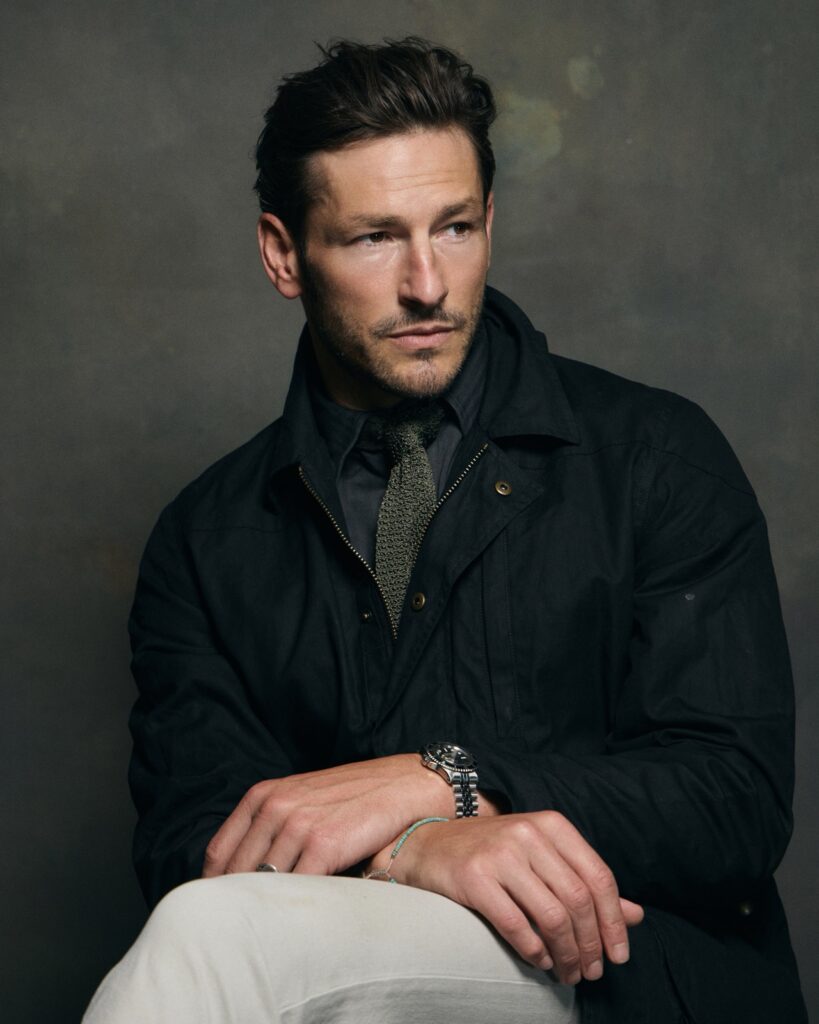
You place a significant emphasis on the editorial side of the brand. Through The Rivay Dispatch, you feature interviews with creative, stylish individuals. Why is it so important for you to build a cultural narrative around the clothes you create?
People today tend to spend much more time on social media content because it’s easy to consume, whereas reading something takes more time. But I believe there is a place for long-form content and long-form articles that live natively on a brand’s website or on a platform like Gents Cafe. Social media, with its eight-second bits and hooks designed to pull you into the algorithmic machine, isn’t attractive, authentic, or genuine. More and more people want to detach from the doom-scroll and the constant loop of short videos. That’s why when we launched our editorial features we positioned it as a Sunday read. We want people to take their time and really get into the website and the brand. Since we own our website, I don’t have to worry about big tech changing an algorithm on us.
Building up a deep library of content is almost like stepping into our physical retail store. I’ve always wanted our website to feel like you just walked through our doors. It’s a hard feeling to translate online, but when you visit, you find articles about watches, cars, clothes, and people; you get to step into our world. If it’s not happening in the physical world of our store, we have to create that atmosphere digitally, and I just don’t think three-second TikTok videos are a romantic way to get people involved.
We also meet so many interesting people. This interest stems from my days as a prosecutor when I interviewed a lot of people and had to listen to many stories. I love asking questions and learning new things from new people. Our customers love it too. When we interview people, we often ask questions like, “Where did you go on your last vacation?”, “What do you keep on your nightstand?” or “What was your last Google search?” People love those details because someone might share a vacation spot we’ve never heard of, which provides a genuine sense of discovery, surprise, and delight. That feels much more authentic than just using an influencer.
The people we feature are mostly customers who have become friends, or just individuals and subjects that Katie and I are genuinely interested in. It’s all about natural, organic conversations and discoveries that we think our customer base might enjoy. We don’t want to overcomplicate it. It keeps things authentic, human, and approachable. The guys we feature are just normal people who happen to have great taste in cars, travel, and style, but it’s about humanizing them. Moving forward with everything that is happening in technology, I think it is important to know who is behind a brand, what they are into, and who they talk to. I want our audience to feel like they would easily grab a beer with the people in our circle. That’s the exact connection we like to build.
I want our audience to feel like they would easily grab a beer with the people in our circle. That’s the exact connection we like to build.


