



This story originally appeared on the Gents Cafe Newsletter. You can subscribe here.
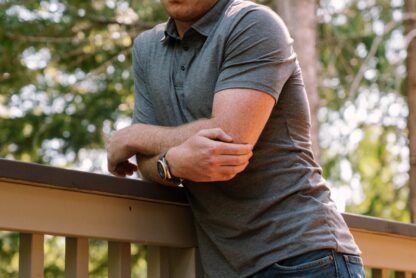
Meet Jonathan Petrino (@studiopetrino), currently living in Idaho after living in over 10 U.S. States throughout the years. A technology executive with a background in publishing and travel technology, he also works as a freelance writer and travel photographer. He founded Studio Petrino to share his passions online with like-minded individuals.
What are your main passions and how do you cultivate them?
My primary passions are travel, photography, and cooking—all of which are deeply interconnected. Because I travel extensively for both work and vacation, I find myself away as much as I am at home. Interestingly, this constant movement has made me appreciate the sanctuary of home even more. When I’m out in the world, I pay very close attention to how different places and experiences make me feel. I actively look for ways to bring those specific feelings back home with me, integrating them into my writing, brand building, and “world-building” projects.
Photography is inseparable from my travels. My father was a technical photographer, so I was exposed to the craft early on, but I’ve evolved into more of a visual documentarian. I use photography as a way to journal my life. Sometimes I don’t realize the importance of a moment until much later; other times, I know immediately that I want to capture a feeling so I can return to it in five years and feel exactly what I felt then. While I shoot for myself rather than for others, I’ve been fortunate enough to have my work featured by art book publishers like Assouline, sold through Sonic Editions, and exhibited at a photo festival in Saint Barts.
Cooking is the third pillar, and it’s a direct extension of my travels. I love the obsession of bringing a discovery home, like a specific lasagna I encountered at a vineyard in Tuscany. I spent ages trying to figure out exactly what made it different and how to replicate it. As much as I love exploring new destinations, being in the kitchen at home with my wife, a great cocktail or a bottle of wine, and some music playing is probably my favorite place in the entire world.
I use photography as a way to journal my life. Sometimes I don’t realize the importance of a moment until much later; other times, I know immediately that I want to capture a feeling so I can return to it in five years and feel exactly what I felt then.
How did you first develop an appreciation for style?
I believe that seeing the world and meeting a wide variety of people has been the primary way I’ve calibrated my understanding of style. When you spend time in cities like Paris, Milan, London, or New York, you start to notice the different ways people present themselves and what they value through their clothing. Long before I could ever put a label on a particular look, traveling helped me identify what I personally connected with, and just as importantly, what I could appreciate on others but knew wasn’t for me.
I’ve also been fortunate to have friends, both personally and professionally, who work in fashion and menswear. I’ve learned a great deal simply by watching what they build and the directions they take. For example, a very close friend of mine (who actually officiated my wedding) is never without a blazer, no matter the occasion. Seeing how people like him interact with style helped me figure out what feels authentic to me.
To me, style is a lot about experimentation. It’s about trying new things and paying attention to how they make you feel.

What does “being well-dressed” mean to you?
I love this question because, while I certainly appreciate specific brands and pieces, I believe being well-dressed is primarily about showing up as yourself. It’s about presenting yourself in a way that feels both authentic and intentional. When you feel well put-together, you carry yourself differently, and people respond to that.
In the last few years, I’ve really embraced wearing ties, which is something of a dying art with a wonderful vintage element to it. I’ve even started a small collection of vintage ties. I find that when you show up with that level of intentionality, it changes how you interact with the world.
My favorite ties are often the old knit ones, those that are a little worn or frayed at the edges, where you can see the history of where they’ve been tied and tightened over the years. Eventually, my passion for finding these pieces grew to the point where I was buying more than I could ever wear, so I started selling them. It felt like a way to pass these items along so their history doesn’t get lost, helping others find that same sense of style.
What has been your most memorable or adventurous trip, and what made it so special?
It’s hard to pick just one, but a two-week journey through Italy we took a couple of years ago stands out as one that simply couldn’t be repeated. My wife had never been to Italy, so we wanted to move beyond the typical four-cities-in-five-days pace and truly experience the country.
We started in Rome, soaking in the history of the “museum city,” before renting a little Abarth 595. For me, the car is an essential part of the story. I needed something fast and fun to drive, but small enough to navigate those tiny Italian streets. From Rome, we headed north toward Umbria, staying at Reschio on the border of Tuscany. It is easily one of the top three hotels I’ve ever visited—every corner is a photograph, and the place stays in your soul long after you leave.

Our next stop was Modena, where we stayed at Massimo Bottura’s guesthouse, Casa Maria Luigia. It’s an incredible property that perfectly blends country elegance with a private collection of classic cars and motorcycles. We even had Thanksgiving dinner at the restaurant there, and getting to meet Massimo and his wife Lara Gilmore was an unforgettable highlight.
We ended the trip in Milan, and I remember feeling genuinely sad to leave. Compared to the ancient monuments of Rome, Milan felt like a modern fashion capital with a completely different energy and style. It’s a city where you have to explore the hidden corners to truly understand it.
Having the car allowed us to take those spontaneous side trips and set our own pace. It wasn’t just about the destinations; it was the combination of the car, the people, the food, and the intentionality of the journey that made it so special.

What’s a place that holds significant meaning for you, and why?
During the pandemic, after nearly two years of restricted movement, the first place we traveled to was St. Barts in the Caribbean. At the time, we had recently moved to the mountains, and I was desperate for the total opposite experience: a tropical beach. St. Barts wasn’t originally on my travel list, but because it was our first breath of freedom as the world began to reopen, it made a profound impression on me.
The island is a fascinating blend of the Caribbean and France. You have this incredibly casual, hot environment where you walk around in very light clothing, yet you also have access to proper French food, wine, and a level of service you won’t find elsewhere in the region. The hospitality is particularly special because many of the staff come from French hospitality schools for the season. When we first arrived, there was a beautiful synergy: travelers who were desperate to see the world again meeting service professionals who were just as desperate to provide hospitality after the long hiatus.
Reaching the island is an experience in itself. It takes about 24 hours of travel, involving multiple flights and a final leg on a tiny plane that lands on a famously short runway. Despite the distance from where we live, we have returned every year since that first trip. I find that when I’m there, my mind is freer and I feel incredibly creative. It has become an essential chapter of my year, a “low season” break in the summer that allows me to reset between the intense halves of the calendar.

Is there an item in your wardrobe that holds special meaning?
Twenty-five years ago, I was serving in the Marine Corps and our ship docked in Queensland, Australia. It was a tropical paradise near the Great Barrier Reef, and I realized I hadn’t packed any swim shorts. I ducked into the first shop I could find—a little place run by a husband and wife—and bought a pair of Canterbury rugby shorts out of pure necessity. I assumed I’d use them for that trip and eventually get rid of them.
Instead, those shorts have accompanied me on every single beach vacation I’ve taken since. They’ve been to St. Barts every year and have survived countless miles of travel. After a quarter-century, the logo has completely worn off the leg, but they are still in great condition.
They are likely the only thing I’ve owned for that entire span of time. In twenty-five years, I’ve cycled through hundreds of garments—selling, donating, or losing them—but these remain. They connect me to a specific time and place when I was a very different person. I don’t think I’ll ever be able to let them go.

Can you describe an art form you create and what inspires you to pursue it?
I’ve come to realize that my true art form is journaling, a practice that encompasses photography, writing, and even sound. I view my photography as “visual journaling,” but the process doesn’t end there. Often, I’ll return from a trip and find that a specific photograph inspires a piece of writing or becomes the catalyst for a larger creative project.
The key for me is that I never set out with the intention of “creating art”. If I grab my camera and tell myself I’m going to create something artistic today, the quality is never as high as when I simply go out to find things that inspire me. Most of the time, I am simply trying to capture, curate, and remember a moment so I can stitch a place together in my mind. For example, when I took the photograph that was eventually published in the Assouline book, I wasn’t thinking about publishers; I just wanted to capture the scene for myself.
Journaling must be done for its own sake. I don’t always know what will come of it—maybe it turns into a framed print, a book, or maybe it remains just for me. To document my experiences, I travel with a Moleskine journal for handwritten notes, but I also use the notes app on my phone or record voice notes of the sounds around me. I can put on my headphones right now and be transported to a piazza with ringing bells or a busy restaurant just by listening to those recordings.
I organize these fragments—photos, writings, and audio files—in a central document that links everything together. I even include work by others that inspires me or ties into my own experiences of a place. The art is in the capturing itself; the act of being present enough to record the world as it makes me feel is what matters most.
Do you collect anything? How did that passion start?
I collect several things, but the collection I’m most passionate about is travel guidebooks. There is a specific feeling and narrative in these books that we’ve largely lost in the digital age. Today, you can find the most popular restaurant in Brera on Instagram in seconds, but you lose the curated point of view that a physical guidebook provides.
Each publisher offers a distinct lens through which to see a city. Knopf guides, for example, were wonderful for their cultural depth, featuring overlay pages that helped you understand the architectural layers of a place like the Milan Duomo. Michelin had its famous “Green Guides” for routes and “Red Guides” for dining, while the Baedekers from the early 20th century were elaborate, hardcover volumes with massive fold-out maps. Imagine trying to navigate the Alps in 1912; those books were essential for moving between tiny mountain lodges before the era of modern transport.
What fascinates me most is how these books capture a place “in amber.” If you pick up a guide to Milan from 1985, you are transported back to the atmosphere and vibe of that specific era. Because they are written with a narrative and personal approach. Reading them allows you to re-experience a city at a particular moment in time.
In a world where everything is immediate, up-to-date, and often generated by AI, I value the personal, analog approach of these books. Whether it’s a design-focused Monocle guide or a hidden-gem seeker like the Type 7 series, these books require you to immerse yourself in research. My bookshelf is full of these volumes; they are one of the few ways I’ve found to truly revisit the past.

What advice would you give your younger self?
I would tell my younger self to start sooner. Figure out what you are truly passionate about and begin building a life around those things as early as possible. It’s a challenge because learning about yourself takes time, but the moment you find something that makes you feel a certain way—something you feel strongly about—that is the moment to start.
The world naturally pushes you to conform and fall in line with what everyone else is doing. It isn’t necessarily a sinister plot, but the pressure to follow a traditional path is always there. However, if you look at the people we truly admire and find inspiring, they are almost always the ones who refused to do that. They chose their own path instead.
It is never too late to begin, but the sooner you start living on your own terms, the better. Build your life around your passions, not around the expectations of others.
The world naturally pushes you to conform and fall in line with what everyone else is doing. However, if you look at the people we truly admire and find inspiring, they are almost always the ones who refused to do that. They chose their own path instead.
What are your three favorite brands and why?
First is Monocle. I’ve been collecting their issues for a decade, and reading one, or even just listening to one of their podcasts, feels like traveling. They have mastered a “print-first” multimedia approach that explores design, entrepreneurship, and global affairs through a sophisticated lens. Whether it’s through their magazines, their coffee shops, or their Christmas markets, Monocle consistently transports you to another place, even if you’re just sitting at home with a morning coffee.
Next is Assouline. They have turned the printed book into a true art form that serves as a centerpiece for the home. Years ago, I remember drinking Negronis late at night in their London bar while book shopping, and it’s incredible to think that they have since published some of my own work. They have a unique ability to capture the essence of a designer, a hotel, or a destination and let you hold it in your hands. It’s a family-run business that has managed to scale its distinct aesthetic globally without losing its soul.
Finally, there is Ralph Lauren. While it’s a quintessentially American brand, its imagination and execution are truly global. It is cinematic, timeless, and ubiquitous—about half of my own wardrobe is Ralph Lauren and has been for as long as I can remember. I especially love their hospitality element, like Ralph’s Bar in Milan. When a brand can curate a mansion store so thoughtfully and then serve you a meal in a restaurant that feels just as designed, it creates a rare and powerful connection. You don’t just wear the brand; you live it.

What are your three favorite restaurants or cocktail bars and why?
I could easily list twenty, but three specific places stand out because of the way they prioritize hospitality and atmosphere.
First is 45 Jermyn St. in London. It’s located just behind Fortnum & Mason and holds a very personal meaning for me. Years ago, I arrived in London from Sydney completely destroyed by jet lag. I woke up at 11 PM thinking it was lunchtime, only to find the city dark and mostly shut down. I wandered into 45 Jermyn St. just as they were closing; the door was unlocked, but the room was empty. Instead of turning me away, the staff welcomed me in, sat me at the bar, and made me a steak and a Martini. That gesture of genuine hospitality turned the restaurant into a ritual for me. I’ve been back at least thirty times since, and I even choose my hotels based on their proximity to it.
Next is Freddy’s Bar at the De L’Europe in Amsterdam. It’s a classic, old-school bar with dark wood, polished brass, and a piano player who sets the perfect mood. What makes it special is the contrast: just outside the doors, there is the chaotic energy of Amsterdam, but inside, it is perfectly calm. It’s the place to go for a proper Martini and impeccable service when you need to escape the city’s pace for a while.
Finally, there is the Sand Bar at the Eden Rock Hotel in St. Barts. It’s an open-air bar right on the beach, where you can watch planes landing at the nearby airport and boats bobbing in the water while people swim just feet away. It’s a bit of a contradiction—a high-end cocktail bar in a tropical, casual setting—but it works perfectly because they are so focused on the details. You can sit there in your beach gear while enjoying a Negroni that is as well-crafted as any you’d find in a major world capital.