




This story originally appeared on the Gents Cafe Newsletter. You can subscribe here.
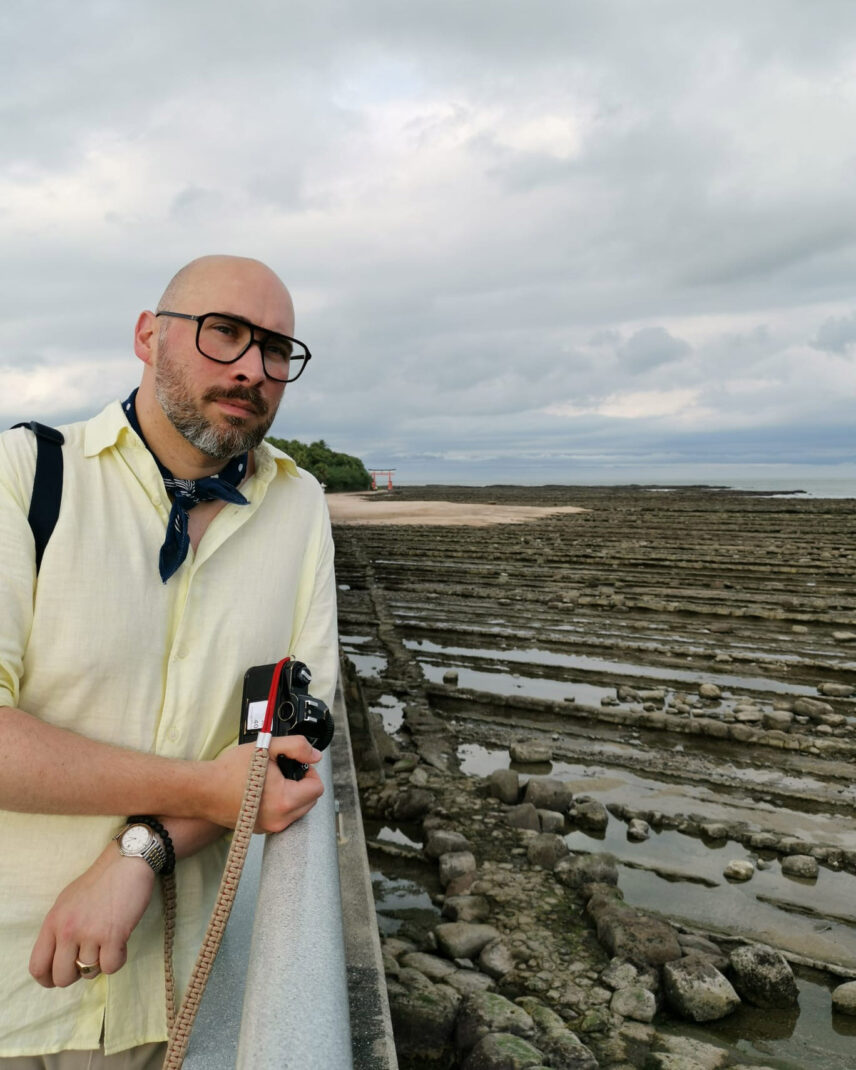
Meet Thomas B. Thomson (@thomasbthomson), a freelance writer and film director hailing from Hamburg, Germany. With a background in acting and photography, he enjoys all forms of storytelling, and constantly watches the world around him to catch every glimpse of inspiration daily life has to offer.
What are your main passions and how do you cultivate them?
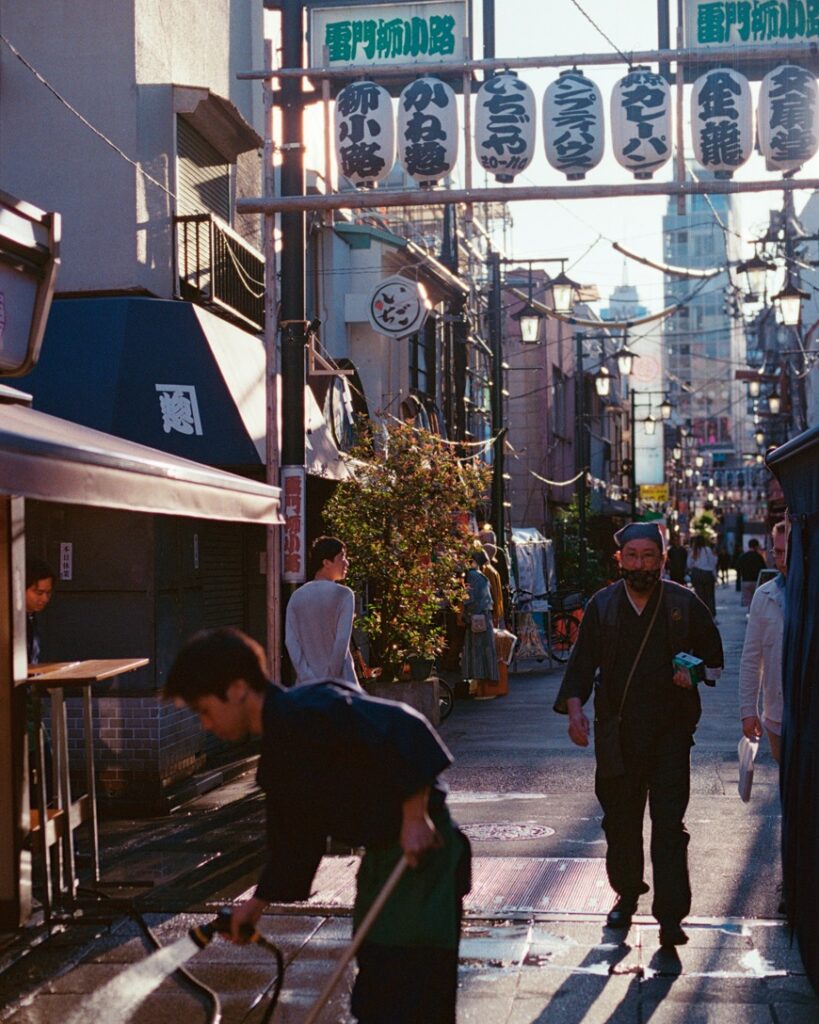
I’d say my passions are actually very basic. One of the biggest is immersing myself in different cultures, something I do mainly through food — a way to learn so much about a culture: its heritage, its habits, even its language. I love learning languages, so whenever I’m interested in a culture, I also try to learn at least a little bit of the language. And when you travel, that feels essential. You should be able to say “hello,” “goodbye,” “thank you,” or at least order something to eat, instead of walking into a country expecting everyone to speak English.
When I travel I enjoy visiting places that are untouched by tourism. Places where speaking English is not an option. You have to communicate differently. It’s great if you know a bit of the language, but a lot of it is simply listening and being present with people. Once you do that, the language barrier somehow becomes less important. You still find a way to understand each other.
I love finding stories everywhere: in my apartment, on the street, just by listening to people or watching what’s happening around me.
Another passion I have is photography. It’s how I keep a shortcut to memories. I started when I was a kid with a little Olympus film camera, and ever since then, I’ve always had a camera with me. In my late teens and early twenties, I mostly shot concerts and music. Later I worked as a photographer professionally. Eventually, I picked it up again to stay inspired as a director: having still images helps me convey feelings and atmospheres.
Some years ago, I went back to film photography. Most of the photos I take today are on film. The depth and tactile quality just carry a different feeling, a different story. And the process is so much more rewarding. You select a frame, and you hope no one walks into it, because you don’t have 30 versions of the same image like you would on a phone. You have one shot. And even if you take another one, the film will react differently. I even started developing my own film. So now it’s the whole process: choosing which camera to take, which film stock to use, shooting, developing, scanning.
And the third passion is my work. I genuinely look forward to it every day. If I had to sum it up in one word, it would be storytelling: that’s the core of everything I do. Stories can be told in so many ways, and a good story can live in any medium. I love finding stories everywhere: in my apartment, on the street, just by listening to people or watching what’s happening around me. When you’re open to it, stories simply come to you, and you can create something out of almost anything.
How did you first develop an appreciation for style?
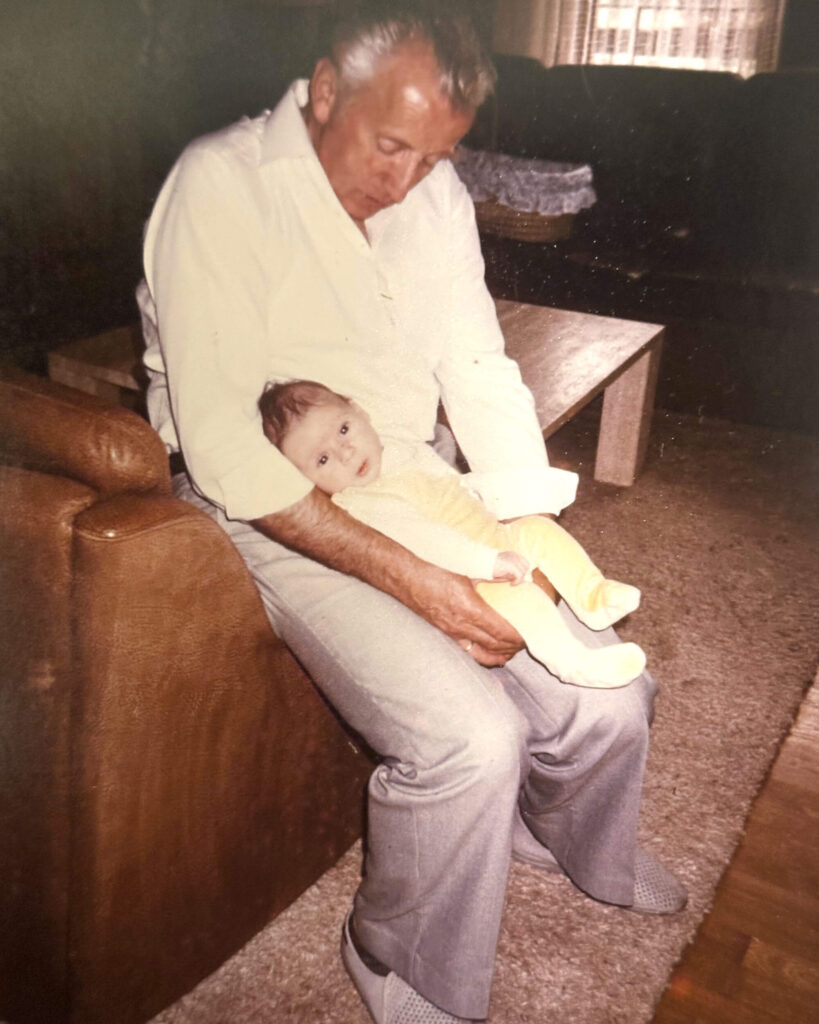
I’d say it comes from a few different places. The person who first shaped my sense of style was my German grandfather. To me, he was always a style icon. He dressed very low-key, very practical, but still effortlessly chic. Everything he wore had a certain quality: clothes you could comfortably wear to a restaurant and then walk straight out into the garden without worrying they’d tear or stain. Good fabric, good shoes, things that last and work in different situations.
Wherever my grandpa went, he always looked well put-together. And at some point, a former girlfriend said to me, “You’re basically dressing like your grandpa.” She’d only seen him in photos, but she was right. There was even a Christmas at my mom’s place where I caught my reflection in a shirt and grey slacks and then saw a photo of my grandpa holding me as a baby. He was wearing almost the same thing: a blue-and-white striped shirt and braces. And I thought, Yeah… I really am dressing like my grandpa. And I actually loved that.
Then there’s the Peruvian side of the family. My grandmother was always impeccable. And her mother — my great-grandmother — was this very old, very stern Peruvian lady who only spoke Spanish and lived to 99. Even when she didn’t leave the house, even if she just came downstairs for breakfast and sat by the window reading, she was put together: hair perfectly done, makeup on, a dress, stockings, high heels. She was the full abuela archetype. And you had immediate respect for her because she respected herself. That made a huge impression on me as a kid.
Another major influence was movies. I grew up on films and books. My parents were art and literature teachers, so our house was full of books about art, cinema, photography. As a kid, I was constantly flipping through them. And if you grow up looking at photos of Humphrey Bogart, Cary Grant, James Dean… it does something to you. You see them and think, “These guys look unbelievably cool. I want to look like that”.
What does “being well-dressed” mean to you?
For me, being well-dressed really comes down to feeling comfortable in what you’re wearing. There’s a big difference between simply putting on clothes, dressing up because you want to, and dressing because some convention expects you to. Being well-dressed is about the second one: choosing to dress a certain way because you want to feel that way in that moment.
There’s also an element of self-respect in it: choosing quality for yourself because you value yourself. Respecting other people enough not to show up sloppy when you meet them, even if you’re just running errands. For me, dressing well is tied to that sense of intention — the idea that I owe it to myself to wear something that makes me feel good.
Everything else falls into place naturally. Over time you develop a certain taste, whether that leans more toward rugged workwear, something refined, or in my case, anything made of wool. Other people will feel good in streetwear or something completely different, and that’s perfectly valid.
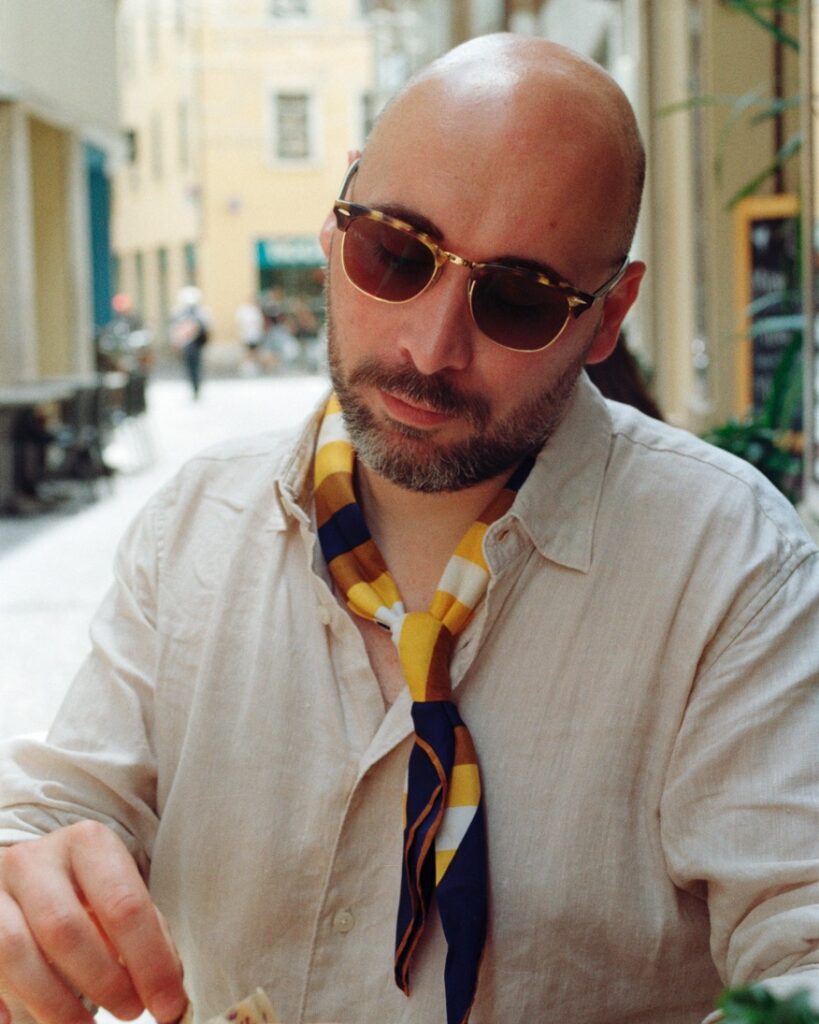
How do you find time to unwind and slow down?
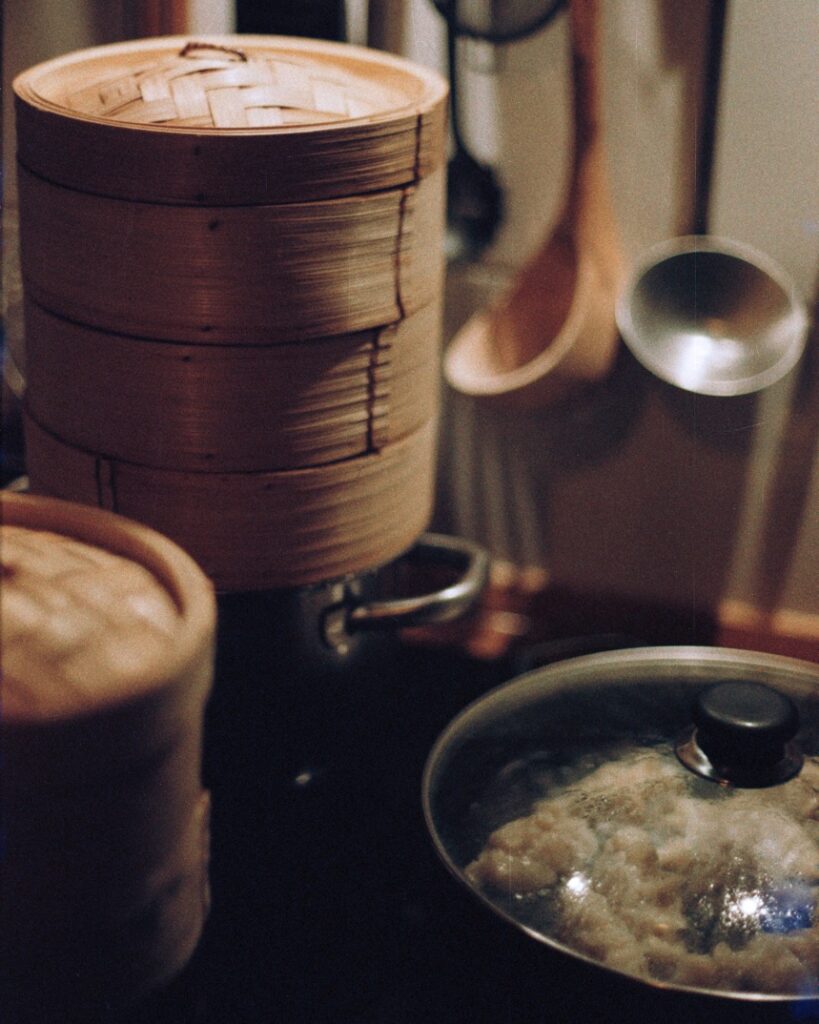
Cooking dinner with my girlfriend is our way of slowing down. We talk about our days, process things, get each other’s take on whatever’s been on our minds. It’s a way to let the workday go and shift into something hands-on. Maybe there’s a glass of wine or a good beer involved. We focus on making something truly good for us. We both love cooking and eating, and we like experimenting — figuring out how to achieve a particular taste or perfect a specific dish. It’s very relaxing for both of us.
When we moved into our current place, there was no kitchen, so we had to install one ourselves. We realized that a cheap kitchen already costs a few thousand euros, and the kind we actually wanted wasn’t much more. So we designed our own: a layout that suits how we cook, with a big butcher block in the center so we can work together from all sides.
That setup has turned our home into a kind of open house. Friends will call and ask, “Do you have time? Should I bring a bottle of wine? Are we cooking something?” And “we” usually means my girlfriend and I cook, while everyone else brings the gossip and the wine. We spend a long time in the kitchen together, trying things out, then sit down for a shared meal. Hosting like that really helps me unwind, and it keeps me grounded in the moment instead of thinking too much about the past or future.
Is there a particular item in your wardrobe or accessory that holds special meaning for you?
It’s hard to narrow it down because I tend to choose accessories that either come with a story or stay with me long enough that they become a story themselves. My first thought was my Barbour jacket, which I bought for directing outdoor shoots. Barbour jackets are perfect for that kind of work, with that big hunting pocket in the back where you can stash anything you need on set.
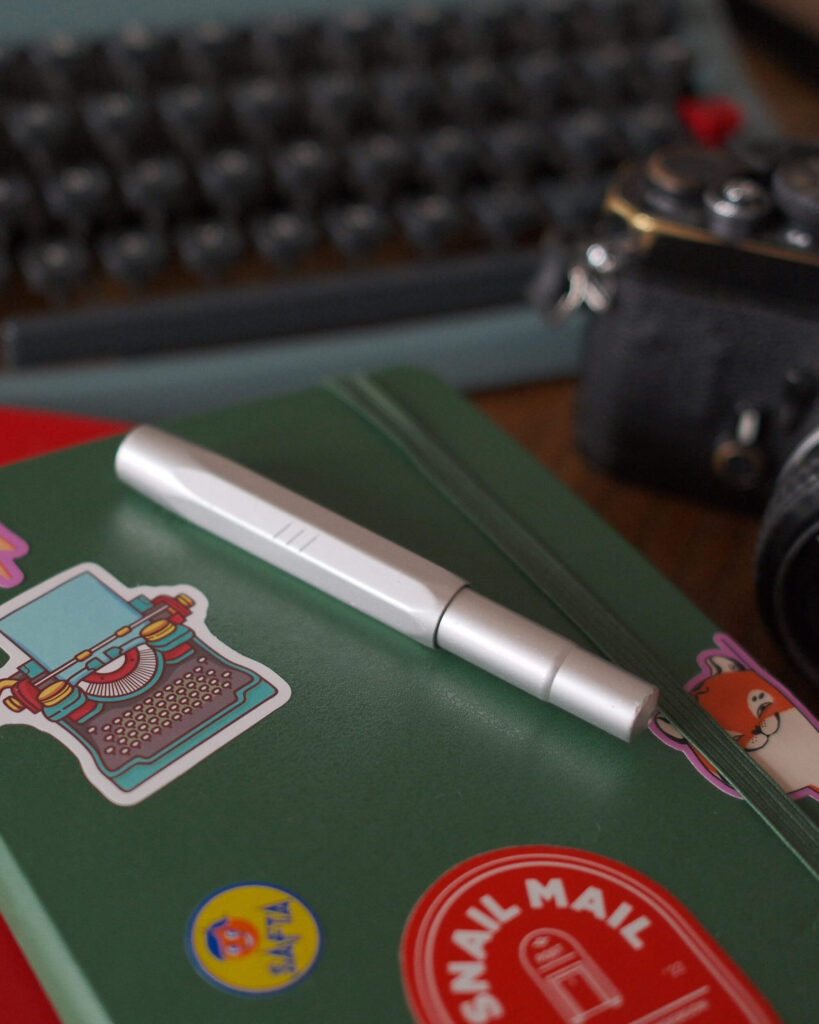
But I must mention my Kaweco Sport pen, which it comes with a slightly tragic, but now almost funny, history. The one I have today is actually number three. The original was a gift from my mom. I lost it in San Francisco, and I was so devastated that I spent the entire day retracing my steps. I happened to have the route saved on Google Maps and walked it all over again, checking every corner. Eventually, around half past midnight, I found myself sitting on a curb under this dramatic streetlight in front of a pizza parlor, and I called my mom to confess. I told her, “I have to tell you something… I lost the pen.” She just asked where. When I said, “San Francisco,” she replied, “That’s a good place to lose things. I’ll get you a new one.” She knew how much it meant to me. She told me to engrave it with a small “2” so I’d always know it was the second one. And then I lost that one too, here In Hamburg. I was furious. So I bought myself a third one, didn’t tell my mom, and continued the tradition by engraving a “3” on the side.
Another object that means a lot to me is my Nikon FM. It’s the camera I use the most, and is a fully mechanical thing of beauty. I’ve repaired it several times myself: scratches, dents, little issues here and there. At this point I can take it apart and put it back together. It’s built like a tank, but it’s also this elegant piece of Japanese engineering: reliable, precise, and incredibly good-looking.
How do you find inspiration in your work?
I think my greatest inspiration comes from everyday life. I love observing people, animals, places and all the little stories that unfold when you’re simply paying attention. For example, the film I’m working on right now — a 3D animated short called Flausen — is literally inspired by a moment outside my kitchen window. It’s about a little seagull who’s afraid of heights. He falls from his rooftop nest into a new world, has to survive the night, face his fears, find his way home, and learn to fly. The original Flausen was a real seagull chick that fell into our courtyard two years ago. We have around 40 or 50 seagull families nesting around the building every year, all at different rooftop heights, so we see a lot of their social lives play out.
This little seagull wandered around the courtyard and even onto the street. I spent two days watching him, trying to get close, following his little adventure. Last year, I finally sat down and thought: “There is a story right there”. So I wrote the screenplay. This year I even bought binoculars and spent months birdwatching — something I never thought I’d do. But there I was, following the seagull families from April until all the chicks learned to fly. Then they all head down to the harbor and live by the water until they return the next year to the exact same spot to nest again.
Is there an object or piece of craftsmanship in your life that holds deep meaning? What makes it special?
The most meaningful item I own is certainly my chevalier ring. I would absolutely lose my mind if I ever misplaced it. It’s forged from old gold accessories that belonged to three people who shaped me deeply: my grandfather, my great aunt (who helped raise me), and my mom. There was an old watch, a golden cross, and a couple of other small pieces. My mom realized the items themselves weren’t things we’d wear, but the memories were too important to let them disappear. So she took them to a goldsmith, had them melted down, and split the gold between me and my sister.
She asked what I wanted, and I said a ring. I even designed it myself. It holds the memories of those three influential people, all combined into one piece. It’s gold, engraved with a Scottish thistle — my favorite flower and a nod to my Scottish roots — and it has my monogram on the side.
Who’s someone you admire, and why?
I mentioned my grandfather before, and if there’s one person who influenced me more than anyone else, it’s him. I learned the most important values in life from him. The way he lived had a huge impact on me.
He was born in 1919, grew up in the countryside between two wars, went to school for only a few years, and then was drafted into the army for the Second World War. He saw horrible things — he was a prisoner of war in Russia, then Italy, and before finally coming home he was taken to France, just a hundred meters from the border. He knew that if he ran, he’d be safe, but also that he’d be shot. So he didn’t. He waited. And instead of becoming bitter or broken, he somehow used that time to immerse himself in those places, learn from the people, and help where he could.
He never told me the really dark parts — I had to piece things together from little stories he shared. Only later, as an adult, did I realize just how awful some of it must have been. But what always amazed me was that he still managed to take something good from these experiences instead of letting them destroy him.
After coming home, he started travelling to those same countries. He learned their languages. He taught himself Portuguese because he loved Portugal. He watched the news in English because, as he said, “the only financial news worth watching is on the BBC.” He never stopped learning. He never let himself become one of those old, bitter, sarcastic men. He stayed curious and was always wanting to discover something new, always open to people.
He also taught me the importance of working with both your mind and your hands. Learning is great, but you should also be able to cook, fix things, handle basic repairs — just be capable in a practical way. He embodied this balance of being a gentleman while also being grounded and skilled.
And above all, he was kind. Truly kind. He didn’t demand respect; he earned it by giving respect freely to everyone he met. That’s something I’ve tried to carry with me in my own life.
If there’s one person who influenced me more than anyone else, it’s my grandfather. I learned the most important values in life from him. The way he lived had a huge impact on me.
What are your three favourite books?
The first is Peter Pan by J.M. Barrie, the story of the boy who never wants to grow up. I’ve always found it quite sad if you take it literally, because refusing to grow up means refusing a part of life. But if you read it as a reminder to keep your inner child alive while you mature, then you get the best of both worlds. That idea has stayed with me, and it’s also one of my earliest reading memories. I had an old edition with beautiful illustrations, a gift from my grandparents, and ever since then, whenever someone asks my favorite book, I say Peter Pan.
The second choice ties into my love for style: the original James Bond novels by Ian Fleming, as well as the anthology novels by Anthony Horowitz, because they fit seamlessly into the original canon. The books give Bond so much more depth than the films. He’s sometimes an asshole, he’s definitely not a feminist by modern standards, yet there are moments where something like early feminism shines through. The women in the novels are far stronger and more complex than the films often allow. And the biggest surprise is that Bond genuinely hates killing — something that’s almost counterintuitive for someone whose job involves pulling the trigger. That contradiction makes the character fascinating.
The third is How Do You Live? by Genzaburō Yoshino, a Japanese book I discovered a year or two ago. It inspired Studio Ghibli’s The Boy and the Heron, and Miyazaki often cites it. It’s a beautiful philosophical reflection on growing up and on what it means to try to be a good human being, even with all the flaws we carry. The book shows that even when we stumble, there’s always a way back to the person we want to be. I’ve read it two or three times now, probably once a year, because it’s such a good reminder of how to live.
What are your three favourite movies?
As a director, a writer, and someone who genuinely lives on films and series, this is a terrible question to answer. I can’t pick my favorite movies, but maybe I can pick three films I could watch anytime. They’re not necessarily the best or the most dramatic or ambitious. They just hold a special place in my heart because of how they feel.
The first is In the Mood for Love by Wong Kar-wai. The visuals are breathtaking, the story is quietly devastating, and the style unbelievable. How can people look that impeccably put together? It’s stunning.
The second is La La Land by Damien Chazelle. It’s this whirlwind of references and cinematic love letters, and as a movie kid, I adore that. I lived in L.A. for two months in 2012 while working at a studio, and it became one of my favorite places. Whenever I get homesick for it, I watch La La Land.
And the third is Perfect Days by Wim Wenders. It’s such a quiet, touching film about how to be a good person, how to find joy in small things, how to live your life in the most present, grounded way possible without stepping on anyone else. It’s gentle and profound in a way that stays with you.


